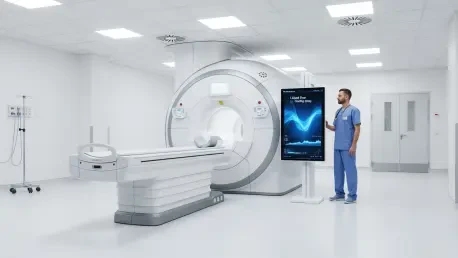

The precarious stability of India’s healthcare infrastructure has recently been pushed to its limits as a global helium shortage threatens to paralyze diagnostic services across the subcontinent. This crisis is not merely a localized logistical hiccup but a direct consequence of volatile geopolitical shifts in West Asia, particularly affecting Qatar’s liquefied natural gas production. Since helium is harvested as a secondary byproduct of natural gas processing, any disruption in the energy sector ripples instantly through the medical community. For years, the cooling of superconducting magnets in Magnetic Resonance Imaging machines has relied exclusively on liquid helium, a resource that India must import in vast quantities. Currently, the medical imaging landscape faces a double-edged sword of soaring operational costs and the looming threat of equipment downtime. As international supply lines tighten, the vulnerability of traditional MRI technology becomes an urgent national security concern for the Indian health ministry.
The Cascade Effect: Impact on Medical Device Manufacturing
Beyond the high-tech confines of radiology departments, the helium scarcity is triggering a dangerous domino effect across the broader medical device manufacturing sector. Essential hospital consumables, including IV bags, syringes, and cannulas, are currently facing unprecedented production bottlenecks due to the rising costs of industrial gases and energy. Many domestic manufacturers report that they are operating on razor-thin margins with inventory levels lasting only fifteen to twenty days. This fragility is exacerbated by the fact that industrial facilities are being forced to pivot toward expensive alternative energy sources, such as diesel generators, to maintain operations amid fluctuating power costs and gas availability. The financial strain on these producers often translates to higher prices for hospitals, which eventually burdens the patient. This systemic instability highlights a critical need for a more self-reliant manufacturing ecosystem that does not depend on erratic global commodities.
The logistical nightmare extends to the specialized sterilization processes required for surgical instruments and implantable devices, which often utilize specific gas mixtures now in short supply. When the supply of these precursors is interrupted, the entire surgical pipeline risks coming to a standstill, leading to backlogs in elective procedures and critical care interventions. Healthcare administrators are finding it increasingly difficult to secure long-term contracts at fixed prices, as suppliers are wary of the volatile market conditions. This environment has fostered a sense of urgency among policymakers to incentivize the local production of medical-grade gases and to streamline the bureaucratic hurdles associated with energy procurement. Without immediate structural adjustments, the reliance on imported resources will continue to act as a ceiling on the growth and accessibility of India’s healthcare delivery. The current strain serves as a wake-up call for the industry to diversify its supply chains and invest in domestic resilience.
Technological Innovation: A Strategic Defense Against Scarcity
In response to the persistent threat of resource scarcity, the medical technology sector has accelerated its transition toward helium-independent imaging solutions. Leading global entities like Siemens Healthcare have pioneered dry-cool systems that require only a fraction of the helium used in traditional units, effectively insulating providers from price shocks. Meanwhile, the domestic innovation landscape is seeing a surge in activity, with startups such as Voxelgrids developing indigenous MRI hardware designed to function entirely without liquid helium. These breakthroughs represent a fundamental shift in how diagnostic tools are engineered, moving away from high-maintenance superconducting magnets toward more sustainable alternatives. By eliminating the need for periodic helium refills, these new systems offer a significantly lower total cost of ownership and higher uptime in rural or remote areas where liquid helium delivery is logistically impossible. This technological pivot is not just an engineering achievement but a vital strategy for national healthcare sustainability.
The adoption of helium-free or “helium-efficient” magnets also simplifies the architectural requirements for installing MRI suites, as they no longer necessitate the complex venting systems required for traditional cryogen storage. This reduction in infrastructure complexity allows smaller clinics and regional hospitals to deploy advanced diagnostic capabilities that were previously reserved for major urban centers. Furthermore, the integration of artificial intelligence in these modern systems helps optimize image quality even at lower magnetic field strengths, ensuring that the move away from helium does not result in a compromise of clinical accuracy. As the technology matures, the competitive pressure is expected to drive down the cost of these innovative machines, making them the standard choice for future procurement cycles. The focus has shifted from merely surviving the current shortage to building a futuristic imaging infrastructure that is immune to the whims of international gas markets. This evolution marks the beginning of a new era where diagnostic accessibility is decoupled from global resource volatility.
Future-Proofing: Building a Resilient Healthcare Ecosystem
Addressing the systemic vulnerabilities of the medical supply chain required a multifaceted approach that combined policy reform with rapid technological integration. Stakeholders throughout the healthcare industry recognized that reliance on a single geographic region for critical resources was no longer a viable long-term strategy. To mitigate these risks, government agencies began offering tax incentives for hospitals that transitioned to sustainable, helium-free imaging equipment, effectively subsidizing the modernization of the national diagnostic fleet. Collaborative efforts between public research institutions and private startups also led to the development of localized supply chains for alternative cooling materials and advanced magnet components. These initiatives empowered the domestic industry to reduce its import dependency and fostered a culture of innovation centered on resource efficiency. The transition was supported by rigorous training programs for biomedical engineers, ensuring that the next generation of healthcare professionals was equipped to maintain and operate these sophisticated, gas-independent systems.
The successful implementation of these strategies demonstrated that the path forward for India’s medical infrastructure lay in the decoupling of essential services from volatile global commodities. By prioritizing the procurement of indigenous technologies and investing in energy-efficient manufacturing processes, the healthcare sector established a robust defense against future geopolitical disruptions. Future considerations for the industry now involve expanding this model of self-reliance to other critical areas, such as the production of rare-earth magnets and high-purity chemicals used in laboratory diagnostics. Moving forward, the emphasis remained on creating a circular economy within the medical field, where materials were recycled and dependence on finite resources was minimized. These proactive measures ensured that the quality of patient care was no longer hostage to the fluctuations of the natural gas market. Ultimately, the crisis served as a catalyst for a technological revolution that reshaped the diagnostic landscape into a more resilient and equitable system for all citizens.