
The failure of next-generation sequencing panels for NF1 and SPRED1 to provide answers forced a deeper investigation into the patient’s entire genomic architecture. This case involved a 56-year-old woman whose dermatological features presented a textbook illustration of Neurofibromatosis Type 1. With numerous café-au-lait macules and axillary freckling, clinicians initially felt confident in their preliminary assessment. However, the negative results from targeted panels suggested that the medical team was chasing a phantom diagnosis or a rare mimic. This diagnostic odyssey serves as a poignant reminder of the limitations inherent in phenotype-driven medicine. In the current landscape of 2026, the reliance on visual markers alone often proves insufficient for resolving complex multi-system disorders. The move to broader testing was not just a procedural choice but a logical necessity to address the patient’s list of symptoms that spanned various medical specialties.
From Visual Diagnosis to Genetic Reality
The Deceptive Nature of Physical Symptoms
In clinical genetics, the presence of specific skin pigmentation patterns typically points toward a very narrow set of possibilities. For this patient, the axillary freckling and scattered macules were the primary drivers of the initial diagnostic hypothesis, as these are classic hallmarks of either NF1 or Legius syndrome. The latter is often considered a milder mimic, but both are tied to specific genetic disruptions that were absent in this individual. The diagnostic challenge was exacerbated by the high prevalence of such skin findings in the general population, which can sometimes occur without an underlying genetic syndrome. Nevertheless, when the expected genetic culprits were cleared of suspicion, the medical team had to reconcile the physical evidence with the laboratory data. This disconnect highlighted a critical flaw in relying too heavily on visual phenotypes, which can occasionally manifest in patients who possess entirely unrelated pathogenic variants.
Limitations of Phenotype-Driven Diagnostics
The complexity of the patient’s medical history further obscured the diagnostic path, as she presented with a diverse array of issues including speech delays, hearing loss, and spinal stenosis. Of particular interest were the known kidney cysts, which had been documented but not fully explained given the absence of any family history regarding polycystic kidney disease. In many cases, such isolated findings might be dismissed as incidental or attributed to age, yet in the context of a potential genetic syndrome, they take on a much more significant meaning. The lack of a familial pattern suggested either a de novo mutation or a condition with significantly reduced penetrance, making the search for a single unifying diagnosis even more difficult. This multi-system involvement required a transition from narrow, gene-specific inquiries to a more holistic view of the genome, acknowledging that the answer might lie in a gene previously unassociated with the patient’s most visible characteristics.
The Genomic Turning Point
Shifting From Targeted Panels to Wide-Angle Sequencing
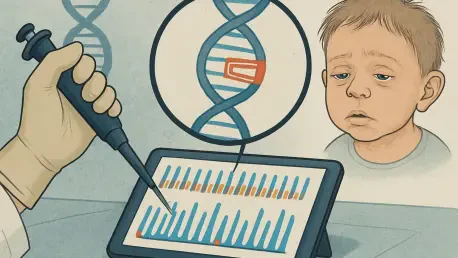
Faced with a diagnostic wall, the clinicians opted to employ whole-genome sequencing (WGS), a technique that allows for the examination of virtually all DNA sequences in an individual. Unlike targeted panels that only look at a pre-defined set of genes, WGS provides a comprehensive overview, often uncovering variants in genes that would never have been suspected based on the patient’s primary symptoms. This shift from a focused beam to a wide-angle perspective was instrumental in breaking the case open. By 2026, the integration of WGS into standard clinical practice has significantly reduced the time patients spend in a state of diagnostic uncertainty. In this specific instance, the technology bypassed the skin-related genes that had dominated the conversation and instead scrutinized the entire landscape for any pathogenic alterations. This unbiased approach is essential when a patient’s phenotype does not clearly align with established genetic categories, ensuring that no lead is ignored.
Discovery of the Pathogenic GANAB Mutation
The analytical breakthrough came with the identification of a pathogenic variant in the GANAB gene, an outcome that was entirely unexpected given the clinical presentation. GANAB is known to be a rare cause of Autosomal Dominant Polycystic Kidney Disease, specifically type 3, and it has no established biological link to skin pigmentation or café-au-lait macules. The specific variant found was a nonsense mutation, a type of genetic error that instructs the cell to stop building a protein prematurely. This results in a non-functional protein product, which in the case of GANAB, disrupts the proper processing of other proteins essential for renal health. While GANAB mutations only account for approximately 0.3 percent of polycystic kidney disease cases, the discovery was transformative. Subsequent medical imaging confirmed a high burden of both liver and kidney cysts, finally providing a concrete biological explanation for the patient’s renal symptoms and the care she required.
Addressing the Diagnostic Conflict
Reconciling Skin Findings with Renal Discovery
While the identification of the GANAB variant solved the mystery of the kidney cysts, it created a new scientific dilemma regarding the patient’s prominent skin markings. There is currently no known molecular mechanism that connects GANAB mutations to the development of café-au-lait macules or axillary freckling. This leaves two primary interpretations: either the patient possesses an exceptionally rare expansion of the GANAB phenotype, or she coincidentally has two separate conditions, one of which remains genetically elusive. Clinicians remain cautious about claiming a definitive link between the gene and the skin findings, noting that such spots are relatively common and could potentially arise from somatic mutations or other factors. To establish a true biological connection, similar cases would need to be identified in other patients across the globe. This ambiguity underscores the ongoing challenge of interpreting genomic data when it clashes with long-standing clinical observations.
Transitioning to Genotype-First Medical Models
The resolution of this case demonstrated the profound shift toward a genotype-first diagnostic model, where DNA data took precedence over misleading physical symptoms. By prioritizing the results of whole-genome sequencing, the medical team successfully transitioned the patient into a structured nephrology monitoring program tailored to her specific needs. This approach not only clarified the risks associated with her renal health but also provided actionable information for her extended family members. Looking forward from 2026, the integration of these advanced tools promised to further erode the barriers between disparate medical specialties. Practitioners recognized that the true power of genomics resided in its ability to look past the obvious and uncover the hidden drivers of human health. As more data points were collected, the relationship between rare variants and unusual clinical presentations became clearer, eventually paving the way for more personalized interventions.