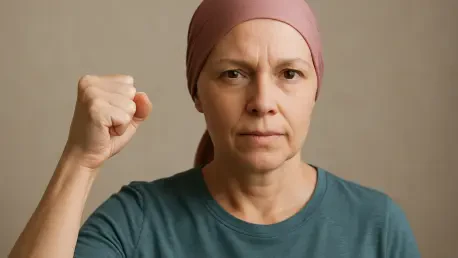

The staggering reality of cancer in Europe continues to cast a long shadow, with over 3.2 million new diagnoses and 1.5 million lives lost each year, underscoring the urgent need for a unified and effective response. Amid this challenge, a powerful new paradigm in oncology has emerged, encapsulated by the theme “United by Unique,” which acknowledges that every patient’s journey with cancer is deeply personal and requires policies that reflect this individuality. The advent of precision and personalized oncology offers unprecedented potential to transform outcomes, but fully unlocking this promise is not merely a scientific endeavor. It demands unwavering political will and significant, long-term investment at both the national and European Union levels to build the infrastructure, foster the research, and create the equitable access necessary to turn cutting-edge innovation into a standard of care for every citizen affected by this devastating disease. The continent has laid out an ambitious roadmap, but the true test lies in its ability to translate these grand plans into tangible, life-saving action.
1. Bridging the Chasm Between Policy and Practice
Over the last five years, Europe’s Beating Cancer Plan (EBCP) has successfully established a robust framework aimed at fostering more equitable, innovative, and people-centered cancer care across the continent. This landmark initiative created a shared vision and a set of priorities designed to address the entire disease pathway, from prevention and early detection to diagnosis, treatment, and quality of life for survivors. However, a recent analysis of six Member States, jointly developed by Cancer Patients Europe and the EFPIA Oncology Platform, reveals a concerning disparity. The report, titled Europe’s Beating Cancer Plan in Action: National Implementation for the Future, confirms that while significant momentum exists at the policy level, persistent gaps between the ambitious goals outlined in the EBCP and their real-world delivery at the national level remain. This implementation gap is not a minor discrepancy; it represents a fundamental breakdown in the chain of care that carries serious, life-altering consequences for patients and their families, threatening to undermine the very foundation of the plan itself.
The failure to effectively translate national cancer control plans from paper to practice has dire and immediate human costs that extend far beyond bureaucratic shortcomings. These implementation gaps manifest as delayed diagnoses that allow cancers to progress to more advanced and less treatable stages, profound inequalities in access to innovative treatments and technologies, and ultimately, poorer patient outcomes and avoidable mortality. The issue is not merely technical; it stems directly from underfunded health systems and weakly monitored National Cancer Control Programmes (NCCPs). Without adequate, ring-fenced financial resources and robust accountability mechanisms, even the most well-designed strategies are rendered ineffective. The clear and urgent message from this analysis is that for Europe to succeed in its mission, it must move beyond aspirational planning and ensure that national strategies are fully funded, rigorously tracked, and consistently executed to benefit every person who needs care.
2. Placing Patients at the Heart of Implementation
A critical insight emerging from the analysis of national cancer strategies is the transformative impact of meaningful patient involvement. The data shows a consistent trend: countries that formally integrate patients into the governance and oversight of their NCCPs consistently achieve the strongest and most sustainable progress. This is because patient insights provide an invaluable, real-world perspective that system-level data alone cannot capture. Patients and their advocates can identify the subtle but significant barriers that exist in screening programs, the logistical hurdles in diagnostic pathways, the unmet needs in survivorship care, and the daily challenges of living with cancer. By bringing these lived experiences to the forefront, policymakers can design more effective, empathetic, and practical solutions that address the actual pain points within the healthcare system, ensuring that policies are not only well-intentioned but also genuinely impactful on the ground.
To truly harness this potential, the role of patients must evolve from passive recipients of care to active partners in its design and delivery. This requires a structural shift where patients are treated as co-designers of national cancer plans, not as an afterthought in a consultation process. Their input is essential in setting investment priorities to ensure funding is directed toward areas with the greatest patient impact. Furthermore, they must be integral to the development of monitoring frameworks and key performance indicators (KPIs), helping to define what successful outcomes truly look like from a patient’s perspective. By embedding the patient voice at every stage of the policy cycle—from initial strategy formation to ongoing evaluation and adjustment—nations can create a more responsive, accountable, and ultimately more effective cancer control ecosystem that is built for and by the people it is meant to serve.
3. The Critical Case for Sustained Strategic Investment
The remarkable advancements in precision oncology are fundamentally changing how cancer is treated, offering tailored therapies that can lead to dramatically improved outcomes for patients. However, the availability of these innovations is not uniform across Europe. Their successful implementation depends entirely on the existence of a sophisticated and well-supported healthcare ecosystem, which includes modern infrastructure for genomic testing, a highly skilled workforce with the capacity to interpret complex data, and a vibrant research environment that fosters continuous discovery. To ensure that these life-saving innovations reach all patients who could benefit, regardless of their location, Europe must commit to sustained and strategic investment across the entire cancer care continuum. This includes bolstering funding for comprehensive screening and early detection programs, expanding access to cutting-edge diagnostics and treatments, and promoting robust research into personalized medicine.
The deep inequities that persist across the continent represent a major obstacle to progress. The report highlights a stark reality: access to essential services like screening, diagnostics, and innovative therapies varies dramatically between Member States. For example, participation in major cancer screening programs can differ by as much as tenfold from one country to another, and no nation has yet achieved the EBCP’s ambitious target of 90% coverage. This disparity is critically important because early detection is the cornerstone of effective cancer treatment. Without widespread and successful screening, many cancers are diagnosed at a later stage, when treatment options are more limited and less effective. Precision treatments, while powerful, can only deliver their full potential when a cancer is identified early. Therefore, closing this investment and access gap is not just a matter of fairness; it is an essential prerequisite for realizing the promise of modern oncology.
4. A Concrete Blueprint for Turning Plans into Reality
To effectively translate the EBCP’s vision into tangible results, national governments must adopt a series of targeted recommendations. The first and most critical step is to guarantee long-term, ring-fenced funding for NCCPs, ensuring that these vital programs are protected from shifting political priorities and budget cuts. Concurrently, national plans must be fully aligned with EBCP priorities, with a specific focus on tackling inequalities, addressing the unique challenges of pediatric cancer, and advancing personalized medicine. To foster accountability, governments should strengthen transparency by implementing updated KPIs and committing to regular public reporting on progress. Furthermore, it is imperative to align all national screening programs with the latest EU guidelines to ensure high standards of quality and care. Advancing precision oncology requires dedicated national strategies, the establishment of sustainable genomic testing pathways, and the development of equity frameworks to guarantee fair access. Finally, strengthening Comprehensive Cancer Centres is essential to deliver high-quality, equitable care and serve as hubs of excellence and innovation.
While national action is paramount, further leadership at the EU level is essential to harmonize efforts and drive progress across the continent. The EU should take the lead in setting a series of EU-wide minimum standards for NCCP governance, financing, KPIs, and data interoperability to ensure a consistent level of quality and accountability in every Member State. To support this, establishing a permanent NCCP Support Facility and offering capacity-building grants would provide nations with the technical assistance and resources needed to meet these standards. Looking ahead, securing dedicated, ring-fenced cancer funding in the next Multiannual Financial Framework is crucial to signal a long-term commitment. Lastly, the EU can accelerate the dissemination of innovation and knowledge by promoting best-practice sharing through EU-wide twinning initiatives and fast-track programs designed to help all Member States learn from the successes of others and collectively raise the standard of cancer care.
A Lasting Commitment Forged in Action
Europe stood at a pivotal moment where the political momentum generated by the Beating Cancer Plan had to be decisively matched with long-term, sustainable funding and robust, patient-centered implementation. The ambitious vision for a future with fewer cancer cases and better outcomes for all required more than just policy documents; it demanded a steadfast commitment to action. To ensure that every person, regardless of their origin, received timely, high-quality, and personalized cancer care, European leaders and national governments committed the necessary resources, established strong accountability mechanisms, and delivered on the promises made. This united effort ensured that the plan’s potential was fully realized, creating a tangible and lasting legacy of improved health and hope for millions of citizens across the continent.