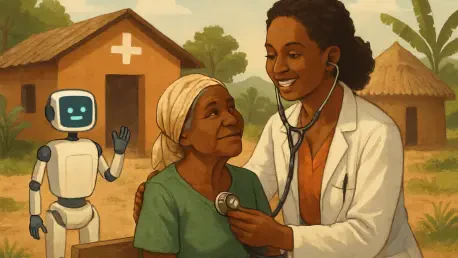

In the sprawling rural landscapes of Ghana, where access to quality medical care is often a matter of distance and wealth, a staggering 44% of the population faces significant barriers to receiving timely health services. For many, a simple check-up can mean a day-long journey and prohibitive costs, turning preventable conditions into life-threatening emergencies. This stark reality has long been one of the nation’s most pressing challenges, a systemic issue rooted in infrastructure gaps and a shortage of medical personnel in remote areas. Now, a pioneering initiative is emerging from this very challenge, leveraging the power of artificial intelligence to bridge the divide between patients and providers. A multidisciplinary team of Ghanaian scientists has launched Mary Health, a venture born from personal tragedy and technological ingenuity, aiming to redefine healthcare delivery for the country’s most vulnerable communities by placing a virtual doctor in the palm of their hands. This ambitious project seeks not just to introduce new tools, but to dismantle the foundational obstacles that have perpetuated a cycle of inadequate care for generations.
A Personal Mission Fueled by Technology
The Genesis of an Innovation
The driving force behind Mary Health is a deeply personal story of loss that powerfully illustrates the human cost of healthcare inequality. The initiative’s founder, U.S.-based computer scientist Felix Davis, was set on a path to medicine until his guardian, Mary Dagadu, succumbed to late-stage breast cancer. Her diagnosis came too late, a tragic outcome that Davis believes could have been averted with the availability of continuous and accessible health monitoring. The inability to track her symptoms and receive early intervention highlighted a critical failure in the healthcare system—a failure of access. This devastating experience became a pivotal moment, compelling Davis to redirect his career from treating patients one-on-one to building systems that could help millions. He pivoted from medical school to computer science at Dartmouth College, channeling his grief and resolve into developing a technological framework that could prevent others from suffering the same fate. The company’s name itself, Mary Health, stands as a permanent tribute to the woman whose life and death inspired its creation.
This transition from medicine to technology was not merely a change in profession but a strategic shift in how to approach the problem of healthcare delivery. At Dartmouth, Davis began to assemble the foundational elements of what would become Mary Health, focusing on how AI could overcome the physical and financial barriers that defined rural healthcare in Ghana. The core idea was to build a system that was intelligent, intuitive, and, most importantly, radically accessible. This meant designing solutions that could function in areas with limited infrastructure and for a diverse user base with varying levels of digital literacy. The early development phase involved extensive research into machine learning models for symptom assessment, secure cloud architecture for patient data, and user interface design that prioritized simplicity and clarity. It was a formidable challenge that required not only technical expertise but also a profound understanding of the specific socio-cultural context of Ghana, ensuring the technology would be a trusted and effective tool for the communities it was designed to serve.
Assembling a Visionary Team
Realizing that technology alone could not solve such a complex, human-centered problem, Felix Davis brought together a multidisciplinary team of Ghanaian scientists and experts. This strategic collaboration is a cornerstone of Mary Health’s approach, grounding its technological ambitions in local knowledge and practical experience. The team comprises professionals from diverse fields, including medicine, public health, software engineering, and community engagement. This fusion of expertise ensures that every aspect of the platform is clinically sound, technologically robust, and culturally appropriate. By involving Ghanaian doctors and public health officials from the outset, the initiative guarantees that its solutions are tailored to the nation’s specific health challenges, from common infectious diseases to the rising incidence of non-communicable conditions like hypertension and diabetes. This homegrown approach fosters a sense of ownership and trust within the local healthcare community, which is essential for widespread adoption and long-term success, moving beyond the common pitfall of imposing foreign-built solutions on a local context.
The unifying mission of this diverse team is to systematically dismantle the systemic barriers that have long plagued Ghana’s healthcare landscape. Their collective goal extends far beyond simply deploying innovative apps; it is about re-engineering the entire patient journey to be more efficient, equitable, and humane. The team addresses the obstacle of distance with robust telehealth services, tackles prohibitive costs with low-cost digital-first solutions, and mitigates the shortage of specialists by connecting them virtually to remote patients. Furthermore, they are working to close the health education gap by providing accessible and reliable medical information directly to individuals, empowering them to take a more active role in their own well-being. By focusing on these deep-seated issues, Mary Health aims to create a more resilient and responsive health ecosystem where a person’s geographic location no longer determines their quality of care. The ultimate vision is a future where intelligent technology serves as a powerful equalizer, saving lives by making quality healthcare a fundamental right for all Ghanaians, not a privilege for a few.
A Three-Pronged Approach to Healthcare
Empowering Patients with Immediate Access
At the forefront of Mary Health’s product suite is “Ask Mary,” an AI-powered virtual health assistant designed to be the first point of contact for individuals seeking medical guidance. This intelligent tool functions as a sophisticated triage system, offering immediate symptom assessments and providing clear, reliable health information. Users can interact with the assistant via a simple, conversational interface, describing their symptoms in natural language. The underlying AI model then analyzes this input against a vast medical knowledge base to identify potential conditions and recommend appropriate next steps, whether it is self-care for a minor issue, a virtual consultation for a more pressing concern, or an urgent visit to a nearby clinic. By providing this initial layer of support, “Ask Mary” plays a crucial role in reducing the burden on overcrowded hospitals and clinics. It helps prevent unnecessary visits for non-emergencies while ensuring that those with serious symptoms are directed to the proper level of care without delay, effectively streamlining the entry point into the healthcare system for countless users.
Building on the initial triage provided by “Ask Mary,” the “Doc Mary” platform extends the continuum of care into the virtual realm. This comprehensive telehealth service enables patients to connect with licensed medical professionals for remote consultations, eliminating the need for long and often costly travel. Through secure video or text-based sessions, doctors can diagnose conditions, issue electronic prescriptions, and develop ongoing care management plans for patients with chronic illnesses. This capability is particularly transformative for rural populations, who often lack access to specialists. “Doc Mary” brings cardiologists, endocrinologists, and other experts directly to patients in underserved communities, facilitating a level of specialized care that was previously unattainable. By creating a persistent and accessible channel for patient-provider communication, the platform supports continuous health monitoring and follow-up, which is essential for managing long-term conditions and improving overall clinical outcomes across Ghana’s remote regions.
Revolutionizing the Clinical Experience
The third pillar of Mary Health’s ecosystem is the Patient Access Terminal (P.A.T.), a low-cost, modular “micro-clinic” kiosk designed to optimize operations within physical healthcare facilities. These terminals address the administrative bottlenecks that often lead to long wait times and patient frustration. Upon arriving at a clinic, a patient can use the P.A.T. to check in for an appointment, schedule future visits, update their personal information, and access their medical records in a secure and efficient manner. This self-service model drastically reduces the administrative workload on front-desk staff and nurses, freeing them to focus on more critical, patient-facing tasks. The modular design of the P.A.T. allows for easy deployment and scalability, making it a viable solution for both small rural clinics and larger urban hospitals. By streamlining these essential but time-consuming processes, the kiosks significantly improve the overall patient experience and enhance the operational efficiency of healthcare providers.
The true power of Mary Health’s initiative lies in the seamless integration of its three core products. Together, “Ask Mary,” “Doc Mary,” and the Patient Access Terminal create a connected and cohesive health ecosystem that guides the patient through every stage of their healthcare journey. For instance, a user in a remote village might first engage with “Ask Mary” on their phone to assess a persistent cough. The AI assistant could then recommend a virtual consultation, which the user schedules and conducts through the “Doc Mary” platform. If the doctor determines an in-person visit is necessary for a lab test, the patient’s appointment and records are already logged in the system, allowing for a swift check-in at the local clinic using a P.A.T. This interconnected workflow ensures continuity of care, reduces redundant data entry, and provides healthcare professionals with a complete and up-to-date view of the patient’s history. This holistic approach is what truly sets Mary Health apart, as it addresses not just individual pain points but the entire system of healthcare delivery.
A New Paradigm for Public Health
The launch of Mary Health’s integrated platform ultimately marked a pivotal moment in Ghana’s public health narrative. By deploying its intelligent, AI-driven solutions, the initiative successfully dismantled long-standing barriers and demonstrated a scalable model for accessible healthcare. The combination of an AI-powered triage assistant, a comprehensive telehealth service, and streamlined clinic administration created a powerful ecosystem that empowered both patients and providers. This new paradigm saved countless lives in the nation’s most vulnerable communities by enabling early diagnoses, consistent management of chronic diseases, and efficient use of limited medical resources. The venture stood as a testament to how locally developed, context-aware technology could forge a more equitable and resilient healthcare system for the future.