
I’m thrilled to introduce Ivan Kairatov, a renowned biopharma expert with a wealth of experience in research and development, particularly at the intersection of technology and innovation in healthcare. With a deep understanding of how cutting-edge tools like artificial intelligence are reshaping disease management, Ivan is the perfect guide to help us explore the groundbreaking AI innovations for tuberculosis (TB) diagnostics unveiled at the recent Union World Conference on Lung Health in Copenhagen. Today, we’ll dive into the potential of breath analysis, cough-based screening, vulnerability mapping, child-specific detection tools, and the critical need for rigorous validation to ensure these technologies truly make a difference in the global fight against TB, a disease that claimed 1.25 million lives in 2024 alone.
Can you walk us through the concept of “breathomics” and how the AI-powered AveloMask system is being used to monitor TB treatment progress, especially with insights from the South African study?
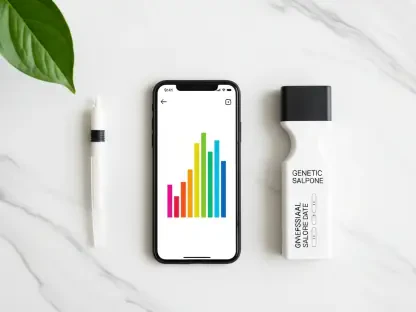
Absolutely, breathomics is a fascinating frontier in medical diagnostics. It involves analyzing the chemical compounds in a person’s exhaled breath to detect specific biomarkers associated with diseases like TB. The AveloMask, developed by researchers from China, captures these breath samples and uses machine learning to identify subtle changes that indicate how a patient is responding to treatment. In the South African study with around 60 participants, they were able to track recovery non-invasively, which is a game-changer compared to traditional methods like sputum culture or X-rays that can be cumbersome and resource-intensive. I recall hearing about a patient in the study—a middle-aged man who had struggled with treatment adherence—who found the breath test so much easier; it gave him a sense of control over his progress. The potential here is not just in monitoring but in shortening treatment safely, reducing costs, and improving outcomes for TB programs globally. It’s like having a window into the body without ever drawing blood or asking for a sample—it’s that intimate and immediate.
How does a smartphone-based tool like Swaasa use AI to distinguish TB coughs from other respiratory conditions, and what was the experience like during the research with over 350 participants?
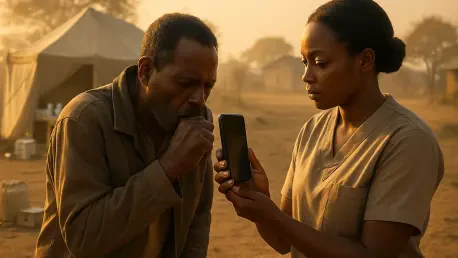
Swaasa is a brilliant example of leveraging everyday technology for public health. This AI platform, developed in India, records cough sounds via a smartphone and analyzes them to differentiate TB from other respiratory issues by picking up on unique acoustic patterns—think of it as a digital ear trained to hear the nuances of a cough. With over 350 participants involved in the study, the tool achieved an impressive 94% accuracy in identifying underlying conditions, which is remarkable for something so accessible. I can imagine the researchers, sitting in community clinics, coaxing participants to cough into a phone—there’s something almost surreal about that simplicity amid such high stakes. One memorable moment shared at the conference was when a participant, initially skeptical, was floored to learn the AI matched a traditional diagnosis; it built instant trust. The process wasn’t just about recording—it was about creating a low-cost bridge to diagnostics in places where X-rays or lab tests are a distant dream, making screening faster and more inclusive.
Could you explain how the AI-driven vulnerability mapping system from India prioritizes communities for TB case detection, and were there any unexpected hurdles during the national testing phase?
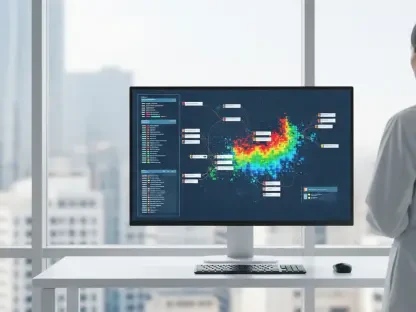
The vulnerability mapping system by Wadhwani AI in India is a strategic marvel. It integrates over 20 datasets—demographic, geographic, economic, and anonymized TB case data from the national surveillance system—to identify villages most likely to have undiagnosed TB, achieving a 71% accuracy in pinpointing the top 20% of at-risk areas. Essentially, the AI sifts through this ocean of data to highlight patterns, like poverty or poor healthcare access, that correlate with higher TB prevalence, allowing health officials to focus resources where they’re needed most. During the national testing phase, one challenge that stood out was the variability in data quality across regions—some rural datasets were incomplete, which initially skewed predictions. I can just picture the team hunched over laptops, wrestling with missing data points, feeling the urgency of getting this right for millions. Yet, they adapted by refining the algorithm to account for gaps, and the surprise was how even partial data still yielded actionable insights, proving the system’s resilience and potential to revolutionize active case-finding.
What makes Qure.ai’s qXR tool unique for detecting TB in children from birth to 15 years, and can you share how it’s impacting early detection in real-world settings?
Qure.ai’s qXR tool is a pioneering step forward, being the first AI-enabled chest X-ray system to gain European regulatory clearance for children as young as newborns up to 15 years old. What sets it apart is its ability to interpret pediatric X-rays with precision, detecting TB in kids who are often the hardest to diagnose due to atypical symptoms and their inability to produce sputum for testing. The AI analyzes subtle patterns in chest images that might escape the human eye, especially in the tiniest patients whose anatomy is so different from adults. In real-world settings, it’s already showing promise—healthcare providers in resource-limited areas are using it to prioritize care and catch cases early, which is critical since delayed diagnosis in children can be devastating. I’ve heard of clinics where staff felt a mix of awe and relief seeing the tool flag a case in a toddler that might’ve been missed; it’s like having a second set of expert eyes. This scalability means more lives saved, especially for the most vulnerable, and it’s heartening to see technology bridge such a long-standing gap.
With concerns raised about the reliability of AI tools for TB detection, how can we ensure their accuracy and effectiveness, and what specific steps or training do you think are crucial for healthcare workers using these systems?
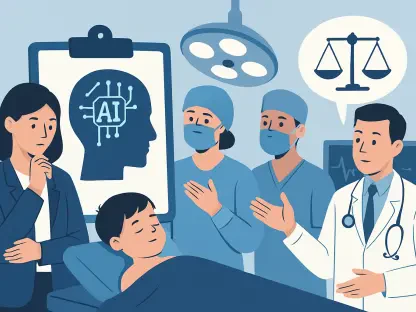
Ensuring the reliability of AI tools for TB detection is paramount, especially given the stakes with a disease as deadly as TB. First, rigorous validation is non-negotiable—these systems must be tested across diverse populations with robust, well-supported datasets to confirm accuracy, specificity, and efficacy, avoiding the risks of flawed outputs. Beyond that, continuous monitoring and updates are essential as new data emerges, much like how we refine vaccines over time. For healthcare workers, training must go beyond just operating the technology; it should focus on interpreting AI results critically, understanding limitations, and integrating outputs with clinical judgment. I remember a workshop where clinicians were initially overwhelmed by AI dashboards, feeling almost intimidated by the flood of data, but after hands-on sessions, they described a newfound confidence in using the tool as a partner, not a dictator. We also need to embed ethical guidelines to prevent over-reliance—AI is a guide, not a replacement for human insight. Building this trust and competence takes time, but it’s the bedrock of making these innovations truly transformative in the field.
Looking ahead, what is your forecast for the role of AI in the global fight against TB over the next decade?
I’m incredibly optimistic about AI’s trajectory in combating TB, though the road ahead will require persistence and collaboration. Over the next decade, I foresee AI becoming a cornerstone of TB elimination strategies, especially as tools like breathomics, cough analysis, and imaging systems become more refined and affordable, reaching even the most remote communities. We could see diagnostics slashed from days to minutes, and with integration into national health systems, case detection rates might soar, potentially cutting down the 1.25 million annual deaths significantly. However, the challenge will be equity—ensuring low-resource settings aren’t left behind due to infrastructure or cost barriers. I envision a future where a rural health worker, equipped with just a smartphone app, can screen an entire village in a day, feeling that surge of hope with every early detection. My forecast hinges on global commitment to validation, training, and access—if we get that right, AI could be the tipping point in ending TB as a public health threat.