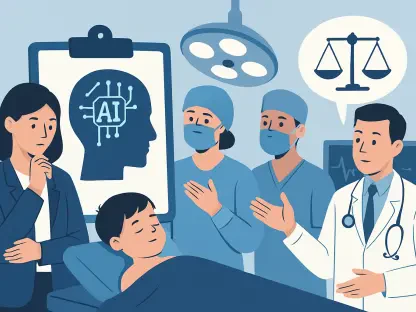

Picture a high-stakes medical decision resting on the shoulders of a systematic review, the gold standard of evidence-based research, where every detail could impact patient lives. In this critical arena, artificial intelligence (AI), particularly large language models (LLMs), has emerged as a potential game-changer, promising speed and efficiency. Yet, a lingering question casts a shadow over this technological marvel: can AI truly stand in for human expertise in crafting trustworthy medical systematic reviews? This article dives into this pressing debate, exploring whether AI is ready to take the reins or if it remains a supportive tool at best. Readers will uncover key insights into AI’s capabilities, limitations, and the irreplaceable value of human judgment in this nuanced field.
Introduction
The intersection of AI and medical research is buzzing with potential, as systematic reviews form the backbone of clinical guidelines and treatment decisions. These reviews demand meticulous attention to detail—scouring literature, selecting relevant studies, extracting data, and drafting rigorous analyses. With AI tools like LLMs showcasing remarkable language processing skills, there’s growing curiosity about their role in streamlining this labor-intensive process. However, the stakes in medicine are sky-high; errors or oversights can have dire consequences. The purpose of this discussion is to address common questions surrounding AI’s viability in replacing humans for such tasks. Expect a deep dive into specific challenges, strengths, and the balance needed between technology and expertise.
This exploration isn’t just about technology’s flashy promises. It aims to peel back the layers of what AI can and cannot achieve in the context of systematic reviews. By tackling key concerns, the content will shed light on how far AI has come, where it stumbles, and what this means for researchers, clinicians, and patients relying on credible evidence. Stick around to navigate through the nuances of this evolving landscape and understand the bigger picture of AI’s place in medical research.
Key Questions and Topics
Can AI Perform Literature Search and Selection as Effectively as Humans?
In the realm of systematic reviews, identifying the right studies is a foundational step, often requiring a keen eye for relevance and context. AI models, with their ability to process vast amounts of text quickly, seem poised to excel here. Yet, the reality is more complex. While these tools can rapidly scan databases and pull out potential articles, their access to comprehensive scientific repositories is often limited, and their training data may not fully capture the depth of original research. This creates gaps in their ability to pinpoint the most pertinent studies with the precision a seasoned researcher brings.
Delving deeper, one standout AI model achieved a commendable match by identifying a significant portion of articles from a human-authored review. Speed is undeniably a strength—AI can sift through thousands of papers in a fraction of the time it takes a human. However, this advantage comes with a catch: the output often requires cross-verification by experts to ensure no critical studies are missed or irrelevant ones included. The implication is clear—AI shines as a preliminary screening tool, but human oversight remains essential to uphold the integrity of the selection process.
How Does AI Fare in Data Extraction and Analysis for Systematic Reviews?
Moving to the heart of a systematic review, data extraction and analysis demand not just accuracy but also an understanding of subtle scientific nuances. AI has shown promise in this area, with some models achieving high accuracy rates in pulling data from studies. For instance, a leading model correctly extracted information from numerous articles, demonstrating a knack for handling structured tasks. Yet, the process isn’t seamless. Complex prompting and repeated interventions often slow down the workflow, making it less efficient than it appears on the surface.
Moreover, while AI can crunch numbers and compile data, it struggles with interpreting context or spotting inconsistencies that a trained researcher would catch instantly. Only a handful of tested models performed adequately in this domain, and even then, their results needed validation. This suggests that while AI can lighten the load by automating initial data handling, the critical task of analysis still leans heavily on human expertise to ensure reliability and depth. The balance tilts toward collaboration rather than replacement.
Is AI Capable of Drafting a Final Systematic Review Manuscript?
Perhaps the most telling test of AI’s potential lies in its ability to craft a final manuscript—a task that blends scientific rigor with clear, authoritative communication. On this front, AI falls noticeably short. Despite producing well-structured drafts with polished scientific language, the content often lacks the depth and insight of a human-written review. The resulting documents may appear credible at a glance but fail to meet the stringent standards expected in academic publishing, risking misinterpretation by readers unfamiliar with the field.
In contrast, human researchers bring a level of critical thinking and contextual understanding that AI cannot replicate. Tested models consistently produced manuscripts that were brief and uninspiring, missing the nuanced synthesis required for a trustworthy review. This gap highlights a crucial point: while AI might assist with formatting or generating initial drafts, the final product demands a human touch to ensure it stands as a reliable pillar of evidence-based medicine. The evidence points to AI as a helper, not a standalone author.
Summary or Recap
The exploration of AI’s role in medical systematic reviews reveals a landscape of both promise and limitation. Key insights show that while AI excels in speed and preliminary tasks like literature screening and data extraction, it stumbles in areas requiring deep critical thinking, such as nuanced analysis and manuscript drafting. The strongest models demonstrate potential as time-saving tools, yet their outputs consistently require human validation to meet the high standards of medical research. This balance underscores the necessity of collaboration over competition between AI and human expertise.
A major takeaway is that AI’s current capabilities position it as an assistant rather than a replacement in this high-stakes field. Its limitations in accessing comprehensive databases and crafting authoritative content highlight gaps that only human judgment can fill. For those eager to delve deeper, exploring recent studies or discussions on AI integration in academia can offer valuable perspectives on how this dynamic continues to evolve. The narrative remains one of cautious optimism—leveraging technology while safeguarding the rigor of evidence-based work.
Conclusion or Final Thoughts
Reflecting on the journey through AI’s potential in medical systematic reviews, it became evident that technology had not yet reached the point of autonomy in this critical domain. The discussions illuminated AI’s strengths in efficiency but also exposed its shortcomings in depth and reliability without human guidance. Each step of the systematic review process, from literature selection to final drafting, reinforced the idea that collaboration had been the most effective path forward during this period of technological growth.
Looking ahead, the focus should shift toward refining AI tools with better access to scientific databases and advanced prompting strategies to close existing gaps. Researchers and institutions might consider investing in training programs that teach effective integration of AI as a supportive ally in research workflows. This approach could maximize efficiency without compromising quality. As the landscape evolves, staying attuned to these developments will be vital for anyone involved in medical research, ensuring that technology serves as a bridge rather than a barrier to credible, impactful outcomes.