
As a Biopharma and technology innovation expert, I’ve had the privilege of witnessing how artificial intelligence is beginning to revolutionize fields that were once considered the exclusive domain of human intuition. One of the most profoundly moving applications is in pediatric medicine, specifically for children with severe hearing loss. A groundbreaking international study has recently shown that AI can predict, with stunning accuracy, how well a child will develop spoken language after receiving a cochlear implant. This is more than a technological feat; it’s a new dawn of personalized care that offers tailored support to these children from the very beginning. We’ll be exploring how this deep learning model processes complex brain scans to make its forecasts, the challenges of deploying such technology across different countries and languages, and what this “predict-to-prescribe” approach, as Dr. Nancy M. Young calls it, truly means for families. We’ll also discuss the practical journey of bringing this tool from the research lab into clinics worldwide and look ahead at the future AI promises for this field.
Your study achieved 92% accuracy in predicting language outcomes using deep transfer learning on MRI scans. Could you explain the key steps in how the model processes these scans and what specific neurological features it prioritizes to make such a precise forecast for a child’s future speech?
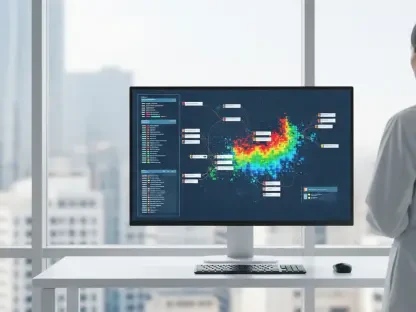
It’s a remarkable achievement, and that 92% accuracy figure really speaks to the power of this technology. The process begins with a child’s pre-implantation brain MRI. Instead of a human looking for specific, known biomarkers, our deep transfer learning model ingests the entire scan and essentially teaches itself what matters. It analyzes thousands of subtle patterns in the brain’s structure, connectivity, and organization that are far too complex for the naked eye to discern. The model isn’t just looking at the auditory cortex; it’s examining the holistic neural architecture that underpins language development. Over time, by correlating these intricate patterns from 278 different children with their eventual language success, the AI builds a powerful predictive framework. It’s not about one single feature, but rather the symphony of neural characteristics that poise a child for strong spoken language development.
The research successfully used a complex dataset involving three different languages and varied scanning protocols. How did the AI model overcome this heterogeneity, and what was the most significant challenge in training it to produce reliable predictions across such diverse international centers?
This is precisely where this model shines and why it represents such a significant leap forward. Traditionally, a machine learning model trained on data from one hospital in the U.S. using a specific MRI scanner would fail miserably if you gave it a scan from Hong Kong, where they might use a different protocol and the child speaks Cantonese. Our use of deep transfer learning was the key to overcoming this. This advanced AI is designed to find the deep, underlying neurobiological signals for language potential that are universal, regardless of whether a child will learn English, Spanish, or Cantonese. The greatest challenge was proving that the model wasn’t just memorizing quirks in the data from one location. By successfully training it on this complex, heterogeneous dataset, we demonstrated its robustness and its potential as a single, universal prognostic tool for cochlear implant programs worldwide.
Dr. Young describes a “predict-to-prescribe” approach. For a child the AI flags as needing more support, can you detail what an intensified therapy plan looks like and how it differs from the standard care that children currently receive after their cochlear implant surgery?
The “predict-to-prescribe” concept is the heart of this work’s clinical value. Right now, every child receives a high standard of care after implantation, but it’s largely a one-size-fits-all approach until a child demonstrably starts to fall behind. This AI tool allows us to be proactive instead of reactive. For a child flagged as having a higher potential for difficulty, an intensified plan could be implemented from day one. This might mean doubling the frequency of speech therapy sessions, introducing specialized auditory training exercises earlier, or providing parents with more intensive coaching and resources to create a richer language environment at home. It’s about strategically allocating resources where they’re needed most, giving that child a crucial head start and fundamentally changing their developmental trajectory for the better.
Given the model’s proven success, what are the next practical steps for integrating this AI tool into clinical workflows at cochlear implant centers globally? Please outline the journey from its current research phase to becoming a standard diagnostic tool for audiologists and surgeons.
The journey from a successful research publication to a standard clinical tool is a deliberate one. The first step is further validation in larger, prospective clinical trials to confirm its efficacy in real-time. Concurrently, we need to develop a seamless, user-friendly software package that can be integrated directly into the imaging and electronic health record systems hospitals already use. A surgeon or audiologist should be able to upload a pre-implant MRI and receive a clear, interpretable risk assessment within minutes. This also involves extensive training for clinical teams to ensure they understand the tool’s output and how to translate it into actionable therapy plans. Finally, we’ll navigate the regulatory approval pathways to certify it as a reliable diagnostic aid, paving the way for its adoption in leading centers like Lurie Children’s and beyond.
What is your forecast for the integration of AI in pediatric hearing loss treatment over the next decade? Beyond this prognostic tool, what other major challenges in the field do you envision this technology helping to solve for children and their families?
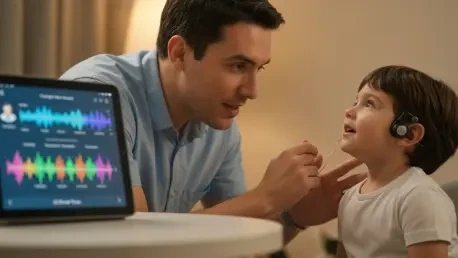
I believe we are at the very beginning of an AI-driven transformation in this field. Over the next decade, I forecast that AI will move beyond just prediction and into continuous optimization. Imagine AI tools that help audiologists fine-tune a cochlear implant’s settings with a precision that’s perfectly tailored to a child’s unique neural pathways. I also envision AI-powered apps and games for home-based therapy that adapt in real-time to a child’s performance, making rehabilitation more engaging and effective. We could even see AI analyzing a child’s vocalizations to provide objective, continuous tracking of their language development, giving families and therapists immediate feedback. Ultimately, AI will help us solve the central challenge: making the journey from silence to spoken language a truly personalized, supportive, and successful one for every single child.