
As a biopharma expert deeply involved in technological innovation, Ivan Kairatov has been at the forefront of applying advanced science to solve critical industry challenges. Today, he joins us to discuss a groundbreaking development in food safety: an artificial intelligence system that dramatically accelerates the detection of bacterial contamination. Our conversation will explore the immense operational hurdles of traditional testing, the clever way researchers taught an AI to distinguish between harmful bacteria and harmless food particles, and the path to implementing this technology in real-world processing facilities. We’ll also delve into its potential to transform public health and prevent widespread foodborne illness.
Traditional food testing can take several days to yield results. What specific operational challenges does this create for food producers, and how does reducing detection time to just three hours fundamentally change their ability to manage contamination risks?
The multi-day wait associated with traditional culture-based methods is a massive logistical and financial bottleneck for any food producer. Imagine you have a shipment of fresh chicken or leafy greens ready to go. You can’t send it out until the test results come back. This means entire lots of products are held in cold storage, tying up capital, occupying valuable space, and shortening the product’s viable shelf life before it even reaches the consumer. If a contamination is discovered five days later, the product may already be in transit or even on store shelves, triggering a costly and reputation-damaging recall. Shifting this entire process to a three-hour window is a complete game-changer. It transforms testing from a retrospective check into a near-real-time quality control measure, allowing producers to isolate and handle a problem before a product ever leaves the facility.
An AI model trained only on bacteria can misclassify over 24% of food debris. Could you elaborate on why microscopic food particles are so difficult to distinguish from bacterial colonies, and what was the key to training your enhanced model to eliminate these false positives?
It’s a fascinating problem of visual interpretation. At the microscopic level, under specific imaging conditions, a small clump of cheese protein or a fragment of a spinach cell can look remarkably similar to an early-stage bacterial microcolony. They can be similar in size, shape, and even how they reflect light. An AI trained exclusively on clean, uniform images of bacteria grown in a lab simply lacks the experience to know the difference. It sees a small, blob-like object and, based on its limited training, concludes it must be bacteria. This led to that frustratingly high false positive rate of over 24%, which is unusable in a real-world setting. The breakthrough wasn’t about making the AI smarter in the abstract; it was about giving it a better education. By training the enhanced model on a diverse dataset that included thousands of images of food debris from chicken, spinach, and cheese alongside the bacterial images, we taught it to recognize what isn’t a threat. The model learned the subtle textural and morphological differences, effectively eliminating those misclassifications entirely.
Your research highlighted E. coli, listeria, and Bacillus subtilis in foods like chicken, spinach, and cheese. What made these particular bacteria and food types ideal test cases, and what are the main hurdles to expanding this model’s accuracy to a wider range of pathogens and products?
This combination of bacteria and foods was chosen very deliberately to represent a cross-section of the challenges in the industry. E. coli and listeria are notorious foodborne pathogens with significant public health implications, often linked to produce and processed meats. Bacillus subtilis, while less dangerous, is a common bacterium that can be a good indicator for general contamination. Similarly, chicken, spinach, and Cotija cheese provide incredibly diverse microscopic environments. You have the fibrous, cellular structure of a leafy green, the complex protein and fat matrix of meat, and the dense, cultured composition of cheese. Proving the model could work accurately across these varied backgrounds was a critical first step. The main hurdle to expansion is data. To teach the AI to accurately identify a new pathogen, like Salmonella, or perform well with a new food, like strawberries, we need to build a comprehensive image library for each. This involves meticulously preparing thousands of samples and images, which is a time-consuming but essential process to ensure the model’s reliability and robustness across the entire food system.
Moving a tool from a research lab to a food processing facility involves unique challenges. As you optimize this AI system for industry adoption, what are the primary technical and operational adjustments required to make it a practical, everyday tool for quality control teams?
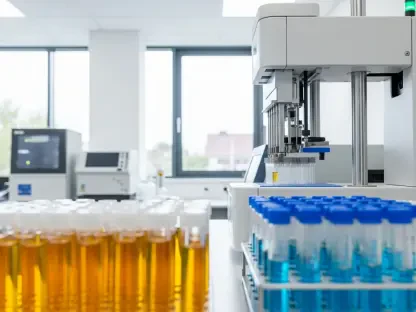
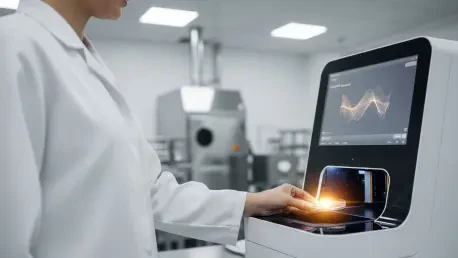
This is the critical transition from a promising proof-of-concept to a robust industrial tool. In the lab, we have controlled conditions. In a food processing facility, you have temperature fluctuations, variable lighting, and staff who need a system that is simple, fast, and foolproof. The primary technical adjustment is to package the entire system—the imaging hardware and the AI software—into a user-friendly, durable device that can withstand the rigors of a production environment. It can’t require a Ph.D. to operate. Operationally, the system must seamlessly integrate into the existing quality control workflow. This means creating a simple interface where a technician can prepare a sample, place it in the machine, and get a clear, unambiguous “contaminated” or “clear” result in under three hours without needing to interpret complex data. We are focused on making it a plug-and-play solution.
The FDA estimates 48 million cases of foodborne illness annually. Beyond preventing recalls, how can this type of rapid, accurate testing directly impact public health on a large scale?
The public health implications are profound and go far beyond just stopping a bad batch of food. With a three-hour detection window, you can move from reactive recalls to proactive prevention. Imagine a spinach processing plant gets a positive hit for E. coli. Instead of finding out days later when the product is already distributed across several states, they know immediately. They can pinpoint the source of the contamination—was it a specific lot of raw spinach from one farm? A piece of equipment on the processing line? This speed allows for immediate corrective action, preventing a small contamination event from becoming a multi-state outbreak that sickens hundreds. It allows public health officials and companies to get ahead of the curve, effectively stopping an outbreak before it even begins and preventing many of those 48 million illnesses from ever occurring.
What is your forecast for the role of AI and deep learning in transforming food safety and quality control over the next decade?
I believe we are on the cusp of a complete paradigm shift. Over the next decade, AI and deep learning will become the central nervous system of food safety. We’ll move beyond simple pathogen detection to predictive analytics. AI models will constantly monitor data from sensors throughout the supply chain—from soil conditions on the farm to temperature logs in transport trucks—to predict contamination risks before they even happen. We will see integrated systems that not only detect bacteria in three hours but also automatically identify the specific strain and suggest the most likely source of the contamination in real-time. This technology will become more accessible, moving from large corporations to smaller producers, creating a much safer and more transparent food system for everyone. It will transition food safety from a series of checkpoints into a continuous, intelligent, and predictive process.