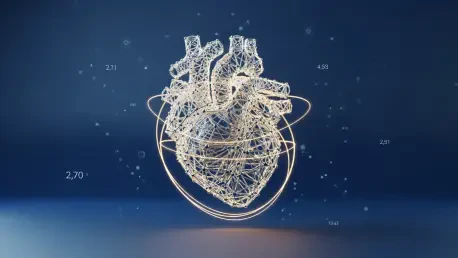

The biological stories told by our internal organs are often more complex than the simple physical blockages visible on a standard medical scan. For years, the gold standard for predicting a heart attack centered on the presence of calcified plaque within the coronary arteries, leaving other critical physiological markers largely unexplored. However, researchers have discovered that a silent, metabolically active layer of fat surrounding the heart—pericardial adipose tissue—may hold the key to identifying vulnerability in patients who currently pass traditional screenings with flying colors. By utilizing artificial intelligence to peel back the layers of standard imaging, medical professionals are uncovering a hidden metric that could fundamentally change the timeline of preventive cardiology.
Beyond the Visible Plaque: The Hidden Metric in Your Heart Scan
Modern medicine has long focused on what is easily quantifiable, such as the hardened blockages that narrow our arteries, yet a significant piece of the diagnostic puzzle has been hiding in plain sight. For decades, radiologists have performed coronary artery calcium scans to gauge heart health, but the layer of fat directly surrounding the heart was often ignored because it was too tedious to measure by hand. It was treated as “background noise” in the imaging process, a byproduct of the scan that lacked a standardized way to be evaluated without hours of manual labor.
Now, artificial intelligence is turning this ignored data into a powerful predictive tool that could redefine how we identify those at risk for a heart attack years before it happens. By automating the analysis of this tissue, clinicians can see beyond the structural damage of plaque and into the inflammatory environment that often precedes it. This shift represents a move toward a more holistic view of the heart, where the surrounding “soil” is considered just as important as the “roots” of the arteries themselves.
The Evolution of Preventive Cardiology and the Role of Pericardial Fat
The quest to prevent cardiovascular disease, which remains the leading cause of death globally, is shifting from general population statistics to precise, individual biology. While traditional tools like blood pressure monitoring and cholesterol checks remain essential pillars of care, they often miss the nuanced local environment where heart disease actually begins. Pericardial fat is not merely stored energy; it is a highly active metabolic tissue that can release inflammatory markers directly into the coronary arteries, accelerating the decay of vascular health from the outside in.
By integrating AI-driven analysis into routine imaging, clinicians are finally able to quantify this adipose tissue with the same rigor applied to cholesterol or blood sugar. This capability bridges the gap between standard risk factors and the specific physiological conditions that lead to sudden cardiac events. Instead of relying on a generalized risk profile, doctors can now assess the specific inflammatory pressure being exerted on a patient’s heart, allowing for a much more targeted approach to prevention and lifestyle intervention.
Transforming Imaging Data into Predictive Power
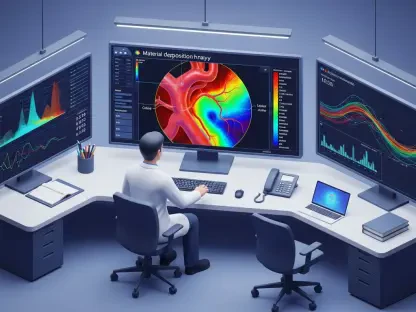
The manual measurement of heart fat has historically been too labor-intensive for busy clinical settings, leading to inconsistent results that were rarely useful for daily practice. AI changes this dynamic by utilizing deep learning algorithms to automatically isolate and measure pericardial fat volume from standard CT scans with high speed and surgical accuracy. This automation allows a previously “hidden” data point to become a viable clinical metric without requiring additional procedures, new appointments, or increased radiation exposure for the patient.
A landmark study by the Mayo Clinic followed nearly 12,000 adults over a 16-year period to test the efficacy of these automated measurements. This longitudinal approach allowed researchers to see exactly how early fat volume measurements translated into real-world outcomes like myocardial infarctions and strokes. The results provided a robust dataset confirming that this AI-derived measurement is not just a secondary observation but a primary indicator of long-term cardiovascular stability or decline.
When compared against two gold standards—the Coronary Artery Calcium (CAC) score and the American Heart Association’s PREVENT equation—the findings revealed that heart fat provides “incremental value.” This means it reveals risks that traditional plaque measurements and clinical variables might overlook entirely. By combining these three data points, healthcare providers can build a three-dimensional profile of a patient’s health, covering their clinical history, their structural arterial state, and their local metabolic environment.
Expert Insights and Validated Research Findings
Research presented at the American College of Cardiology Scientific Session confirms that high volumes of heart fat are consistently associated with increased cardiac risk, even when blood pressure and cholesterol levels are within normal ranges. Expert analysis suggests that this fat influences health through inflammatory pathways that are entirely distinct from the physical buildup of calcified plaque. This explains why some individuals with seemingly perfect blood work still suffer from unexpected cardiac events; the inflammation driven by local fat can trigger a crisis before traditional markers sound the alarm.
One of the most striking findings from the Mayo Clinic team is that individuals with a calcium score of zero—traditionally considered the lowest risk category—could still be at high risk if they possessed high volumes of pericardial fat. This discovery suggests that AI can uncover vulnerability in patients who would otherwise be given a clean bill of health and sent home without further monitoring. It provides a safety net for those who do not fit the typical profile of a heart patient but are nonetheless on a dangerous trajectory.
Clinical experts emphasize that AI heart fat measurements are most transformative for patients in the “intermediate” risk category. In these cases, where the decision to start preventative therapies like statins is often unclear, the additional data provided by AI helps clinicians make more informed, personalized treatment recommendations. Rather than guessing based on population averages, the physician can point to the specific metabolic conditions surrounding the patient’s heart to justify a more aggressive or conservative course of action.
Practical Applications for a New Era of Precision Medicine
The most practical aspect of this technology is its seamless scalability; because the AI analyzes scans that patients are already receiving for other reasons, there is no need for new medical infrastructure. Healthcare systems can implement these algorithms to extract more value from existing data, making heart fat measurement a “bonus” insight from a standard test. This allows for a more efficient use of medical resources, turning a routine screening into a comprehensive diagnostic event that requires no extra time from the patient.
By combining population data from the PREVENT equation with structural data from calcium scores and metabolic data from AI fat measurements, doctors can move away from “one-size-fits-all” medicine. This framework allows for a nuanced view of heart health, enabling interventions that are specifically tailored to the inflammatory state of the individual. As these tools become more prevalent, the definition of a “healthy heart” will likely expand to include not just the absence of blockages, but the presence of a healthy, non-inflammatory environment.
To fully apply these findings, clinical practices were encouraged to adopt standardized AI reporting in their radiology departments. This ensured that every cardiac CT scan provided a comprehensive risk assessment, allowing for earlier intervention and more aggressive management of lifestyle factors. By the end of the research period, the integration of these tools demonstrated a clear path toward reducing the global burden of heart disease through the intelligent use of data already in hand. The transition toward this automated analysis proved that the future of cardiac care resided not just in new treatments, but in a better understanding of the information we already possessed.