
Hidden within the crushing depths of the Mariana Trench and the frozen veins of ancient glaciers lies a biological arsenal that could decide the future of human survival against the rising tide of drug-resistant bacteria. While the world’s most advanced laboratories struggle to engineer new cures, nature has been perfecting chemical warfare for billions of years in the most inhospitable places on Earth. Deep-sea hydrothermal vents, sub-zero glaciers, and parched deserts are not just desolate landscapes; they are high-stakes evolutionary arenas where microbes produce potent molecular weapons to survive. As modern medicine faces a looming crisis with traditional antibiotics, the discovery of the Extreme Environment Microbiome Catalog (EEMC) suggests that the best hope for the future lies in the darkest, coldest, and harshest corners of the planet.
This biological vault remained largely inaccessible until the recent convergence of deep-sea exploration and high-speed genomic sequencing. Scientists now recognize that the extreme physiological pressures of these environments force organisms to develop unique metabolic pathways. These pathways generate secondary metabolites that are entirely different from the compounds found in common garden soil or temperate forests. By shifting the focus toward these “extremophiles,” researchers are opening a new chapter in pharmacology where the rules of survival in extreme heat or cold translate into powerful defenses against human pathogens.
The Untapped Reservoir: Life on the Edge of Possibility
The concept of bioprospecting has historically centered on tropical rainforests or fertile soils, yet the most innovative chemical solutions often emerge from the most stressed environments. In the lightless depths of the ocean floor, microbes do not just exist; they compete for limited resources in a zero-sum game that rewards the development of lethal antimicrobial compounds. These organisms, separated from the rest of the biosphere for millions of years, have evolved genetic blueprints that have never been encountered by the bacteria infecting human hospitals. This separation ensures that the mechanisms of action found in extreme environments are fundamentally different from those to which modern superbugs have developed resistance.
The biological diversity found in these niches is a direct result of specialized adaptation. To survive temperatures that would denature most proteins or pressures that would shatter typical cell walls, extremophiles have developed highly stable and reactive molecules. These molecules often function by targeting the very structural integrity of competing microbes. By studying how a bacterium in a volcanic vent prevents its neighbors from encroaching on its territory, scientists can identify the specific genetic sequences responsible for these defensive toxins. This untapped reservoir represents a literal gold mine of chemical novelty that the pharmaceutical industry has ignored for far too long.
The Global Crisis of Antimicrobial Resistance
The rise of superbugs—pathogens that have evolved to resist nearly all existing medications—poses one of the greatest threats to modern healthcare. For decades, drug discovery focused on easily accessible soil and water samples, but these sources have largely been exhausted, leading to a “discovery void.” The conventional pipeline for antibiotic development has stalled, as researchers repeatedly rediscover the same chemical classes. To break this stalemate, a move toward organisms that thrive under crushing pressure or extreme temperatures is necessary. These microbes possess unique genetic blueprints, offering a way to restart the stalled engine of antibiotic development.
The reality of antimicrobial resistance is that it is an evolutionary arms race where humans are currently losing ground. Common infections that were once easily treated are becoming lethal, and the cost of healthcare is skyrocketing as more expensive and toxic last-resort drugs are required. The exhaustion of traditional sources means that the medical community must look further afield. Extremophiles offer a fresh start because their defensive compounds were designed to work in environments far more hostile than the human body. If a molecule can remain stable and effective in a parched desert or a sub-zero ice sheet, it possesses a level of resilience that could make it a highly effective drug candidate.
Mapping the Extremophile Frontier: The EEMC and Beyond
The scale of the unknown in the microbial world is staggering, and recent efforts to categorize this “biological dark matter” have yielded incredible results. By reanalyzing over 2,200 metagenomes, researchers reconstructed 78,213 high-quality bacterial and archaeal genomes. This effort uncovered over 20,000 entirely new species, with nearly 20% of their four billion genes remaining completely unannotated and unknown to science. This catalog is not just a list of names; it is a map of the chemical factories that exist in the deep. Within this data lie 163,000 biosynthetic gene clusters (BGCs), which act as the primary engines for producing novel secondary metabolites.
Environmental hotspots like deep-sea and cryospheric habitats yield the highest levels of genetic novelty compared to temperate environments. These regions are essentially isolated laboratories where evolution has taken a different path. The BGCs identified in these areas are responsible for synthesizing complex molecules that can bypass the standard resistance mechanisms used by bacteria. The transition from physical samples to a digital catalog allows scientists to scan the genetic code of these organisms without needing to culture them in a lab—a process that is notoriously difficult for extremophiles that require specific, high-pressure conditions to live.
Harnessing Artificial Intelligence to Decode Genetic Secrets
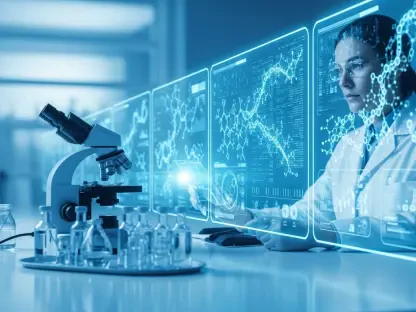
The sheer volume of data in the EEMC is too vast for human researchers to process alone, necessitating a shift toward computational discovery. Researchers now use Large Language Models (LLMs) trained on biological sequences to “read” the genetic code and predict which sequences function as antimicrobial peptides. This process is similar to how a language model predicts the next word in a sentence, but here, the model predicts the arrangement of amino acids that will fold into a functional weapon against bacteria. This AI-driven approach has turned a decades-long search into a process that can yield results in a matter of weeks.
Efficiency in drug discovery is further enhanced by dual-pronged screening, where machine learning predicts both a molecule’s effectiveness against bacteria and its potential toxicity to human cells. This simultaneous evaluation is a major leap forward, as many promising antibiotics in the past failed because they were as harmful to the patient as they were to the infection. Expert insight from recent studies confirms that AI bypasses years of traditional “blind” laboratory testing. The success rate of AI-predicted peptides has reached 84% in real-world laboratory tests, providing a digital prophet that points researchers directly toward the most viable leads.
A Practical Framework for the Future of Drug Discovery
The EEMC provides a scalable blueprint that can be applied to various biotechnological challenges through a structured approach. Data integration is the first step, moving from isolated discoveries to a unified, digital biological resource for global research. Once the data is consolidated, computational pre-filtering implements AI tools to narrow down millions of candidates to the top few thousand high-probability leads. This method ensures that laboratory resources are only spent on the molecules with the highest chance of success, drastically reducing the cost of development.
Physical mechanism testing is the next frontier, focusing on peptides like cAMP_81 that use physical disruption rather than chemical inhibition. Unlike traditional drugs that target a specific protein, these peptides often perforate the bacterial membrane, making it much harder for bacteria to develop resistance through simple mutations. Beyond the pharmaceutical sector, the EEMC model is being expanded to find industrial enzymes, biofuels, and bioremediation tools. This broader scope demonstrates that the secrets hidden in extreme environments have the potential to revolutionize not just medicine, but the entire field of biotechnology.
The scientific community successfully bridged the gap between the most remote environments on Earth and the digital world of predictive modeling. The research team established a precedent for using AI to sift through billions of genes, which resulted in the identification of thousands of safe and effective antimicrobial candidates. This systematic approach demonstrated that the “discovery void” was not a lack of nature’s resources, but rather a lack of the tools necessary to find them. By integrating high-resolution metagenomics with machine learning, the project provided a clear roadmap for mitigating the threat of superbugs. The study confirmed that the future of drug discovery was not limited to traditional laboratories but extended to the depths of the ocean and the edges of the ice. The transition toward data-driven bioprospecting changed the focus from chance findings to a predictable and scalable science.