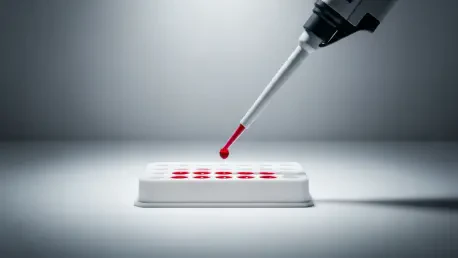

The ancient shadow of leprosy is finally being dispelled by the brilliant light of modern innovation as Brazilian scientists redefine the fight against one of history’s most stigmatized diseases. For centuries, the diagnosis of this condition relied on the appearance of visible physical markers, which often meant that by the time a patient was identified, irreversible nerve damage had already taken root. However, a pioneering breakthrough coming from South America is shifting the paradigm from reactive treatment to proactive detection. By merging the precision of molecular biology with the predictive power of machine learning, researchers have created a diagnostic shield capable of identifying the infection long before the first skin lesion or numb patch appears. This advancement promises to transform a once-elusive diagnosis into an exact science, potentially saving thousands from permanent disability.
A Silent Pathogen Meets Modern Innovation
The diagnosis of leprosy is stepping out of a long period of stagnation and into a new era of technological integration. While traditional medical practices often required doctors to wait for clinical signs like muscle weakness or skin discoloration, the research team at the University of São Paulo (USP) has developed a method that identifies the presence of Mycobacterium leprae during its latent phase. This early intervention is critical because the bacterium moves slowly, often remaining hidden within the human body for years without triggering obvious alarms. The new approach treats the infection not as a mystery to be solved after the fact, but as a biological signal that can be intercepted at the molecular level.
This transition toward advanced diagnostics represents more than just a medical upgrade; it is a fundamental shift in how public health experts view the transmission of chronic infections. By utilizing tools that were previously reserved for high-tech research laboratories, clinicians can now peer into the immune system’s early response to the pathogen. This foresight allows for the administration of multi-drug therapy at a stage where the disease is most vulnerable and the patient’s nervous system is still fully intact. The integration of these modern techniques ensures that the “silent” nature of the pathogen is no longer an obstacle to effective control.
The Diagnostic Gap and the Burden of Leprosy in Brazil
Leprosy remains an urgent public health priority in Brazil, a nation that currently reports nearly 90% of all cases in the Americas and maintains the second-highest case count globally. Public health officials frequently categorize it as a “socially determined disease,” highlighting its tendency to cluster in regions with inadequate sanitation and limited access to primary care. However, recent epidemiological surveys indicate that the disease is much more pervasive than official statistics suggest. The primary culprit for this discrepancy is the diagnostic gap created by outdated testing methods. Traditional skin smear tests and older serological exams often fail to detect the bacterium in patients with a low bacterial load, a state known as paucibacillary leprosy.
This diagnostic lag creates a dangerous cycle where infected individuals unknowingly circulate the pathogen within their communities for years. Without a sensitive test to catch these early-stage cases, the healthcare system remains one step behind the infection, intervening only when physical deformities become apparent. These complications, which include clawed hands and loss of sensation in the extremities, are not only physically devastating but also perpetuate the social stigma that has haunted leprosy patients for millennia. The necessity for a more robust screening tool is clear, as the continued reliance on visible symptoms ensures that the chain of transmission remains unbroken in urban and rural environments alike.
The Science of Mce1A New Frontier in Serological Testing
At the heart of this Brazilian innovation lies the transition from the traditional PGL-I antigen to a significantly more sensitive protein known as Mce1A. This specific protein plays a functional role in the life cycle of the bacterium, acting as a key that allows Mycobacterium leprae to invade and survive within human host cells. Because Mce1A is essential for the very first stages of infection, it serves as an ideal biological marker for early detection. The USP research team moved beyond the limited scope of standard tests by developing a framework that analyzes three distinct classes of antibodies—IgA, IgM, and IgG—to create a comprehensive immunological profile of the patient.
This “triple-antibody” approach allows for a level of diagnostic nuance that was previously impossible to achieve in a field setting. By examining the different types of immune responses, clinicians can differentiate between a person who has merely been exposed to the bacterium, someone with a past contact history, and an individual harboring an active, growing infection. This distinction is vital for determining who requires immediate antibiotic treatment and who needs continued monitoring. During the clinical validation phase, the IgM antibody for the Mce1A antigen proved its worth by successfully flagging two-thirds of the new cases that traditional laboratory methods would have completely missed.
Integrating Artificial Intelligence with Clinical Expertise
To bridge the gap between laboratory results and real-world clinical application, the research team at the Ribeirão Preto School of Medicine paired the blood test with a digital screening layer powered by artificial intelligence. This system, known as MaLeSQs, utilizes machine learning to analyze the Leprosy Suspicion Questionnaire (LSQ), a 14-item assessment tool. The questionnaire focuses on subtle, early neurological indicators such as tingling, localized numbness, and unexplained muscle fatigue—symptoms that patients often overlook or attribute to other minor ailments. By processing these qualitative reports through a sophisticated algorithm, the AI can identify patterns of risk that might escape a general practitioner.
The true strength of this innovation emerged when the AI’s analysis of the questionnaire data was combined with the molecular results of the Mce1A blood test. In a controlled study group, this dual-layered system achieved a 100% sensitivity rate, accurately identifying every single confirmed case. The effectiveness of this combination was most clearly demonstrated when the researchers identified 12 new cases among a group of participants who appeared entirely healthy and lacked any of the skin patches typically associated with the disease. This ability to uncover asymptomatic cases proves that the marriage of digital technology and molecular biology can find the “hidden” prevalence of leprosy that current surveillance programs fail to see.
Scaling the Solution for National Public Health
The practicality of the Mce1A test suggests it is a prime candidate for integration into the Unified Health System (SUS), Brazil’s vast public healthcare network. Unlike many high-tech medical breakthroughs that require specialized, expensive infrastructure, this test utilizes standard laboratory equipment and techniques already present in most diagnostic centers. The implementation would primarily require a shift in the chemical reagents used rather than a complete overhaul of existing facilities, making it a cost-effective solution for a middle-income country. Furthermore, the geospatial data gathered during the study revealed that the disease is not confined to isolated pockets of poverty but is circulating diffusely across urban landscapes, necessitating a broad, city-wide screening strategy.
As the research moves into its next phase, the focus shifted toward refining the peptide markers used in the test. By isolating specific fragments of the Mce1A protein, scientists aimed to eliminate any potential cross-reactivity with other common environmental bacteria, further sharpening the accuracy of the diagnosis. The goal was to move from a whole-protein analysis to a “peptide-based” precision tool that could be mass-produced for national use. This evolutionary step in diagnostic technology provided a scalable model for other countries grappling with endemic leprosy, offering a clear path toward the eventual interruption of transmission and the total prevention of the physical disabilities that have defined this disease for far too long.