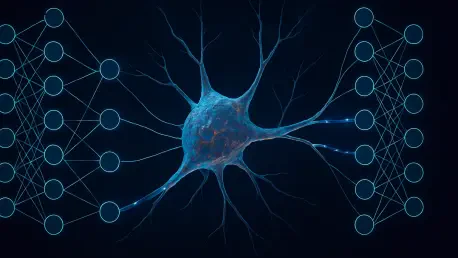

The long-standing barrier between carbon-based biological systems and silicon-based computational frameworks is finally dissolving as researchers successfully harness the chaotic electrical pulses of living neurons to perform complex mathematical operations. This transition marks the birth of Biological Reservoir Computing (BRC), an interdisciplinary field that moves beyond the traditional goal of mimicking brain activity with software. Instead, it utilizes cultured biological neural networks as the actual physical medium for data processing. By treating living tissue as a computational “reservoir,” engineers are unlocking a level of energy efficiency and self-organizing complexity that remains physically impossible for traditional semiconductor architectures to replicate.
The relevance of BRC in the current technological landscape stems from the inherent limitations of standard artificial intelligence, which requires massive energy consumption and rigid data structures. Biological systems, by contrast, operate on milliwatts of power and possess an intrinsic ability to adapt through synaptic plasticity. This review examines how recent breakthroughs in microfluidic architecture and real-time algorithmic training have transformed a simple dish of neurons into a sophisticated processor. This shift represents a fundamental change in perspective, moving from studying the brain as a biological mystery to employing it as a functional, high-performance computational asset.
Introduction to Biological Reservoir Computing
Biological Reservoir Computing is a specialized framework where a “reservoir”—a complex, non-linear dynamical system—processes input signals, and only the output layer is trained to recognize patterns. In this specific implementation, the reservoir is not a set of equations but a living network of rat cortical neurons. These cells are grown in a controlled environment where their natural firing patterns serve as a high-dimensional state space. Because biological networks are naturally chaotic and interconnected, they can project simple inputs into a vast array of complex responses, which is the exact requirement for solving non-linear temporal problems that stymie traditional digital logic.
This paradigm offers a unique advantage over competitors like spiking neural networks or traditional deep learning models. While silicon-based neuromorphic chips struggle to maintain the delicate balance between stability and flexibility, biological neurons do so instinctively through homeostatic mechanisms. By leveraging the physical properties of “wetware,” researchers can perform real-time signal analysis without the massive overhead of simulating every individual synapse. This makes BRC not just a scientific curiosity but a potential solution for edge computing applications where power efficiency and responsiveness to environmental fluctuations are paramount.
Core Architectural Components and Mechanisms
Modular Biological Reservoirs: The Infrastructure of Life
The primary challenge in using biological cells for computation is their tendency to synchronize, which effectively “blunts” their computational utility. When neurons fire in perfect unison, the network loses its ability to represent diverse information, becoming a monolithic signal with zero dimensionality. To combat this, researchers utilize microfluidic architectural control to guide the physical growth of the network. These microscopic structures act as a physical blueprint, forcing the neurons into modular clusters rather than a single, disorganized mass. This structural engineering ensures that the reservoir maintains rich, high-dimensional dynamics, allowing different parts of the network to process different facets of an incoming signal simultaneously.
By physically segregating neuronal populations while allowing specific pathways for inter-modular communication, the system preserves the “chaos” necessary for reservoir computing while preventing total signal collapse. This modularity is what makes biological reservoirs unique compared to static artificial layers. The network is constantly remodeling itself, creating a dynamic computational environment that evolves in response to the stimuli it receives. This ensures that the biological reservoir remains a versatile processing unit capable of sustaining the complex firing patterns required for sophisticated temporal tasks, such as predicting chaotic trajectories or filtering noisy data streams.
FORCE Learning and Readout Integration: Teaching the Wetware
To extract meaningful information from the reservoir, researchers implement the First-Order Reduced and Controlled Error (FORCE) learning algorithm. While the biological reservoir remains fixed in its internal physical connectivity during a task, the FORCE algorithm acts as a digital instructor for the “readout” layer. This layer monitors the electrical output of the neurons and compares it against a desired target signal in real-time. By calculating the error between the biological output and the intended goal, the system makes rapid, precise adjustments to the weight of each neuronal signal, effectively “tuning” the output until it matches the target waveform.
This supervised learning method is significant because it bridge the gap between biological unpredictability and digital precision. It allows a living system to execute mathematical functions, such as generating perfect sine waves or reproducing the complex Lorenz attractor, which were previously the exclusive domain of digital processors. The integration of FORCE learning ensures that the biological wetware is not just reacting randomly but is being channeled into productive computational work. This synergy between a living, adaptive reservoir and a high-speed digital readout creates a hybrid system that captures the best of both worlds: biological complexity and algorithmic accuracy.
Emerging Trends and Technological Shifts: Moving Beyond Simulation
The most prominent trend in the field is the transition toward “online” learning, where biological networks process and adapt to information as it happens. Historically, machine learning involved massive datasets processed “offline,” where the model was trained once and then deployed. Biological Reservoir Computing disrupts this by mirroring the real-time adaptability of living organisms. This shift is characterized by the view that living systems are novel computational resources rather than mere subjects of medical study. Scientists are now prioritizing “intrinsic dynamics”—the natural, unprompted behavior of cells—as a primary tool for solving non-linear problems.
Furthermore, there is a growing consensus that the future of computing lies in bio-hybrid systems that prioritize plasticity over raw speed. While a digital processor can perform billions of operations per second, it cannot physically rewire its hardware to better suit a task. Biological reservoirs, however, exhibit synaptic scaling and long-term potentiation, allowing the “hardware” itself to optimize its performance over time. This trend signals a departure from the “brute force” approach of scaling silicon transistors and toward a more nuanced, efficient methodology that utilizes the self-organizing principles of life to manage the complexities of the modern data landscape.
Real-World Applications and Use Cases: From Labs to Robotics
High-Fidelity Neurological Research: Modeling the Mind
Beyond pure computation, BRC serves as a sophisticated microphysiological system that provides a window into the human brain’s inner workings. By observing how biological reservoirs fail or succeed at computational tasks, medical researchers can model the onset of neurological disorders like Alzheimer’s or epilepsy in a controlled dish. This implementation is unique because it allows scientists to measure “functional” decline—how a disease actually affects the network’s ability to process information—rather than just looking at physical cell death. This level of insight is impossible to gain from traditional simulations, which often oversimplify the messy reality of biological signaling.
This application essentially turns the BRC platform into a diagnostic tool. For example, if a network treated with a specific neurotoxin loses the ability to generate a stable temporal signal, researchers can trace that failure back to specific synaptic disruptions. This creates a high-fidelity feedback loop for understanding how cognitive decline occurs at the cellular level. By using living neurons as the computational medium, the study of the brain becomes an active experiment in signal processing, leading to a deeper understanding of the mechanics of biological intelligence.
Pharmacological Testing and Bio-Hybrid Robotics: Future Agents
In the pharmaceutical sector, BRC offers a transformative platform for high-throughput drug screening. Instead of relying on animal models, which are expensive and ethically complex, researchers can apply potential drug compounds directly to a trained biological reservoir. By measuring changes in the network’s computational efficiency and signal stability, the system provides immediate data on how a chemical affects neuronal communication. This matters because it allows for the testing of drug efficacy on complex network dynamics, which is a more accurate representation of brain function than testing on single cells or synthetic models.
Moreover, the ability of BRC to generate complex motor control signals opens a new frontier in bio-hybrid robotics. Traditional prosthetics often struggle with the “uncanny” jerkiness of digital control systems. A biological reservoir, however, can generate the smooth, rhythmic, and adaptive temporal patterns required for natural movement. This could lead to a generation of autonomous agents or prosthetic limbs that utilize living cells to manage intricate, real-time movements. These systems would be capable of learning and adjusting to the user’s specific physical nuances, providing a level of integration that purely mechanical systems cannot achieve.
Technical Hurdles and Adoption Challenges: The Stability Gap
Despite the impressive milestones, BRC faces significant hurdles, primarily concerning the long-term stability of the biological substrate. Living cells require a constant supply of nutrients and a precisely controlled environment to remain viable. Maintaining the functional consistency of these networks over months or years remains a primary technical challenge. When the cells die or shift their connectivity due to natural growth, the trained “readout” layer may become uncalibrated, requiring constant retraining. This lack of “permanent” hardware makes BRC difficult to deploy in standard consumer electronics.
Additionally, feedback delays in the “wetware-hardware” interface can limit the speed of computation. The time it takes for an electrical signal to move from a digital sensor into the biological medium, be processed by the neurons, and then recorded by the readout layer creates a bottleneck. While biological systems are energy-efficient, they are fundamentally slower than silicon. Furthermore, the ethical considerations of using living tissue for industrial computation pose regulatory challenges. Society must grapple with the implications of “renting” the biological processes of living cells for commercial use, a debate that may slow the transition from the laboratory to the open market.
Future Trajectory and Long-Term Impact: The Rise of Bio-Computers
The trajectory of Biological Reservoir Computing points toward a future where “living processors” are integrated into specialized hardware for tasks requiring extreme adaptability. Breakthroughs in long-term cell maintenance, such as automated micro-incubators and high-bandwidth neural interfaces, are likely to mitigate the current limitations of signal stability. As these technologies mature, the goal will shift from simply making a network “generate a wave” to creating autonomous systems that can learn multi-step reasoning through biological feedback loops. This would represent a paradigm shift where computers are grown rather than manufactured, utilizing the self-healing and self-organizing properties of organic life.
In the long term, BRC could revolutionize both the medical field and the computer science toolkit. It provides the essential tools needed to treat malfunctions of the nervous system by allowing us to “debug” biological signals in real-time. The impact of this technology will likely be felt most in the development of sophisticated brain-machine interfaces, where the boundary between the user’s neurons and the external computer becomes seamless. By mastering the art of biological computation, humanity is not just building better machines; it is beginning to understand the very language of biological intelligence, potentially leading to a symbiotic future between life and technology.
Summary and Final Assessment: A Decisive Verdict
Biological Reservoir Computing successfully demonstrated that the complexity of living matter is a viable resource for high-performance computing. Researchers proved that biological neurons, when properly structured through microfluidic control and guided by FORCE learning, can execute tasks that were once thought to be the exclusive domain of digital logic. The system managed to produce periodic waveforms and chaotic trajectories with a level of plasticity that outperformed static silicon models. Although the technology faced significant challenges regarding the long-term viability of the wetware and the latency of the digital interface, the potential for energy efficiency and real-time adaptability remained unmatched.
The investigation into this field highlighted a fundamental shift in how biological intelligence is perceived. The transition from viewing neurons as objects of study to treating them as computational agents provided new avenues for neurological research and pharmacological testing. The study of these biological reservoirs ultimately served as a bridge between the precision of engineering and the resilience of biology. As the field moved forward, it laid the groundwork for a new generation of bio-hybrid systems that prioritized the intrinsic power of organic life over the rigid constraints of traditional semiconductors. Biological Reservoir Computing stood as a pioneering achievement that redefined the boundaries between artificial and biological systems.