
The silent progression from metabolic health to type 2 diabetes has long been a shadowy path for millions, but a groundbreaking fusion of artificial intelligence and cellular biology is beginning to illuminate the journey with unprecedented clarity. Globally, hundreds of millions of people are living with prediabetes, a critical warning stage where blood sugar levels are elevated but not yet high enough for a diabetes diagnosis. Most are entirely unaware of their condition, stepping closer each day to a chronic disease that can lead to severe health complications. This diagnostic gap represents one of modern medicine’s most urgent challenges, creating a race against time to identify at-risk individuals before the window for effective intervention closes.
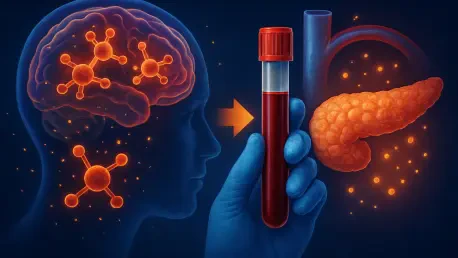
What if the key to stopping this progression was not found in sugar levels alone, but in the subtle signs of stress within our very cells? A recent study has answered this question with a resounding breakthrough, developing an artificial intelligence model that can predict prediabetes with nearly perfect accuracy. By training a sophisticated neural network to analyze not just standard clinical data but also a direct measure of cellular wear and tear known as oxidative stress, researchers have created a tool that promises to transform screening. This innovation moves beyond reactive diagnostics, offering a proactive and personalized glimpse into an individual’s metabolic future, potentially empowering millions to reclaim their health before it is too late.
A New Front in a Global Health War
The sheer scale of the prediabetes epidemic underscores the urgent need for smarter screening technologies. This condition acts as a crucial, yet often missed, turning point. Studies indicate that between 5% and 10% of people with prediabetes will advance to full-blown type 2 diabetes each year, but this outcome is not inevitable. With timely lifestyle changes, a significant portion can halt or even reverse the condition. The fundamental obstacle, however, is identification. Current methods, such as the glycated hemoglobin (HbA1c) test or the oral glucose tolerance test (OGTT), provide a snapshot of a person’s current glucose control but often lack the sensitivity to predict future risk with high precision.
These traditional tests also present practical barriers. They can be expensive, require fasting, and involve time-consuming lab work, making them difficult to deploy for mass population screening. Consequently, a vast number of at-risk individuals remain undiagnosed until symptoms of more advanced metabolic dysfunction appear. This is where artificial intelligence presents a necessary evolution. By processing vast and complex datasets that combine clinical, demographic, and deep biological information, AI models can uncover hidden patterns and create highly accurate, individualized risk profiles. This shift toward proactive, data-driven healthcare is not just an improvement; it is an essential strategy in the global effort to curb the rising tide of diabetes.
The Digital Detective and the Biological Clue
To build this next-generation diagnostic tool, researchers designed a pilot study centered on 199 Indian adults, who were carefully categorized into prediabetic and healthy groups based on their HbA1c levels. The strength of the study lay in the richness of its data. The team collected 14 distinct features from each participant, ranging from standard demographic and clinical measurements like age, BMI, and waist circumference to a full biochemical lipid profile.
The true innovation, however, was the inclusion of a novel data point: “total antioxidant status.” This marker provides a direct measurement of the body’s ability to neutralize harmful free radicals, offering a window into the level of oxidative stress at a cellular level. Oxidative stress is a key biological process implicated in the development of insulin resistance, the hallmark of prediabetes. By feeding this unique combination of data into a Pattern Neural Network (PNN), a specialized AI architecture, the researchers aimed to build a model that understands not just the symptoms of prediabetes but also one of its underlying biological drivers. The PNN was rigorously trained, validated, and tested, its performance benchmarked against other established machine learning algorithms to ensure its superiority.
When the Machine Outsmarted the Standard
The results of the analysis were both clear and compelling. Statistical evaluation first confirmed that six key variables—age, BMI, waist circumference, antioxidant activity, OGTT results, and HbA1c—were significantly different between the prediabetic and healthy individuals. Critically, the prediabetic group showed markedly lower antioxidant capacity, providing strong clinical evidence that heightened oxidative stress is a distinguishing feature of the condition. This biological separation between the groups laid the perfect foundation for the AI to learn.
When unleashed on the data, the PNN model delivered a remarkable performance, achieving an overall accuracy of 98.3%. This level of precision significantly surpassed that of other common machine learning models like support vector machines and logistic regression. The PNN demonstrated near-perfect precision and exceptional recall, meaning it was not only correct most of the time but was also highly effective at identifying true prediabetic cases while generating very few false alarms. Diving deeper, the AI identified the two most powerful predictors in its decision-making process: waist circumference and total antioxidant status. This finding is profound, as it suggests that a simple physical measurement combined with a marker of cellular health can predict prediabetes more powerfully than many traditional metrics.
From the Lab to the Clinic A Path Forward
The immediate implications of this research are significant. The PNN model represents a potential rapid, low-cost, and biologically insightful screening tool that could be deployed for widespread risk stratification in clinical or public health settings. By combining easily obtainable data with a more specialized biomarker, it offers a practical yet powerful method to flag individuals who would benefit most from early intervention.
However, the researchers wisely acknowledge the study’s limitations and outline a clear path toward real-world application. As a pilot study conducted at a single center with a relatively small and specific population, its findings require further validation. The cross-sectional design, which captures data at a single point in time, also needs to be supplemented with longitudinal studies that track individuals over several years to confirm the model’s predictive capabilities over time. The essential next steps, therefore, include validating the model in larger and more diverse populations, conducting prospective studies to monitor disease progression, and carrying out thorough analyses of its cost-effectiveness and feasibility for integration into existing healthcare systems.
The successful development of this PNN model marked a pivotal step forward in preventive medicine. The research established a robust framework that moved beyond conventional risk factors, proving that a deep biological marker like oxidative stress held immense predictive power. The study demonstrated that by fusing human biology with machine intelligence, it was possible to create a tool with the accuracy needed to confront a silent epidemic. This work laid the groundwork for a future where a patient’s risk of chronic disease could be understood not just from their blood sugar, but from the quiet language of their cells.