
The experience of undergoing a magnetic resonance imaging (MRI) scan can be daunting for anyone, but for a child, the combination of a loud, confined space and the absolute need for stillness often necessitates the use of anesthesia. This reliance on sedation, while medically necessary, carries inherent risks and creates significant anxiety for young patients and their families. However, a groundbreaking advancement in medical imaging technology is fundamentally altering this reality, offering a faster, safer, and less stressful alternative that promises to redefine the standards of pediatric care.
A Technological Leap in Pediatric Imaging
The Advent of Deep Resolve
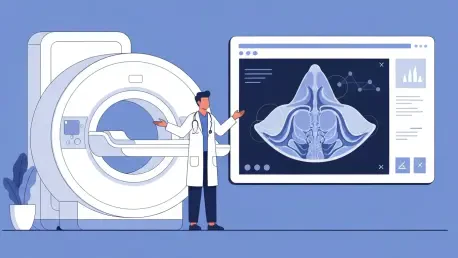
At the heart of this transformation is Deep Resolve, a sophisticated image reconstruction software powered by deep-learning algorithms. Penn State Health Milton S. Hershey Medical Center has integrated this state-of-the-art technology, which fundamentally overhauls how MRI data is processed. Unlike conventional methods that require lengthy acquisition times to build a detailed image, this AI-driven system can generate exceptionally sharp and clear diagnostic images from a significantly reduced amount of raw data. The software’s neural network was trained on vast datasets of MRI scans, enabling it to intelligently fill in missing information and remove noise, resulting in a final image that is often superior in quality to those produced by traditional techniques. Since its installation in April, following a rigorous validation process against standard imaging protocols, this technology has been hailed as a “game-changer” by clinicians. Its immediate success has led to its adoption in approximately 90% of all pediatric MRI scans at Penn State Health Golisano Children’s Hospital, demonstrating rapid and confident integration into clinical practice.
Revolutionizing Patient Safety and Comfort
The most profound impact of this AI-powered technology is its ability to dramatically reduce the duration of anesthesia required for pediatric patients. Children’s developing bodies are more sensitive to the effects of sedation, making any reduction in exposure a significant clinical victory. By accelerating the scanning process, the average exam time has been shortened by seven to ten minutes, a crucial window when a child is under anesthesia. For more complex procedures, the results are even more striking; a brain scan that once required a lengthy period of sedation can now see its scan time reduced by as much as 70%. This speed not only enhances safety but also improves the overall patient experience by decreasing the likelihood of motion-related artifacts. Children in pain or distress find it difficult to remain still, often leading to blurred images and the need for repeat scans. By completing procedures like a knee MRI in as little as seven minutes, the technology minimizes this issue, ensuring a successful scan on the first attempt and reducing further stress on the young patient.
System-Wide Implementation and Broader Impact
Expanding the Scope of Care
While the initial focus of implementing Deep Resolve was to enhance pediatric care, its benefits have quickly proven to be universal, extending to the adult patient population. Faster scan times translate directly into a more comfortable and convenient experience for all individuals, particularly those who suffer from claustrophobia or have difficulty lying still for extended periods. Beyond individual patient comfort, this technological upgrade has a significant positive effect on hospital operations. The increased efficiency allows for a greater number of patients to be scanned each day, which is a critical step in addressing and reducing diagnostic imaging wait times across the health system. By optimizing scanner usage, Penn State Health is not only improving the quality of care but also enhancing access to it, ensuring that more patients can receive timely diagnoses. This streamlining of services demonstrates how a single technological investment can create a ripple effect of positive change throughout an entire medical institution.
A Community-Fueled Advancement for the Region
The successful integration of this cutting-edge technology was made possible through the dedicated support of the Children’s Miracle Network and generous community donors. Their contributions were instrumental in funding the acquisition, bringing a new level of state-of-the-art care to the area and establishing the Golisano Children’s Hospital as the first facility in central Pennsylvania to offer this innovative solution. Looking ahead, Penn State Health has committed to a system-wide rollout, with plans to equip a total of eight MRI scanners with the AI software. This strategic expansion underscored a commitment to leveraging technology to create a new benchmark for patient-centric care. The initiative demonstrated how targeted investments, fueled by community partnership, could directly translate into tangible improvements in safety, efficiency, and the overall patient experience. This achievement not only elevated the hospital’s clinical capabilities but also set a powerful precedent for future healthcare innovations within the region.