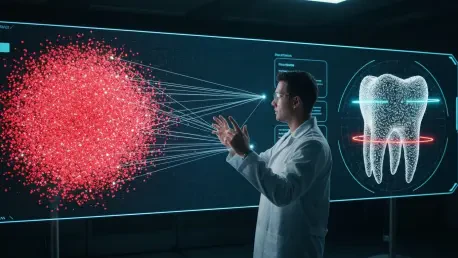

Today we’re speaking with Ivan Kairatov, a biopharma expert whose work at the intersection of technology and research is pushing the boundaries of public health analysis. His team recently published a groundbreaking study that applied a sophisticated machine learning pipeline to the massive National Health and Nutrition Examination Survey (NHANES) database, one of the richest public health data sources available. Their work has uncovered hidden patterns in dental caries, a disease that affects billions worldwide. We’ll be discussing the innovative data-cleaning process they developed, the surprising risk factors for cavities their model unearthed, and how these findings could revolutionize preventative care by revealing that not all caries are the same, especially when comparing children and seniors. This research not only offers a new lens through which to view dental health but also provides a powerful new tool for studying other complex diseases.
Your article mentions a new data-cleaning pipeline with a novel outlier detection algorithm. Could you walk me through the key steps of that process and give an example of the specific data “noise” you had to address to make the NHANES database ready for machine learning?
Of course. The NHANES database is an incredible resource, but its sheer scale means it’s inherently noisy. Before any machine learning model can see patterns, you have to ensure it’s looking at a clean picture. Our pipeline was designed as an integrated, systematic process. First, we had to harmonize data collected over many years, which often has inconsistencies. Then came the outlier detection, which was crucial. For example, you might have self-reported data where someone’s dietary intake is physiologically impossible, or a lab value that’s clearly an error. Our algorithm was built to flag these anomalies that would otherwise confuse the model and lead to false conclusions. It’s about more than just deleting bad data; it’s about creating a robust, reliable foundation so that when the machine learning algorithm identifies a subtype, we can trust that it’s a real biological signal, not just a statistical ghost created by noise.
Your study uncovered novel associations between caries and factors like lead exposure, food types, and sleep patterns. Can you elaborate on the most surprising of these findings and explain how your model specifically connected these seemingly unrelated variables to distinct dental health outcomes?
The connection to lead and pollutant exposure was perhaps the most striking. We often think of cavities in terms of sugar and brushing, but our unsupervised model looked at hundreds of variables without any preconceived notions. It began to group individuals into distinct clusters, and in one of these high-caries-risk clusters, elevated lead levels and specific environmental pollutants kept appearing alongside poor sleep patterns and certain dietary markers. The model wasn’t just saying, “lead causes cavities.” It was revealing a specific patient profile, a subtype of individuals whose dental health was intertwined with a complex web of environmental and behavioral factors. It demonstrated that for some people, the risk isn’t just in the candy aisle; it’s in the air they breathe and the quality of their rest, which was a powerful and sobering insight.
The research highlighted “substantial age-driven heterogeneity,” identifying key clusters for children and seniors. What were the most significant risk factors your model found for each of these distinct groups, and how might this information practically change preventative care for different generations?
This was a core discovery. The model confirmed that a “one-size-fits-all” approach to dental health is fundamentally flawed. For children, the clusters were strongly influenced by factors like nutrition and environmental exposures—things that relate to their developmental stage. For seniors, the risk factors that defined the clusters were different; they were often linked to other laboratory markers and existing health conditions, reflecting a lifetime of accumulated health events. This means preventative care could become much more targeted. For a child in a high-risk cluster, an intervention might focus on nutritional counseling and mitigating environmental exposures. For a senior, it might involve coordinating with their primary care physician to manage other health issues that our model shows are linked to their dental decline. It’s a shift from generic advice to personalized, age-appropriate strategies.
This pipeline was developed for dental caries but could be applied to other conditions. Looking ahead, what other complex, multifactorial diseases seem like promising candidates for this approach, and what unique challenges do you anticipate when adapting your model for a different health condition?
This pipeline is absolutely a template for other complex diseases. Conditions like type 2 diabetes, cardiovascular disease, or even certain autoimmune disorders are perfect candidates because, like dental caries, they are not caused by a single factor but by an intricate interplay of genetics, environment, and lifestyle. The NHANES database contains a wealth of information relevant to these conditions. The primary challenge in adapting the model is domain expertise. It’s not a simple copy-and-paste job. To study cardiovascular disease, for instance, we would need to work closely with cardiologists to select the right variables, define what constitutes a meaningful “outlier” in cardiac biomarkers, and, most importantly, interpret the clinical relevance of the subtypes the model identifies. Each disease has its own unique biological and data signature, so the pipeline must be thoughtfully tailored every time.
What is your forecast for how this type of data-driven, personalized approach will reshape public health strategies in the next decade?
I believe we are on the cusp of a major shift from population-level to precision public health. In the next decade, I forecast that approaches like ours will become standard practice. Instead of broad, generic campaigns, health agencies will be able to use these models to identify specific, high-risk subtypes within the population—for example, “seniors in this zip code with these specific lab markers are at extreme risk for this disease.” This will allow for the deployment of highly targeted, cost-effective interventions directly to the people who need them most. We will move beyond simply reacting to disease and toward proactively predicting and preventing it, subtype by subtype, using the incredible power of large-scale data.