
The promise of extending human lifespan has captivated scientists for generations, yet the reality of a longer life often comes with a decline in health that modern medicine struggles to prevent. As lifespans increase globally, the gap between how long people live and how long they stay healthy continues to widen. A massive AI-driven analysis of a century’s worth of research has now pinpointed a critical reason for this disconnect: the very scientists working to solve the puzzle of aging are operating in separate, non-communicating worlds. This deep-seated division, now quantified by machine learning, is stalling the translation of laboratory breakthroughs into meaningful therapies for an aging population.
As We Live Longer Why Arent We Getting Healthier
Despite monumental progress in understanding the fundamental biology of aging, effective treatments to combat age-related decline and disease have not kept pace with scientific discovery. This central paradox defines the modern challenge of gerontology. While researchers can identify cellular drivers of aging with remarkable precision, the development of interventions that can genuinely improve healthspan—the period of life spent in good health—remains frustratingly slow. This gap between knowledge and application is not just an academic concern; it has profound implications for public health and quality of life worldwide.
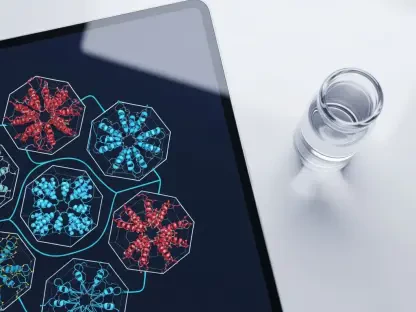
To understand the roots of this stagnation, a comprehensive study harnessed artificial intelligence to systematically map the entire landscape of aging research. By analyzing nearly a century of scientific literature, the project revealed how the field has evolved, exposing a structural flaw that has hampered progress. The findings suggest that the problem lies not in a lack of effort or discovery, but in a fractured research ecosystem that prevents crucial knowledge from crossing disciplinary boundaries.
An Aging World Confronts a Divided Science
The urgency of this issue is amplified by a dramatic demographic shift. The global population is aging at an unprecedented rate, placing an immense and growing strain on healthcare systems built to manage acute illnesses rather than the complex, chronic conditions of old age. As the number of older adults increases, the demand for effective strategies to promote healthy aging becomes a critical social and economic imperative. Failure to address this challenge will have far-reaching consequences for societies around the globe.
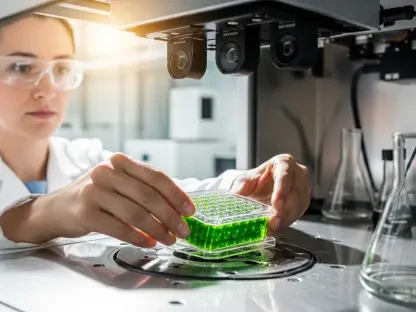
This challenge is compounded by a long-standing divide within the research community itself. Historically, the science of aging has been split into two distinct and often isolated camps. On one side are the basic biologists, who investigate the core molecular and cellular mechanisms of aging—such as DNA damage and metabolic dysfunction—in controlled laboratory settings. On the other side are the clinicians and geriatricians, who focus on managing the symptoms and diseases that manifest in elderly patients, from frailty to dementia.
Two Worlds Drifting Apart What the AI Discovered
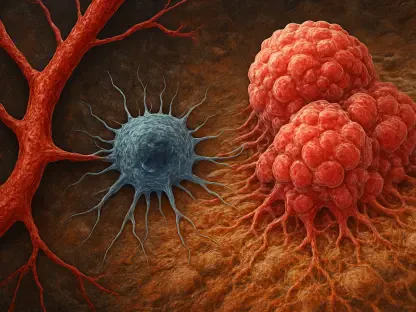
The AI-powered analysis confirmed that one major research track remains deeply rooted in foundational biology. This work provides the essential building blocks for understanding aging, focusing on processes like oxidative stress, telomere shortening, mitochondrial decay, and cellular senescence. However, these investigations are often confined to animal models and cell cultures, remaining distant from human application.
Simultaneously, a separate clinical track concentrates on the practical consequences of aging. This research stream addresses the management of geriatric syndromes, healthcare logistics for the elderly, and the treatment of high-profile conditions like Alzheimer’s disease. While vital, this work often proceeds without fully integrating the underlying biological drivers being uncovered in basic science labs. The result is a system that excels at managing symptoms but struggles to target the root causes of age-related decline.
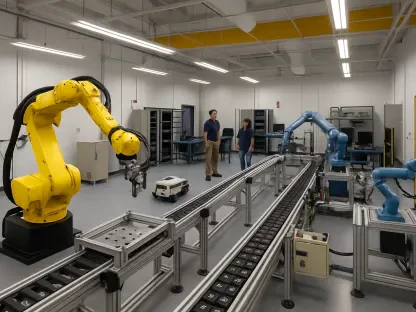
The study’s most stark finding was the clear communication breakdown between these two worlds. Rather than converging over time, the basic and clinical research streams have advanced on parallel tracks, with minimal interaction or knowledge transfer. This has created a profound “translational gap,” a chasm where promising laboratory discoveries languish, failing to evolve into the clinical interventions that patients and healthcare systems desperately need.
A Century of Data One Unmistakable Trend
The sheer scale of the analysis provided undeniable evidence of this trend. Researchers utilized advanced natural language processing to examine over 460,000 scientific abstracts published between 1925 and 2023. This massive dataset allowed the AI to map dominant research themes, identify emerging topics, and track their connections—or lack thereof—over the decades, painting a comprehensive picture of the field’s trajectory.
The core conclusion from this century-spanning review was that the divergence between basic and clinical research has not only been persistent but has accelerated in recent years. This widening chasm directly obstructs the critical bench-to-bedside pipeline, delaying or preventing the development of therapies that could target the aging process itself. This finding explains why, despite exponential growth in knowledge, progress in applied anti-aging medicine feels incremental.
Furthermore, the analysis highlighted critical missed opportunities. Rapidly growing fields with immense therapeutic potential, such as autophagy (the body’s cellular recycling system), RNA biology, and nutrient sensing, were shown to be largely disconnected from clinical research. These cutting-edge areas remain isolated, representing untapped frontiers for developing novel interventions.
A Roadmap for the Future Using AI to Bridge the Divide
This AI-driven diagnosis is more than just a critique; it offers a clear roadmap toward a more effective research model. By illuminating the specific gaps and overlooked connections in the existing literature, the analysis serves as a powerful guide for funding agencies, institutions, and scientists aiming to accelerate progress. It transforms the problem into a set of actionable opportunities.
The system pinpointed several high-potential research avenues that are currently underexplored. For example, it flagged the critical yet rarely studied links between epigenetics and autophagy, as well as the intricate relationship between mitochondrial dysfunction and cellular senescence. Focusing research efforts on these intersections could yield novel insights and pave the way for next-generation therapies designed to promote healthier aging.
Ultimately, the analysis called for a fundamental paradigm shift toward a more integrated, interdisciplinary research model. It championed a new approach that intentionally built bridges between basic biological discoveries and pressing clinical needs. Such a framework was presented as essential for finally translating a century of scientific discovery into the tangible health interventions needed to help people across the globe live not just longer, but fundamentally healthier, lives.