
Today we’re joined by Ivan Kairatov, a biopharma expert with a deep understanding of technology and innovation in healthcare. We’ll be exploring a groundbreaking study that uses artificial intelligence to analyze routine abdominal CT scans, uncovering a surprising new way to predict a person’s risk of falling, sometimes years in advance. This conversation will delve into how AI assesses muscle quality over size, why core strength is a more critical indicator of stability than previously understood, and how this technology could be seamlessly integrated into clinical practice to proactively identify at-risk individuals and guide them toward preventative care.
How does an AI model analyze an abdominal CT scan to distinguish between muscle size and muscle density? What specific visual markers, such as muscle homogeneity, does the technology identify to help quantify a patient’s future fall risk?
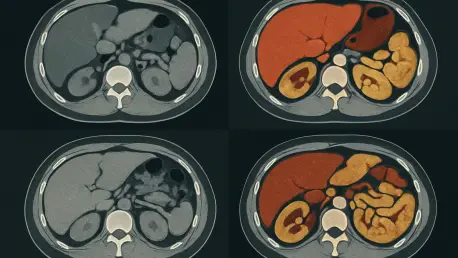
It’s a fascinating and intuitive process once you understand what the AI is looking for. The model essentially moves beyond the simple metric of how big a muscle is, which is just its size. Instead, it focuses on the muscle’s quality, which we measure as density. On a CT scan, a high-quality, dense muscle appears more homogenous and “dark.” This homogeneity is the key visual marker; it signifies that the muscle tissue has very little fat marbled within it. The AI is trained to recognize and quantify this uniformity. A less dense muscle looks less uniform, indicating higher fat content, which is strongly associated with reduced physical strength and function, and, as we’ve found, a higher risk of falling.
The connection between poor abdominal muscle quality and a higher incidence of falls proved surprisingly strong in middle-aged adults. Could you elaborate on why this was unexpected and what it suggests about the early, subtle onset of physical decline?
We certainly expected to find a connection between declining muscle quality and falls in older adults; that’s fairly well-established. The truly surprising element was the strength of this association in middle-aged individuals, people 45 and older. We weren’t necessarily looking for such a robust predictor in that age group. It tells us that meaningful, measurable physical decline is happening much earlier and more subtly than we typically assume. These are not people who would be considered frail. The fact that an opportunistic CT scan, often done for completely unrelated reasons, can pick up these early warning signs is a huge breakthrough. It suggests that the window for preventative action opens up decades earlier than we previously thought.
Since many patients receive abdominal CT scans for unrelated reasons, how can this AI-driven analysis be integrated into a standard clinical workflow? What are the practical steps for flagging at-risk individuals and guiding them toward preventative care?
This is where the technology’s potential becomes incredibly practical. The integration could be almost seamless because we’re leveraging existing medical imaging. The AI model can be set up to automatically analyze any abdominal CT scan performed within the health system. When the algorithm detects low muscle density that crosses a certain risk threshold, it would generate an automated flag in the patient’s electronic health record. This flag would then alert the primary care physician during the patient’s next visit. The physician could then initiate a conversation about fall risk and the importance of core strength, recommending specific exercises or a physical therapy consultation. It turns a routine diagnostic scan into a powerful, proactive screening tool without requiring any extra appointments or scans for the patient.
While leg strength is commonly associated with stability, this research highlights the importance of the body’s core. What is the physiological connection between abdominal muscle density and fall prevention, and why might it be a more critical indicator than previously understood?
For a long time, the focus has been on leg muscles for stability, and of course, they are very important. However, this research really shifts the spotlight to the body’s core. Your abdominal muscles are the foundation of your posture and balance; they stabilize your entire torso. When these muscles are weak or have low density, your ability to make rapid, small adjustments to maintain your center of gravity is compromised. This study supports the idea that muscle density, reflecting its functional quality, is a much stronger predictor of physical function than sheer size. A strong core acts as a steady anchor, and its quality might be a more sensitive and earlier indicator of declining neuromuscular control than the strength of the limbs alone.
Do you have any advice for our readers?
Absolutely. One of the most important and empowering messages from this research is to prioritize your core strength throughout your entire adult life. Don’t wait until you’re older to think about stability and fall prevention. The benefits of keeping your abdominal muscles in the best possible shape begin in midlife and will compound significantly as you age. Simple, consistent exercises that target your core can have a profound impact, potentially preventing a debilitating injury down the road. It’s a proactive investment in your long-term health and independence.