
As a biopharma expert with a deep background in research and technology, Ivan Kairatov has a unique perspective on the intersection of artificial intelligence and frontline medicine. His work focuses on how innovations like causal modeling can translate complex data into life-saving actions. Today, we explore a groundbreaking study that used AI to confirm the life-saving benefits of prehospital intubation for trauma patients. We’ll discuss how this technology works at a chaotic accident scene, the logistical hurdles of wider implementation, and the profound financial and human impact of getting this critical care to patients sooner.
A 10% survival increase is significant for high-risk trauma patients receiving early intubation. Could you walk us through the critical moments at an accident scene where this intervention makes such a difference and what specific patient outcomes confirm its success beyond initial survival?
Imagine the chaos of a severe traffic accident—the noise, the confusion, the immense pressure. A patient with major trauma might be unconscious, struggling to breathe, with their airway compromised by injury. In those moments, every second is critical. Securing an airway by intubating the patient on-site, before the bumpy and often lengthy trip to the hospital, is a game-changer. It ensures the brain and vital organs get a steady supply of oxygen, preventing the catastrophic cascade of damage that begins when breathing stops. That 10.3% increase in 30-day survival isn’t just an abstract statistic; it’s a person who makes it through that first, most critical month. Beyond that, early intubation often leads to better neurological outcomes, fewer complications like pneumonia in the ICU, and a faster, more complete recovery, which is a monumental difference for the patient and their family.
An AI model can now help identify high-risk trauma patients using just eight prehospital measurements. What are some of these key measurements, and how does this technology practically assist paramedics in making life-or-death decisions more accurately under immense pressure?
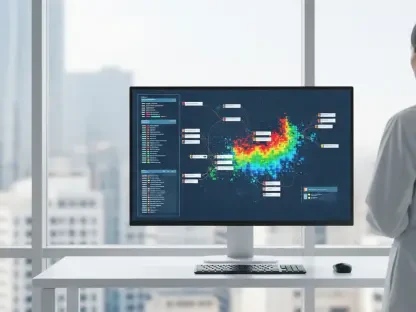
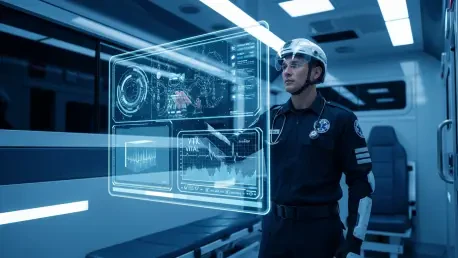
In that high-stakes environment, a paramedic is juggling a dozen things at once. The AI model, what the researchers call ‘Intub-8’, acts like an incredibly fast, intelligent co-pilot. It takes eight routine measurements that are already being collected—things like the patient’s heart rate, blood pressure, respiratory rate, and oxygen saturation—and analyzes them in a way a human brain simply can’t under duress. It sees the subtle patterns and combinations that scream “high risk.” Instead of relying on instinct or a rough estimation, the paramedic gets a clear, data-driven signal. This technology cuts through the noise and cognitive load, giving the critical care team the confidence to make the call to perform a complex procedure like intubation, knowing it’s based on a robust prediction of need and benefit.
Given that this advanced care is often delivered by specialized air ambulance teams, what are the primary logistical and training challenges in extending this capability to ground ambulance crews? Please detail the steps needed for a successful rollout to ensure high-quality care.
This is the central challenge. Right now, this procedure is the domain of highly trained physician-paramedic teams, typically on air ambulances, who perform it regularly. Extending this to ground crews isn’t as simple as just adding a new piece of equipment to the ambulance. First, there’s the intensive training; this is an advanced anesthetic procedure that carries risks. It requires a deep understanding of pharmacology, airway management, and physiology. Second, you need to maintain that skill. A paramedic in a busy urban center might use it frequently, but one in a quieter, rural area might not, leading to skill decay. A successful rollout would demand a standardized, rigorous training curriculum, ongoing simulation-based practice, and strong clinical governance to oversee the quality and safety of the program. It’s a significant investment in people, not just technology.
The financial analysis suggests a potential annual saving of over £100 million for the UK’s health system. Can you break down where these cost savings come from, considering both the immediate reduction in care costs and the long-term economic benefits of lives saved?
The £101 million figure is staggering, and it comes from several places. Immediately, a patient who receives early, effective intervention is likely to have a less complicated hospital stay. This means fewer days in the intensive care unit, which is the most expensive part of a hospital, and fewer secondary complications that require costly treatments. But the larger economic benefit is long-term. Every one of the 170 lives potentially saved each year represents a person who can return to their family, their job, and their community. The savings model accounts for the economic productivity of these individuals and the reduced need for long-term disability care. It’s a powerful demonstration that the upfront investment in advanced prehospital care pays for itself many times over, both in human and financial terms.
Since randomized trials for this procedure are considered unethical, causal modeling with AI offers a powerful alternative. For those unfamiliar with this approach, could you explain in simple terms how it isolates the effect of the intubation from other factors like injury severity?
It’s a brilliant application of technology to a tough ethical problem. You can’t ethically have two groups of critically injured people and tell one, “You get the potentially life-saving treatment,” and the other, “You don’t.” So instead of a live experiment, the AI runs a virtual one. It looks at the real-world data from thousands of patients—in this case, 6,467 of them. It learns all the complex relationships between the severity of their injuries, their vital signs, and their outcomes. The model then creates a “digital twin” for each patient who was intubated. This digital twin is identical in every way—same injuries, same vital signs—but in the model, they were not intubated. By comparing the real patient’s outcome to their digital twin’s predicted outcome, the AI can isolate and measure the precise survival benefit that came from the intubation itself, effectively stripping away the influence of all other factors.
The study’s context is a mixed rural-urban UK setting with physician-paramedic teams. How might the survival benefits and implementation strategies need to be adapted for different healthcare systems, such as a purely urban US system or one in a developing nation with fewer resources?
Context is everything, and you’re right to point that out. In a dense urban US system with short transport times, the benefit might be less pronounced because the hospital is only minutes away. The focus there might be on getting the patient to a trauma center as fast as possible. However, the AI model could still be invaluable for identifying which patients need to be routed to a top-tier trauma center versus a closer hospital. In a developing nation with limited resources and potentially very long transport times, the survival benefit of prehospital intubation could be even greater than the 10.3% seen here. But the challenge would be immense—training personnel, equipping ambulances, and maintaining a supply of anesthetic drugs. The strategy would have to be tailored, perhaps by creating a few highly specialized mobile teams to cover a large area, rather than trying to equip every single ambulance.
What is your forecast for emergency trauma care?
I believe we are on the cusp of a major transformation. For decades, the paradigm has been “scoop and run”—get the patient to the hospital as fast as possible. This study and the technology behind it signal a shift toward “stay and play”—bringing the hospital’s critical care capabilities directly to the patient. My forecast is that within the next decade, AI decision-support tools will become standard in ambulances, guiding paramedics through complex choices. We will see a greater emphasis on advanced, targeted interventions at the scene, effectively starting the lifesaving process the moment help arrives. This will save countless lives that are currently lost in transit, fundamentally redefining the golden hour of trauma care.