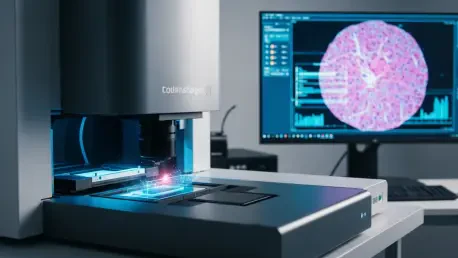

The microscopic architecture of a single human cell holds a clock that ticks toward an inevitable biological finish line, yet reading this timer has long required expensive genetic sequencing that remains out of reach for routine clinical care. The emergence of TLPath, a specialized artificial intelligence tool, changes this dynamic by extracting biological age data directly from standard biopsy images. By converting static histopathology slides into dynamic markers of cellular decay, this technology bridges the gap between traditional pathology and advanced gerontology. It represents a fundamental shift in how the medical community perceives tissue samples, moving beyond simple disease diagnosis toward a comprehensive assessment of a patient’s overall biological vitality.
The Convergence of AI and Biological Aging Markers
As the healthcare industry shifts toward personalized medicine, the ability to quantify aging at a cellular level has become a holy grail for researchers. Telomeres, the protective caps on our chromosomes, naturally shorten as we age, serving as a reliable proxy for our “biological” as opposed to “chronological” age. However, the high cost and technical complexity of measuring these caps have historically restricted such data to high-end research laboratories. The introduction of AI-driven prediction models democratizes this information by utilizing the millions of biopsy slides already generated annually in hospitals worldwide.
This technological evolution is significant because it recognizes that the physical appearance of a cell is a manifestation of its underlying genetic health. Instead of viewing a biopsy slide as a mere tool for identifying tumors or infections, AI interprets the subtle textures and arrangements within the tissue as a coded language of aging. This convergence of computer vision and biology allows for a non-invasive, scalable method to monitor how lifestyle, environment, and genetics influence the rate at which our bodies wear down over time.
Technical Framework and Foundational Architecture
Computer Vision and Foundation Models
The core of this technology rests on “foundation models” in computer vision, which are trained to recognize complex spatial hierarchies within high-resolution images. Unlike basic diagnostic algorithms that look for specific abnormalities, these models evaluate the broader morphological landscape of a tissue sample. They process vast amounts of data to identify patterns that correlate with telomere attrition, such as the specific density of cell nuclei or the arrangement of the extracellular matrix. This approach allows the system to generalize its findings across diverse human tissues, from skin to liver, without requiring a unique model for every organ type.
By leveraging deep learning, the software can perceive “higher-order features” that elude the human eye. While a pathologist sees a healthy-looking cell, the AI might detect a specific roughness in the nuclear envelope or a subtle change in cytoplasmic staining that signals a shortened telomere. This depth of analysis transforms a standard medical image into a high-dimensional data point, providing a level of granular insight that was previously impossible without destroying the sample for genetic testing.
High-Resolution Feature Extraction and Weighting
To achieve high accuracy, the system employs a sophisticated process of segmentation and statistical weighting. Each high-resolution digital slide is sliced into thousands of microscopic “patches,” ensuring that no localized detail is overlooked. The algorithm then extracts over a thousand distinct features from each patch, ranging from the geometry of individual cells to the complex textures of the surrounding tissue. By assigning mathematical weights to these features, the AI determines which visual cues are the most reliable indicators of telomere length for a specific individual.
This weighting system is what gives the technology its predictive power, allowing it to distinguish between two patients of the same age. It does not simply guess based on a birth year; rather, it measures the actual biological “wear and tear” present in the sample. This capability ensures that the results are grounded in the physical reality of the patient’s health, making it a far more effective tool for risk assessment than traditional demographic statistics.
Current Trends in Computational Pathology and Tissue Analytics
The field of computational pathology is currently undergoing a massive digital transformation, moving away from glass slides and manual microscopy toward fully digitized workflows. This shift is driven by the need for speed and the desire to apply machine learning to vast archives of medical data. Emerging trends suggest that the future of pathology lies in “multi-modal” analysis, where AI combines visual data from slides with other biological markers to create a holistic view of patient health.
Furthermore, there is a growing industry shift toward “opportunistic screening.” In this model, every biopsy performed for a specific medical reason is also scanned for general health indicators like telomere length. This trend maximizes the value of every clinical procedure, turning a routine diagnostic check into a comprehensive health audit. As the infrastructure for digital imaging improves, the integration of these predictive tools into standard hospital software is becoming a primary objective for health tech developers.
Real-World Applications in Clinical Research and Diagnostics
In the realm of clinical research, AI-driven telomere prediction is being deployed to accelerate drug trials, particularly those focused on longevity and age-related diseases. Researchers can use the tool to monitor how a specific intervention affects cellular health over time without the need for repetitive, invasive genetic tests. In the pharmaceutical sector, this provides a faster and more cost-effective way to measure the efficacy of “anti-aging” compounds, allowing for more agile development cycles and more precise data collection.
In clinical diagnostics, the technology offers a new way to identify patients at high risk for chronic conditions such as cardiovascular disease or neurodegeneration. By flagging individuals with “accelerated” biological aging—those whose telomeres are significantly shorter than their chronological age would suggest—doctors can implement preventative measures years before symptoms manifest. This proactive approach marks a departure from the traditional “wait and see” model of medicine, potentially saving lives through early intervention and lifestyle modification.
Adoption Barriers and Technical Limitations
Despite its potential, the widespread adoption of this technology faces significant hurdles, primarily related to the lack of standardized digital infrastructure. Most clinical settings still rely on physical slides, and the high-resolution scanners required to feed data into an AI model are expensive and not yet universal. Moreover, there are inherent challenges in data interoperability; a slide prepared in one laboratory might be stained or scanned differently than one in another, leading to potential inconsistencies in AI performance if the model is not properly calibrated.
Regulatory and ethical concerns also persist regarding how this biological age data is used. There is a risk that insurance companies or employers could misuse information about a person’s biological aging rate to discriminate or adjust premiums. Additionally, while the AI is highly accurate, it is still a predictive model rather than a direct measurement. Ensuring that clinicians understand the probabilistic nature of these results—and do not treat them as absolute genetic facts—remains a critical step in the responsible rollout of the technology.
Future Trajectory: Towards Scalable Biological Monitoring
Looking ahead, the trajectory of this technology points toward a future where biological monitoring is both continuous and invisible. As digital pathology becomes the global standard, AI-driven telomere analysis will likely become a background process integrated into every medical check-up. We may see the development of even more refined models capable of predicting specific disease onsets based on tissue-specific aging markers, further refining our ability to provide personalized healthcare.
The long-term impact of this shift could be a significant extension of the human “healthspan.” By identifying the early signs of cellular decay across entire populations, society can shift its resources toward prevention rather than just treatment. This scalability is the true power of AI in this context; while genetic testing is a luxury for the few, AI-driven analysis of existing medical images could eventually provide biological insights for the many, fundamentally altering our collective approach to aging.
Assessment of AI’s Role in Modern Pathological Science
The integration of AI into telomere prediction represents a successful marriage of computational power and biological necessity. The technology moved beyond the limitations of traditional genetic assays, proving that the physical architecture of our tissues is a reliable mirror of our inner genetic clock. By automating the detection of cellular aging, this innovation provided a scalable solution to one of the most persistent challenges in modern medicine. It demonstrated that with the right tools, the standard biopsy slide—once a static diagnostic record—could become a dynamic window into the future of human health.
The transition toward digital pathology was significantly accelerated by these findings, pushing health systems to modernize their data storage and imaging capabilities. These advancements allowed for a more nuanced understanding of individual health, prioritizing biological reality over chronological assumptions. This paradigm shift encouraged the development of proactive interventions, ensuring that healthcare became more about maintaining vitality than simply managing decline. As these systems matured, they established a foundation for a more data-driven and equitable approach to monitoring the human condition.