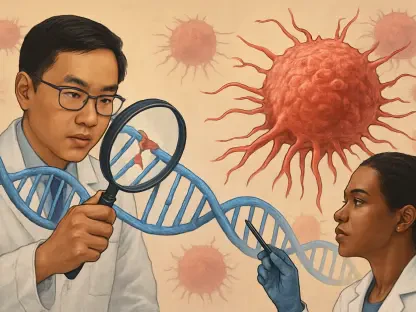

The intricate architecture of the human gut serves as a delicate frontier where trillions of microbes meet the body’s immune system in a constant, silent negotiation for balance. For millions of people living with ulcerative colitis, this internal peace treaty has collapsed, replaced by a relentless cycle of inflammation that erodes the intestinal lining and dictates the rhythm of daily life. While the medical field has traditionally relied on trial-and-error chemistry to find relief, a transformative shift is occurring as researchers trade traditional petri dishes for high-velocity algorithms. By deploying artificial intelligence to navigate the vast complexities of molecular biology, scientists have unearthed a novel peptide that promises to do more than just quiet the fire; it aims to rebuild the very foundation of gut health.
A New Era in the Fight Against Chronic Intestinal Inflammation
While traditional drug discovery often feels like searching for a needle in a haystack, researchers have just handed the magnet to artificial intelligence. A breakthrough study has leveraged machine learning to pinpoint a specific molecule capable of quieting the debilitating symptoms of ulcerative colitis, a condition that has long frustrated both patients and physicians. By processing thousands of chemical sequences in a fraction of the time it would take a human, this AI-driven approach has identified a candidate that does more than just mask symptoms—it actively works to repair the gut.
This digital evolution marks a departure from the “shotgun” approach of broad-spectrum medicine. Instead of overwhelming the body with systemic steroids or heavy immunosuppressants, the focus has shifted toward precision instruments designed by code. These new molecules are engineered to recognize specific biological signatures, ensuring that the treatment hits its target without causing collateral damage to the rest of the body. As this technology matures, the prospect of turning a chronic, life-altering disease into a manageable condition becomes increasingly tangible for those who have exhausted standard options.
The Growing Crisis of Ulcerative Colitis and the Search for Better Solutions
Ulcerative colitis (UC) is an increasingly common global health challenge, characterized by chronic, relapsing inflammation of the colon that leads to severe abdominal pain and persistent digestive distress. Current treatment options, ranging from anti-inflammatory steroids to complex biologics, often fall short; many patients either fail to respond initially or find that the medication loses its effectiveness over time. This therapeutic gap has driven scientists to explore antimicrobial peptides (AMPs)—natural defense molecules—as a possible alternative. However, the manual identification of these peptides is notoriously slow and expensive, creating a bottleneck that only modern technology can break.
The stakes are high because the incidence of inflammatory bowel diseases continues to rise in urbanized societies, likely due to changes in diet and environmental factors. As the patient population grows, the economic and social burden of long-term care intensifies. The search for “AMPs” represents a pivot toward nature’s own toolkit, as these peptides are fundamental parts of the innate immune system. Finding the right sequence, however, requires a level of pattern recognition that exceeds human capability, making the integration of computational intelligence not just a convenience, but a necessity for modern pharmacology.
How Artificial Intelligence Accelerated the Discovery of the LR Peptide
The integration of machine learning has transformed a multi-year experimental process into a streamlined digital pipeline, allowing researchers to screen vast libraries of molecular sequences with unprecedented precision. By simulating how different chemical structures interact with biological membranes, the software can predict which molecules will kill pathogens and which will leave healthy cells untouched. This predictive power essentially allows scientists to conduct thousands of “virtual experiments” before a single drop of liquid ever touches a test tube.
Using sophisticated algorithms and genetic models, the research team analyzed a library of over 6,000 potential peptide candidates. The AI evaluated these sequences based on their structural stability and predicted antibacterial effectiveness, eventually narrowing the field to just 22 high-potential sequences. This digital filtration saved months of labor-intensive laboratory work, allowing scientists to focus their resources on the “best of the best.” The efficiency of this process suggests that the timeline for drug development could be slashed from decades to years, fundamentally changing the economics of the pharmaceutical industry.
From the AI’s shortlist, a peptide designated as “LR” emerged as the clear frontrunner. Laboratory testing confirmed that LR possessed a rare and valuable combination: it was highly effective at killing harmful pathogens like E. coli while remaining remarkably gentle on healthy host cells. Unlike many traditional treatments that cause significant side effects, the LR peptide showed minimal toxicity, suggesting it could be a much safer option for long-term management. This balance of power and safety is the “holy grail” of drug design, particularly for diseases that require daily intervention.
In comparative studies using animal models, the LR peptide demonstrated clinical results that surpassed existing gold-standard therapies. Mice treated with the peptide showed significantly less weight loss and better preservation of colon health than those treated with conventional drugs like 5-aminosalicylic acid or standard antibiotics. The peptide didn’t just compete with current medications; it moved the needle further toward a full recovery by addressing the root causes of the flare-up rather than just the resulting pain.
Expert Findings on the Mechanisms of Gut Healing
Researchers have identified that the success of the LR peptide stems from its ability to tackle ulcerative colitis from three distinct biological angles, as confirmed by histological and molecular analysis. This multi-modal strategy ensures that the treatment is robust, closing off multiple pathways that the disease uses to progress. By stabilizing the environment of the colon, the peptide creates a window of opportunity for the body’s natural regenerative processes to take over and finish the job.
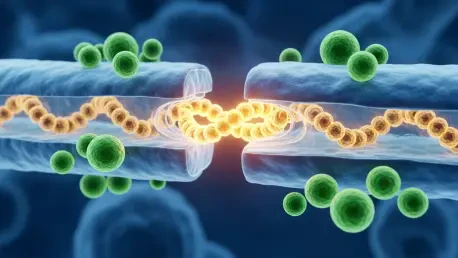
A primary feature of UC is a compromised intestinal lining that allows toxins to enter the bloodstream. The study found that the LR peptide stimulates the production of vital “tight junction” proteins, which act as the cellular glue holding the gut lining together. By reinforcing this barrier, the peptide effectively seals the leaks that fuel chronic inflammation. This structural fortification is essential, as a leaky gut acts like an open door for irritants that keep the immune system in a state of constant, destructive alarm.
Perhaps the most striking finding is that the LR peptide acts as a “smart” antimicrobial. Rather than wiping out all gut bacteria—as traditional antibiotics do—it selectively targeted pathogens while actually increasing the abundance of Akkermansia muciniphila. This beneficial bacterium is widely regarded by specialists as a cornerstone of gut health, known for its ability to reduce systemic inflammation and support the mucosal lining. This selective nurturing of the microbiome represents a significant shift toward “pro-microbial” medicine, where the goal is to cultivate a healthy internal ecosystem rather than simply sterilizing it.
Practical Implications for the Future of IBD Therapy
The success of this AI-driven discovery provides a framework for how precision medicine will likely evolve, offering a roadmap for developing more targeted, “microbiota-friendly” treatments. This methodology moves beyond the digestive tract, offering a template for how we might one day design custom molecules for skin conditions, respiratory infections, or even complex autoimmune disorders. The ability to “program” a peptide to perform a specific task within a complex biological environment opens a new frontier in synthetic biology.
The pipeline used to find the LR peptide can be adapted to search for treatments for other inflammatory and autoimmune diseases. By combining AI prediction with targeted laboratory validation, the pharmaceutical industry can significantly reduce the cost and time associated with bringing new, life-changing drugs to market. This democratizes the discovery process, potentially allowing smaller research institutions to contribute to the global pharmacopeia by leveraging computing power over massive physical infrastructure.
While the results in animal models were a massive leap forward, the next phase involved translating these findings into human clinical settings. The high stability and low toxicity of the LR peptide made it an ideal candidate for further development, signaling a shift away from broad-spectrum drugs and toward personalized therapies that worked in harmony with the human microbiome. Researchers began preparing protocols for safety trials, focusing on how different human diets and genetic backgrounds might interact with the peptide. This transition required a rigorous evaluation of delivery methods to ensure the molecule remained intact until it reached the affected areas of the colon. The move toward human application highlighted the necessity of interdisciplinary cooperation, bridging the gap between computer science, microbiology, and clinical medicine to ensure that the digital promise was fulfilled in the lives of real patients.