
As a leading expert in biopharma and technological innovation, Ivan Kairatov has dedicated his career to the intersection of health and R&D. Today, we delve into a groundbreaking study where artificial intelligence analyzed WhatsApp voice messages to detect major depressive disorder, a condition affecting over 280 million people worldwide. We will explore the specific vocal biomarkers AI identifies, the significant performance gap observed between genders, the power of spontaneous speech in diagnostics, the practical path toward clinical integration, and the challenges of adapting this technology for global use.
When analyzing voice messages for signs of depression, what specific acoustic patterns—like pitch, pace, or tone—are the most telling? Could you walk us through how an AI distinguishes these subtle cues from a person’s normal speech variations, and explain what makes this method so innovative?
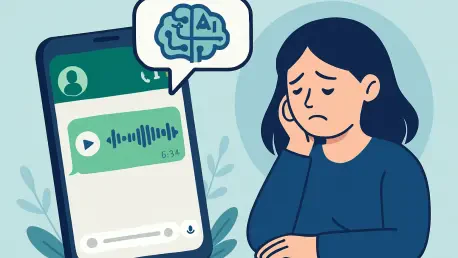
The real beauty of this approach lies in its subtlety. The AI isn’t just listening to the words; it’s analyzing the music behind them. We’re talking about almost imperceptible shifts in vocal biomarkers—a flatter intonation where there would normally be emotional peaks and valleys, a slightly slower pace of speaking, or longer, more frequent pauses between phrases. These “subtle acoustic patterns” can be tell-tale signs of the psychomotor slowing often associated with depression. What makes this so innovative is that it meets people where they are. By analyzing routine WhatsApp messages, it captures a person’s natural state without the pressure of a clinical setting, making it a low-burden screening tool that genuinely respects daily communication habits.
A model demonstrated over 91% accuracy in identifying depression in women but only 75% in men when analyzing spontaneous speech. What potential factors might explain this significant performance gap, and how can future models be trained to improve diagnostic accuracy and equity for male participants?
This performance disparity is a critical finding and points to a few potential issues. The most immediate explanation is the imbalance in the training data; the initial dataset included nearly four times as many women as men in the depression group, which naturally biases the model to better recognize female vocal patterns. Beyond the data, there are well-documented differences in how men and women express emotion vocally, which the algorithm may be picking up on. To close this gap, the path forward involves a very deliberate effort to diversify the training data. We need to build larger, more balanced datasets with equal representation and then fine-tune the algorithms to be more sensitive to the unique acoustic markers present in male speech, ensuring the tool is equitable and effective for everyone.
The model’s accuracy was significantly higher when analyzing a narrative like “describe your week” compared to a structured task like counting to ten. Why does spontaneous speech yield richer data for this purpose? What unique emotional or cognitive indicators does it reveal that rote counting cannot?
Spontaneous speech is a window into the mind that rote tasks simply can’t open. When someone is just counting from one to ten, they are performing a purely mechanical cognitive task. The emotional and cognitive load is minimal. But when you ask someone to describe their week, you invite them to access memories, formulate a narrative, and convey feelings. This is where the true diagnostic gold lies. In that free-form audio, the AI can detect a lack of variability in pitch, a monotone delivery when discussing potentially emotional events, and a hesitancy in speech that reflects cognitive fog—all classic symptoms of depression. This richness is why the accuracy for women jumped from 82% on the counting task to over 91% when analyzing their weekly narrative.
Envisioning this AI as a low-cost screening tool, what are the practical next steps for integrating it into clinical workflows? Please describe how a healthcare provider might use it ethically and effectively to support, not replace, traditional diagnostic methods while protecting patient privacy.
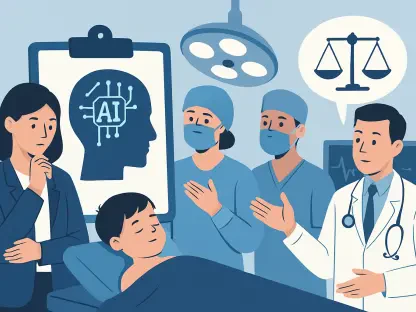
The key here is integration, not replacement. I see this as a powerful early-warning system. A primary care physician, with a patient’s explicit and informed consent, could use this tool to flag individuals who might need a more thorough mental health evaluation. Imagine a patient sending a routine voice update to their doctor; the system could privately alert the physician that the patient’s vocal patterns show a high probability of depression, prompting a compassionate follow-up conversation. Ethically, this requires an ironclad framework for data privacy—all analysis must be encrypted and anonymized. It’s a support tool to enhance a clinician’s intuition and prioritize care, never a replacement for human diagnosis.
This research focused on Brazilian Portuguese speakers. What are the key challenges and necessary steps in adapting this technology for other languages and cultures? How would you account for linguistic nuances and different cultural expressions of emotion to maintain high accuracy across diverse populations?
Scaling this technology globally is a monumental but necessary challenge. You can’t simply translate the model; you have to retrain it from the ground up for each new language and culture. The prosody, cadence, and emotional intonations of English are vastly different from those of Japanese or Swahili. Furthermore, cultural norms dictate how emotions are expressed; what might sound like a flat affect in one culture could be a sign of respectful deference in another. The process involves collecting massive, diverse, and culturally specific datasets for each target population. We must collaborate with local linguists, psychologists, and community members to ensure the model understands these nuances, preventing cultural biases from creating diagnostic errors.
What is your forecast for AI-driven mental health screening tools?
I am incredibly optimistic. I forecast that within the next decade, these tools will become a seamless and integrated part of preventative primary care. They will function much like a routine blood pressure check—a quick, non-invasive way to get a baseline on a patient’s mental well-being. By leveraging the technology people already use every day, like their smartphones, we will dramatically lower the barriers to seeking help and enable earlier detection for millions. This won’t eliminate the need for mental health professionals; instead, it will empower them by identifying at-risk individuals sooner, allowing for more timely and effective intervention before a crisis point is reached.