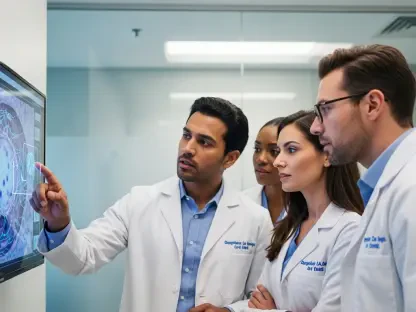

The traditional landscape of organizational psychology is undergoing a seismic shift as corporate entities increasingly seek more granular insights into employee behavior and team dynamics. For decades, the DISC assessment has served as a foundational pillar for categorizing personality into Dominance, Influence, Steadiness, and Conscientiousness, yet its manual nature often limited its scope in the modern, data-heavy era. Recent breakthroughs led by researchers at the University of East London, particularly under the guidance of Associate Professor Dr. Mohammad Hossein Amirhosseini, have introduced sophisticated machine learning models to modernize this framework. By transitioning from a rule-based scoring system to one powered by artificial intelligence, the evaluation process has become significantly more responsive to the nuances of human interaction. This evolution allows organizations to move past static snapshots of their workforce, instead embracing a dynamic, evidence-based approach that aligns behavioral theory with the rapid pace of current technological advancements.
Technological Precision: Refining the Algorithmic Approach
The integration of advanced algorithmic models has yielded a level of precision that was previously unattainable through conventional manual scoring methods. By processing extensive datasets from over 1,000 diverse participants, researchers successfully trained machine learning systems to recognize and replicate the underlying logic of the DISC framework with an accuracy rate exceeding 93 percent. This high degree of reliability is crucial for corporate applications, as it provides a standardized baseline that minimizes the inherent subjectivity and potential for human error associated with manual interpretations. These automated systems can identify subtle patterns in responses that might be overlooked by human evaluators, ensuring that the resulting behavioral profiles are both consistent and mathematically sound. Consequently, the transition to AI-driven assessments provides a robust foundation for talent management, offering high-fidelity data that supports more informed decision-making regarding team composition and organizational culture.
Building on this foundation of accuracy, the research also addressed one of the most persistent challenges in psychological testing: the time investment required from the participants. Through the application of feature selection techniques, the machine learning models identified the most “informative” variables within the traditional 40-item questionnaire, which traditionally presented a barrier to high completion rates. By isolating these high-impact questions, the team developed a condensed 10-item version that maintained a remarkable accuracy rate of over 91 percent. This 75 percent reduction in length transforms the assessment from a tedious administrative hurdle into a streamlined, frictionless interaction. Such efficiency is particularly valuable in fast-paced professional settings, where the ability to gain deep psychological insights in a fraction of the time allows for more agile recruitment processes. This development ensures that comprehensive personality profiling can be integrated into high-volume hiring environments without sacrificing the depth or the quality of the insights.
Behavioral Complexity: Beyond the Four Quadrants
While traditional DISC evaluations often categorize individuals into one of four rigid quadrants, machine learning allows for a far more sophisticated exploration of human personality. By utilizing unsupervised learning and clustering techniques, the AI models identified “hybrid” profiles that better reflect the multifaceted nature of professional behavior. In a real-world setting, an individual rarely exhibits traits exclusively from a single category; instead, they often demonstrate a complex blend of assertiveness, analytical rigor, and interpersonal warmth. The AI’s ability to map these overlapping traits provides a more authentic representation of how an employee might operate under pressure or within a collaborative team. This shift toward a more nuanced understanding of personality prevents the oversimplification often criticized in earlier psychological models. By acknowledging these blended profiles, organizations can gain a clearer picture of their talent pool, recognizing the diverse strengths that individuals bring to their specific roles and responsibilities.
This enhanced understanding of behavioral fluidity has direct implications for leadership development and communication strategies within the modern workplace. Organizations are now able to leverage these detailed profiles to tailor training programs that address the unique “subtle overlaps” in an executive’s management style. For instance, a leader who possesses the drive of “Dominance” alongside the precision of “Conscientiousness” requires a different coaching approach than one who balances “Influence” with “Steadiness.” The data-driven insights provided by machine learning enable a more personalized approach to professional growth, fostering environments where communication styles are optimized for maximum efficiency. Furthermore, this multifaceted view of personality supports the creation of balanced teams, where complementary traits are strategically aligned to drive innovation. By moving away from “box-based” psychology and toward a more flexible, cluster-based analysis, companies can foster a culture of adaptability that is essential for navigating the complexities of the current global business environment.
Organizational Standards: Implementing Data-Driven Strategy
The practical application of AI-enhanced DISC assessments is currently reshaping how human resources departments approach the entire lifecycle of employment. From initial recruitment to long-term retention, the ability to obtain fast, accurate, and deep behavioral insights allows for a more strategic alignment of human capital with organizational goals. By integrating these streamlined assessments into the onboarding process, companies can immediately identify the best ways to integrate new hires into existing team structures. The objective nature of the AI-driven data also provides a neutral ground for performance reviews and conflict resolution, as it focuses on evidenced-based behavioral patterns rather than anecdotal observations. This level of transparency and data integrity is becoming a requirement for modern enterprises that prioritize diversity and objective meritocracy. As these tools become more accessible, the barrier between sophisticated psychological theory and practical workplace application continues to dissolve, making high-level behavioral science a standard component of corporate operations.
Ultimately, the successful marriage of machine learning and the DISC framework established a new benchmark for how organizations understood and supported their workforce. These advancements demonstrated that technological intervention did not have to replace psychological nuance; instead, it served to amplify and refine the core principles of behavioral science. Forward-thinking leaders adopted these tools to ensure that their management strategies remained rooted in empirical evidence while staying flexible enough to account for individual differences. The move toward shortened, high-accuracy assessments facilitated a culture of continuous feedback, where behavioral data informed every step of the professional journey. By prioritizing these actionable insights, organizations optimized their team dynamics and significantly improved their overall operational resilience. The shift toward this hybrid approach ensured that the human element remained at the center of the technological revolution, providing a clear path for sustainable growth and a deeper understanding of the diverse talent driving modern industry.