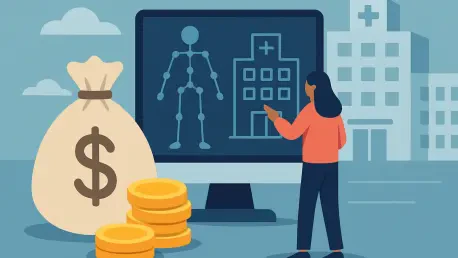

The intricate web of interconnected medical devices and patient data systems that forms the backbone of modern healthcare is also its greatest vulnerability, creating a vast attack surface for cybercriminals. The healthcare sector has become a prime target, where a single breach can disrupt critical care and compromise sensitive patient information. In response to this escalating threat, the Advanced Research Projects Agency for Health (ARPA-H) has initiated a bold strategy, awarding a significant $19 million grant to Northeastern University. This funding, part of the Universal Patching and Remediation for Autonomous Defense (UPGRADE) program, is set to pioneer a new era of proactive cyber defense by financing the development of sophisticated “digital twins”—virtual replicas of entire hospital ecosystems—to test and fortify defenses without risking patient lives.
The PATCH Project’s Virtual Blueprint
Understanding the Digital Twin Ecosystem
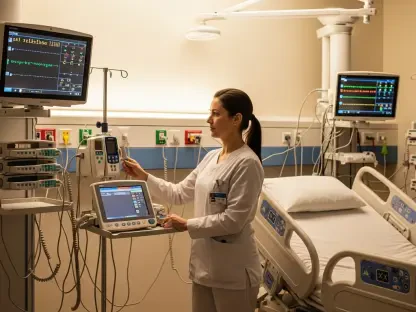
The central aim of the PATCH Project is to construct high-fidelity digital twins that serve as comprehensive virtual models of a healthcare organization’s complete network. These are not mere simulations; they are dynamic, detailed replicas that accurately mirror how every component—from infusion pumps and MRI machines to user accounts and data servers—is interconnected and interacts within the live environment. By creating an exact copy of the hospital’s operational technology and IT infrastructure, this initiative provides security teams with an unprecedented tool. This virtual sandbox allows for rigorous testing, experimentation, and security drills in a completely isolated setting. The ability to model the complex dependencies between legacy medical equipment and modern IT systems is a crucial advantage, as it enables a holistic understanding of the network’s vulnerabilities that was previously unattainable without potentially disrupting the delivery of care.
This virtualized environment fundamentally changes the paradigm of hospital cybersecurity from a reactive to a proactive stance. Within these digital twins, IT and security professionals can safely deploy and analyze potential cyber threats to understand their behavior and impact. This allows them to accelerate the discovery of hidden vulnerabilities, meticulously trace likely attack paths, and evaluate the effectiveness of security patches before they are applied to the live network. A significant benefit is the ability to prioritize remediation efforts, focusing on the network systems and medical devices that pose the greatest risk to patient safety and operational continuity. This targeted approach ensures that limited security resources are allocated efficiently, hardening the most critical assets against attack and significantly reducing the window of opportunity for malicious actors to exploit weaknesses within the complex hospital infrastructure.
Forging Strategic Alliances
This ambitious initiative is not a solitary effort but a robust collaboration led by Northeastern University’s Archimedes Center for Healthcare and Medical Device Cybersecurity. To ensure the digital twins are grounded in real-world complexity, the project has partnered with several leading provider organizations, including Michigan Medicine, Massachusetts General Hospital, and Beth Israel Deaconess Medical Center. These institutions will play a pivotal role by providing the anonymized data, network architectures, and operational insights necessary to build and validate the virtual models. Their direct involvement ensures that the resulting technology is not merely a theoretical exercise but a practical, effective tool tailored to the unique challenges and intricate workflows of active hospital environments. This synergy between academic research and clinical practice is essential for developing solutions that are both technologically advanced and operationally viable in the high-stakes world of healthcare.
The project’s scope extends beyond development to ensure widespread adoption and long-term sustainability through key commercial and educational partnerships. To facilitate the transition from research to real-world application, the initiative involves commercial partners such as Medcrypt and ForAllSecure. Their expertise will be instrumental in commercializing the open-source platforms developed, making the technology accessible and easily deployable across a diverse range of healthcare systems nationwide. Complementing this effort is a crucial partnership with the Association for the Advancement of Medical Instrumentation (AAMI). This collaboration will focus on vital outreach and training programs designed to equip healthcare technology management professionals and IT staff with the skills needed to maintain, operate, and secure these sophisticated digital twin systems, fostering a culture of cybersecurity resilience from the ground up.
Beyond Cybersecurity: The Expanding Role of Virtual Models
A Versatile Tool for Modern Medicine
The growing investment in digital twin technology for cybersecurity highlights a much broader trend of its adoption across the healthcare landscape. Beyond fortifying networks, these virtual replicas are proving to be powerful tools for optimizing hospital operations and improving patient outcomes. Healthcare administrators are utilizing digital twins to simulate and streamline patient flow, predict staffing needs during peak hours or emergencies, and test new layouts for clinical spaces to enhance efficiency and safety. In the realm of clinical research, this technology is advancing precision medicine by allowing researchers to create virtual models of patients for clinical trials, enabling the testing of novel treatments and therapies in a simulated environment before human application. This capability not only accelerates medical innovation but also enhances the safety and efficacy of new medical interventions.
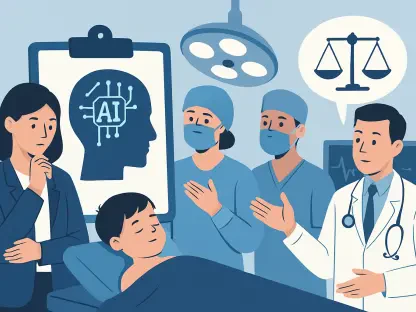
The potential of AI-driven digital twins is particularly noteworthy in the fields of predictive maintenance and threat intelligence. For biomedical engineering teams, these virtual models can simulate the wear and tear on critical medical equipment, predicting when a device is likely to fail and allowing for preemptive maintenance that prevents costly downtime and potential risks to patient care. In the cybersecurity domain, AI algorithms can continuously analyze the digital twin for anomalies and patterns indicative of an impending cyberattack, offering a predictive capability that traditional security tools lack. However, the successful implementation of these advanced systems hinges on two critical factors: they must be cost-effective for health IT teams to build and maintain, and they must incorporate uncompromisingly robust protections for the sensitive system and patient data they replicate to prevent the models themselves from becoming a security liability.
A New Standard in Healthcare Defense
The UPGRADE program represented a strategic pivot in the nation’s approach to healthcare cybersecurity. By funding initiatives like the PATCH Project, the federal government signaled a clear move away from traditional, reactive security measures toward a more autonomous and predictive defense framework. The development of digital twins provided a practical pathway to achieving this goal, creating a safe and controlled environment where innovative security solutions could be tested and refined without endangering patients. This initiative fostered a collaborative ecosystem where academia, healthcare providers, and technology vendors could work together to solve one of the most pressing challenges facing the medical industry. The project’s success established a new benchmark for securing critical infrastructure.
Ultimately, the creation and deployment of these virtual hospital replicas had a lasting impact on how healthcare organizations approached risk management. The ability to visualize attack paths and test patches in a mirrored environment empowered security teams to make more informed, data-driven decisions. This led to more resilient networks, reduced system downtime, and, most importantly, enhanced patient safety. The open-source nature of the platforms developed through this initiative ensured that these advanced defensive capabilities were not limited to a few well-resourced hospitals but could be adopted broadly across the healthcare sector. The project’s legacy was a stronger, more secure healthcare system, better equipped to defend against the sophisticated cyber threats of the modern era and protect the well-being of the communities it served.