
At the University of Southern California, a quiet revolution is underway, driven by visionary leadership and a historic philanthropic investment that is positioning the institution to fundamentally reshape how urologic cancers are diagnosed, treated, and potentially cured. Under the guidance of Dr. Inderbir Gill, a renowned pioneer in robotic surgery, USC’s Department of Urology is on an ambitious mission to transform a terrifying diagnosis into a manageable condition by systematically shifting away from highly invasive procedures and their often-debilitating side effects. This new paradigm focuses on a more humane, precise, and effective patient-centered approach, aiming to give patients with bladder, kidney, and prostate cancers their futures back with minimal physical trauma and a preserved quality of life. The core of this initiative rests on multiple pillars of innovation, from novel drug development to artificial intelligence, which are already showing exceptional promise and are projected to impact patients globally within the next few years.
A New Paradigm in Diagnosis and Drug Development
Smarter Diagnostics Seeing Cancer Without the Scalpel
USC is pioneering technologies that aim to provide definitive answers about cancer without the need for invasive procedures, a shift that promises to alleviate significant patient anxiety and eliminate unnecessary risks. For individuals with a suspected kidney tumor, the team is advancing the field of radiogenomics, an innovative approach that integrates traditional imaging techniques with the sophisticated analysis of cancer biomarkers. This powerful combination allows clinicians to non-invasively and accurately differentiate between benign, harmless growths and malignant, cancerous tumors. This breakthrough offers immense psychological relief to patients who might otherwise face a period of uncertain waiting or a major operation to remove a potentially harmless mass. By providing a clear diagnosis upfront, this technology is poised to eliminate thousands of unnecessary and high-risk surgeries each year, representing a major leap forward in both patient safety and healthcare efficiency.
Further addressing the discomfort and potential inaccuracies of current diagnostic standards, USC Urology is developing a novel virtual biopsy platform specifically for prostate cancer. The prevailing method today often involves an uncomfortable procedure where 12 to 20 invasive needle biopsies are taken from the prostate gland, a process that can miss cancerous tissue or lead to complications like infection and bleeding. The new platform in development leverages advanced, high-resolution imaging to accurately detect and characterize cancerous lesions without any physical tissue sampling. This innovation promises to replace an often imprecise and deeply uncomfortable procedure with a non-invasive, more reliable diagnostic tool. By creating a virtual map of the prostate that clearly identifies areas of concern, it provides surgeons with a more accurate guide for treatment planning and spares patients the ordeal of a traditional biopsy, marking a significant evolution in prostate cancer care.
A Revolutionary Drug That Teaches the Body to Heal Itself
A cornerstone of USC’s research is a novel medication for bladder cancer that has demonstrated remarkable efficacy and safety in clinical trials, offering a new horizon of hope for patients. What makes this drug truly groundbreaking is its unique ability to generate what is known as an “adaptive immune response.” Instead of just attacking cancer cells directly, the medication effectively trains the patient’s own immune system to recognize and tenaciously fight the cancer. This immunologic education leads to a durable remission, a state where the cancer does not return even long after the treatment has concluded. The body’s own defenses are left with a lasting memory of the cancer, ready to eliminate any recurrence. This approach signifies a fundamental shift from temporary chemical suppression to long-term biological control, harnessing the body’s innate power to heal itself and offering the potential for a lasting cure rather than just a temporary reprieve from the disease.
The immense promise of this innovative bladder cancer medication has not gone unnoticed by the medical and scientific communities. Its exceptional potential has been validated by its reception of the FDA’s prestigious “Breakthrough Therapy” designation, a status reserved for drugs that demonstrate substantial improvement over available therapies for serious conditions. This designation is intended to expedite the development and review of the drug, bringing it to the patients who need it most as quickly as possible. Furthermore, the research has been bolstered by a highly competitive R01 Research Project grant from the National Cancer Institute, an award that signifies a high degree of confidence from the nation’s leading cancer research authority. These powerful endorsements underscore the scientific rigor and clinical importance of this work, positioning the therapy not just as an incremental improvement but as a potential new standard of care that could redefine treatment for bladder cancer and inspire similar approaches across other malignancies.
The Future of Surgery Precise, Non-Invasive, and AI-Powered
Redefining Treatment From Radical Surgery to Focal Therapy
Leveraging world-renowned expertise in robotics and minimally invasive techniques, USC is aggressively advancing the frontier of non-invasive focal treatments for prostate cancer. For decades, the standard of care for localized prostate cancer often involved surgically removing the entire gland in a procedure known as a radical prostatectomy. While effective at removing the cancer, this operation carries significant risks of long-term side effects, including urinary incontinence and erectile dysfunction. The new focal therapy approach completely redefines this paradigm. Instead of removing the whole organ, these techniques use highly targeted energy sources—such as extreme cold (cryoablation), focused heat, or high-intensity ultrasound—to precisely destroy only the cancerous area within the gland. This method treats the tumor with surgical precision while leaving the surrounding healthy tissue and critical nerve structures completely intact, offering a powerful alternative to radical surgery.
The primary advantage of focal therapy lies in its ability to help patients avoid major surgery and, crucially, preserve their quality of life. By sparing the healthy portions of the prostate and surrounding nerves, these techniques significantly reduce the risk of the debilitating side effects that so many men fear. The preservation of urinary and sexual function is a central goal, shifting the focus of cancer treatment beyond mere survival to encompass the holistic well-being of the patient. This patient-centered approach represents a more humane and sustainable model of care, where the long-term consequences of treatment are considered just as important as the immediate removal of the cancer. As these technologies are refined and become more widely available, they hold the potential to transform the prostate cancer experience, turning a life-altering diagnosis into a treatable condition with far less impact on a patient’s daily life and personal identity.
The Surgeon’s Co-Pilot Integrating AI and Robotics
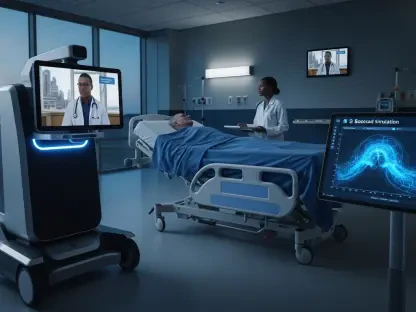
The future of the operating room is being actively developed at USC through a sophisticated “surgical computer vision system.” This forward-thinking technology combines a state-of-the-art robotic camera with an advanced artificial intelligence platform, both of which have been meticulously trained on an extensive and diverse library containing thousands of videos of complex robotic surgical procedures. In practice, the system functions as an intelligent co-pilot, augmenting the surgeon’s skills by providing real-time guidance and critical data-driven insights during delicate operations like a robotic prostatectomy. As the surgeon works, the AI analyzes the visual feed from the camera, identifies critical anatomical structures, and can provide alerts or highlight areas of concern, thereby enhancing precision and reinforcing safety protocols. This fusion of human expertise and machine intelligence is designed to elevate the standard of surgical care to a new level of accuracy and consistency.
The long-term impact of this AI-enhanced surgical vision extends far beyond a single institution. The system is being designed to act as a great equalizer, democratizing surgical expertise on a global scale. By encapsulating the knowledge and techniques gleaned from thousands of successful surgeries, this technology can provide invaluable assistance to surgeons everywhere, regardless of their individual experience level. It has the potential to shorten the learning curve for complex procedures, reduce the rate of human error, and help standardize the quality of care provided to patients around the world. As this intelligent co-pilot becomes more integrated into surgical practice, it promises to improve patient outcomes on a massive scale, ensuring that more people have access to the highest possible standard of surgical precision, ultimately making complex cancer surgery safer and more effective for everyone.
The Dawn of Incision-Free Office-Based Procedures
The long-term vision at USC extended even further, conceptualizing a future where major surgery itself could be replaced by simple, office-based procedures. The team envisioned a new generation of tiny, flexible robots capable of being inserted into the body without any incisions. These conceptual micro-robots would navigate through natural pathways to reach a tumor and then destroy it in a single, pain-free session. This represented the ultimate goal of minimally invasive cancer treatment, where a life-altering operation was transformed into a routine outpatient visit. This forward-looking work established a new benchmark for what was possible, pushing the boundaries of medical engineering and setting a course toward a future where the physical trauma of cancer treatment was all but eliminated. This ambition reflected a deep commitment to fundamentally altering the patient experience for the better.
The confluence of visionary leadership, a dedicated research team, strong institutional collaboration, and an unprecedented philanthropic investment created a unique ecosystem for medical innovation at USC. This environment allowed the Department of Urology not just to improve existing treatments but to actively forge a new paradigm for cancer care. Endorsements from university and health system leaders affirmed that the department’s work was truly life-changing and positioned it as a global leader. Through a focused and relentless pursuit of less invasive diagnostics, targeted therapeutics, and AI-assisted robotics, USC Urology laid out a clear and accelerated path to transform cancer from one of medicine’s most feared diagnoses into a treatable and survivable condition, contributing to a new era of hope for patients worldwide.