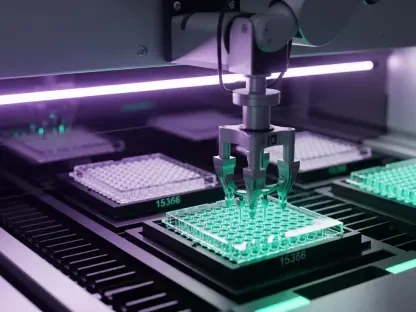

The biopharmaceutical sector is at a critical inflection point where groundbreaking scientific potential is met with unprecedented economic and regulatory pressures, reshaping the very definition of medical innovation. A convergence of advanced technologies, massive capital investments, and evolving regulatory standards is forcing companies to rethink their strategies from the laboratory bench to the manufacturing floor. This dynamic environment is creating both immense opportunities for breakthrough therapies and significant challenges for those unprepared for the new realities of drug development. The industry’s next wave is not being driven by a single discovery but by a fundamental transformation in how medicines are conceived, tested, and delivered.
Charting the Modern Biopharma Landscape
The current biopharma landscape is a study in contrasts. On one hand, the pace of scientific discovery has accelerated dramatically, with fields like cell and gene therapy moving from theoretical concepts to tangible treatments. On the other hand, the pathway from a promising compound to an approved drug has become increasingly complex and costly. Companies must now navigate a world where data is as valuable as molecules and where supply chain resilience is as critical as clinical efficacy.
This environment demands a new level of strategic agility. The era of the isolated blockbuster drug developed entirely in-house is giving way to a more interconnected ecosystem. Success is increasingly dependent on forming strategic alliances with technology firms, managing intricate global supply chains, and anticipating the rigorous demands of regulators who are continually raising the bar for what constitutes a meaningful therapeutic advance.
The Engines of Transformation and Market Momentum
At the heart of the industry’s evolution are powerful new technologies and the strategic capital being deployed to harness them. From artificial intelligence that can predict molecular interactions to novel immunotherapies that retrain the body’s own defenses, these innovations are not just incremental improvements; they represent a paradigm shift in the fight against disease. This technological surge is being met with significant financial commitments from industry leaders, who are placing multibillion-dollar bets on the platforms and products they believe will define the future of medicine.
From AI-Powered Pipelines to Advanced Cellular Therapies
The integration of artificial intelligence into drug discovery is rapidly moving from a niche concept to a core business strategy. Novartis, for instance, has committed to a collaboration with the AI startup Relation Therapeutics that could exceed $1.7 billion. The partnership aims to leverage Relation’s technology to uncover novel drug targets for atopic diseases, demonstrating a clear industry trend toward using sophisticated computational platforms to de-risk and accelerate the early stages of research and development. This reliance on external AI specialists highlights a shift toward a more collaborative and data-centric discovery model.
Simultaneously, advancements in clinical science continue to yield promising results for complex diseases. The dual-acting cancer immunotherapy pumitamig, developed by Bristol Myers Squibb and BioNTech, has shown significant efficacy in a Phase 2 trial for triple-negative breast cancer, one of the most aggressive forms of the disease. With a confirmed response rate of 61.5% and tumor control in over 92% of patients, the therapy exemplifies the potential of next-generation immunotherapies. The partners’ decision to advance to a global Phase 3 study underscores the immense clinical and commercial promise held by these advanced biological treatments.
Billion-Dollar Bets and Blockbuster Projections
The scientific momentum is backed by enormous capital investments aimed at securing future market leadership, particularly in high-growth areas like metabolic diseases. Eli Lilly and Company’s plan to invest $6 billion in a new manufacturing facility in Huntsville, Alabama, is a testament to this strategy. The plant is designed to produce active pharmaceutical ingredients for its pipeline, including for orforglipron, a highly anticipated oral obesity pill. This move is not merely an expansion of capacity but a strategic decision to onshore a critical part of the supply chain, ensuring control and reliability for a product projected to become a major blockbuster.
These massive infrastructure investments are a direct reflection of the industry’s confidence in its next generation of products. By committing billions to domestic manufacturing long before a drug like orforglipron receives final approval, companies are betting on both their clinical data and their ability to meet soaring market demand. This proactive approach to building a resilient supply chain is becoming a prerequisite for competing in the most lucrative therapeutic areas, transforming manufacturing from a logistical function into a core strategic asset.
Navigating the High Stakes of Modern Drug Development
While the potential rewards are greater than ever, so are the risks. The journey from a promising clinical result, like that seen with pumitamig, to a globally available treatment is fraught with scientific, financial, and regulatory hurdles. Each stage of development requires immense capital outlay and carries a significant risk of failure, making the high-stakes decisions of today critical for the long-term viability of any biopharma enterprise.
The sheer scale of the investments required underscores the pressure to succeed. A multibillion-dollar manufacturing plant or a high-value technology partnership represents a massive bet on a future that is far from guaranteed. Companies must therefore balance their pursuit of innovation with rigorous strategic planning, ensuring that their scientific ambitions are supported by a robust operational and financial foundation capable of weathering the long and often unpredictable development lifecycle.
The Evolving Regulatory Gauntlet
Compounding the inherent challenges of drug development is an increasingly stringent regulatory environment. Agencies like the U.S. Food and Drug Administration are raising the evidence bar, demanding more robust data to justify the approval of new therapies, especially in fields where effective treatments already exist. This shift reflects the maturation of cutting-edge therapeutic areas and ensures that new products offer a demonstrable benefit over the current standard of care.
A prime example of this trend is the FDA’s proposed new framework for CAR-T cancer therapies. Regulators are moving away from approvals based on single-arm studies and now expect future CAR-T candidates to prove their worth in randomized, controlled clinical trials against existing treatments, including other approved CAR-T therapies. This mandate significantly increases the complexity and cost of development. Even for drugs nearing the finish line, the final steps can be intricate. The recent delay in the FDA’s decision on Agios Pharmaceuticals’ anemia drug, mitapivat, illustrates that even procedural details, such as finalizing a risk-mitigation program, can add uncertainty to the approval timeline, highlighting the meticulous scrutiny applied throughout the review process.
Decoding Tomorrow’s Breakthroughs and Business Models
The forces of technological innovation, strategic investment, and regulatory evolution are collectively forging new business models within the biopharma industry. The future no longer belongs solely to the vertically integrated giant but to the organization that can adeptly build and manage a network of partnerships. Collaborations between established pharmaceutical players and nimble AI firms are becoming standard practice, creating a synergistic model where deep clinical expertise is augmented by powerful computational capabilities.
Moreover, the emphasis on securing domestic supply chains, as seen with Eli Lilly, signals a broader strategic realignment. In an era of geopolitical uncertainty and potential disruptions, control over manufacturing is a powerful competitive advantage. This strategic focus, combined with the necessity of generating clinical data that can withstand heightened regulatory scrutiny, is shaping a new paradigm. Tomorrow’s breakthroughs will be defined not only by their scientific elegance but also by the robust, resilient, and strategically sound business models that bring them to patients.
The Blueprint for Success in a New Era of Medicine
The biopharmaceutical landscape’s recent trajectory demonstrated a decisive shift toward a more complex and interconnected model of innovation. Success was no longer contingent on a single blockbuster discovery but depended on a multifaceted strategy that integrated technological prowess, financial foresight, and regulatory acumen. The industry showed that navigating this new era required more than just cutting-edge science; it demanded a holistic approach.
The companies that positioned themselves for leadership were those that embraced strategic partnerships to accelerate discovery, invested heavily in resilient domestic supply chains to de-risk their pipelines, and prepared meticulously to meet a higher bar for clinical evidence. The emerging blueprint for success was clear: it was built on a foundation of collaboration, strategic manufacturing, and an unwavering commitment to generating data that could withstand the rigorous scrutiny of a modernizing regulatory environment. These elements were the cornerstones that supported the development of the next generation of transformative medicines.