
Today we’re speaking with Dr. Ivan Kairatov, a biopharma expert whose work is at the very intersection of technology and immunology. His research has illuminated a fundamental biochemical pathway that governs how our immune cells maintain the health of our organs. We’ll be exploring his recent findings on the enzyme DHPS, a critical regulator of macrophage maturation. We will delve into how this single enzyme dictates the transformation of circulating immune cells into dedicated tissue guardians, the consequences of its failure in organs like the lungs and liver, and the exciting therapeutic possibilities this discovery unlocks for treating chronic inflammatory diseases.
Your research highlights that without the DHPS enzyme, monocyte infiltration becomes “futile.” Could you elaborate on what happens to these cells when they enter tissues? Please describe the cellular-level failures that prevent them from becoming fully functional, tissue-resident macrophages and how this leads to inflammation.
It’s a fascinating and ultimately tragic story at the cellular level. Imagine these monocytes as first responders arriving at an emergency. They get the signal, they rush into the tissue, full of potential. But once they arrive, they stall. Without DHPS, they lack the final set of instructions to complete their training, so to speak. They can’t fully differentiate into the mature, tissue-resident macrophages that are essential for cleanup and repair. Instead of becoming stable guardians that clear debris and maintain balance, they remain in an immature, unsettled state. The body, sensing that the macrophage population isn’t being restored, keeps sending in more and more monocytes. This creates a persistent, ongoing influx of these confused cells, which leads to chronic inflammation rather than the healing and homeostasis the tissue desperately needs.
The polyamine-hypusine pathway is central to your findings. Can you walk us through how DHPS controls the production of specific proteins for cell adhesion and signaling? Please explain step-by-step why the inability to create these proteins prevents macrophages from properly anchoring within their environment.
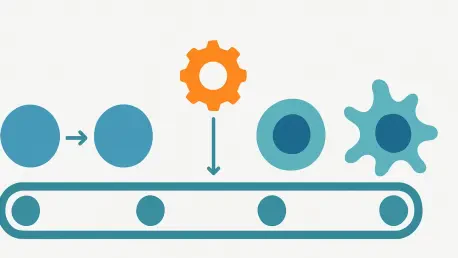
Certainly. The polyamine-hypusine pathway is like a highly specialized quality control system on a cellular assembly line. DHPS is the master switch in this process. It initiates a modification on a specific protein involved in translation, which is the process of making new proteins from genetic blueprints. This modification enables the cell’s protein-making machinery to efficiently translate a very specific subset of messenger RNAs. These aren’t just any proteins; they are the ones that code for things like cellular anchors and communication antennas—molecules critical for cell adhesion and signaling. Without DHPS, this switch is never flipped. The cell simply can’t manufacture these essential proteins correctly. As a result, the would-be macrophage is like a ship without an anchor or a rudder. It can’t properly stick to its surroundings or communicate with its neighbors, leading to the abnormal shapes and positioning we observed under the microscope. It’s fundamentally disconnected from its environment.
Your work demonstrated distinct problems in different organs, such as surfactant accumulation in the lungs and vascular disruption in the liver. How can the failure of one core “tissue-agnostic” pathway lead to such varied, organ-specific damage? Please explain the connection between this single mechanism and its diverse outcomes.
This is a crucial point and it beautifully illustrates the principle of “think globally, act locally” within our bodies. The DHPS-driven maturation program is a universal, or “tissue-agnostic,” requirement for all macrophages. It gives them their core identity. However, the specific day-to-day job of a macrophage is highly tailored to the organ it resides in. In the lungs, alveolar macrophages are responsible for clearing surfactant to keep the air sacs open. In the liver, Kupffer cells are essential for maintaining the integrity of blood vessels. When the fundamental maturation process fails, the cells can’t perform their specialized local duties. So, in the lung, you see the direct consequence of failed surfactant clearance—it builds up. In the liver, the absence of functional macrophages leads to the collapse of the local vascular architecture. The root cause is the same, but the symptoms manifest differently depending on the unique role that macrophage was supposed to play in that particular organ.
Given that this DHPS-driven maturation process is fundamental across many tissues, what are the potential therapeutic implications for conditions like chronic inflammatory diseases or fibrosis? Please detail the opportunities and challenges in developing treatments that could either enhance or inhibit this pathway to promote tissue health.
The implications are incredibly broad and exciting. We now have a central lever that controls a key aspect of tissue health across the body. For diseases like fibrosis, where macrophages can contribute to scarring, we might want to inhibit this pathway to dampen their activity. Conversely, in situations of acute injury or in aging, where tissue repair is impaired, we could look for ways to enhance the DHPS pathway to boost the generation of functional, healing macrophages. The primary challenge is precision. This is a fundamental pathway, so systemically inhibiting or activating it could have unintended consequences in healthy tissues. The opportunity lies in developing targeted therapies—perhaps using lipid nanoparticles or other delivery systems—that can modulate DHPS activity specifically within a diseased organ or a site of injury. It’s a delicate balance, but understanding this core mechanism gives us a powerful new target to aim for.
What is your forecast for macrophage-targeted therapies? Can you envision a future where we can precisely modulate the DHPS pathway to either boost tissue repair after an injury or dampen harmful inflammation in chronic diseases, and what would be the first steps to get there?
I am very optimistic. My forecast is that within the next decade, therapies that directly reprogram macrophage function will become a major pillar in treating a wide range of diseases, moving beyond broad-stroke immunosuppression. I absolutely envision a future where a physician could administer a treatment designed to specifically enhance DHPS activity in a patient’s failing heart after a heart attack to accelerate repair, or selectively inhibit it in the joints of someone with rheumatoid arthritis to quell inflammation. The first step to getting there is deep characterization. We need to identify the complete set of proteins that depend on DHPS for their translation. Once we have that detailed map, the next step will be to develop small molecules or genetic tools that can fine-tune the pathway’s activity with precision. This will require rigorous preclinical testing in disease-specific models to ensure we can achieve the desired therapeutic effect without disrupting the delicate balance of tissue homeostasis elsewhere. It’s a complex but clear path forward.