
In the quiet landscape of South Dakota, a veteran who had endured years of unrelenting chronic pain alongside the invisible wounds of post-traumatic stress disorder found an unexpected and complete reprieve, not from a new pill or surgical procedure, but from a low-level electrical current gently applied to his scalp. This remarkable, almost serendipitous, healing is not an isolated miracle but a powerful testament to the transformative medical research emerging from the University of South Dakota Sanford School of Medicine. More than just a training ground for future physicians, the school has established itself as the state’s epicenter for innovation, where fundamental scientific discoveries are systematically translated into tangible, life-altering healthcare solutions. The institution’s work is a carefully woven fabric of advanced science and community focus, addressing the specific health challenges of South Dakota’s rural and veteran populations while simultaneously contributing to the global medical conversation. By fostering an environment where cutting-edge research thrives, the Sanford School of Medicine is not only advancing patient care but is also building a robust, self-sustaining medical workforce, ensuring that the brightest minds are incentivized to remain in the state and serve the communities that need them most.
Neuroscience: New Hope for the Brain and Behavior
Breakthroughs in Neuromodulation
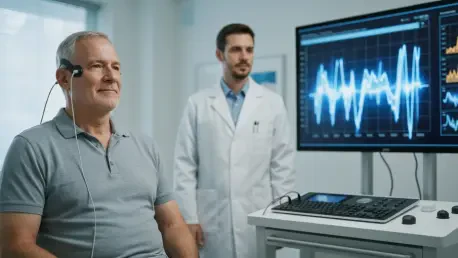
At the forefront of brain research, Dr. Lee Baugh, Director of the Center for Brain and Behavior Research (CBBRe), is exploring the profound connections between neural activity and human behavior, often with results that defy initial expectations. His work with a noninvasive technique known as transcranial direct current stimulation (tDCS) has produced one of the most compelling examples of research yielding life-changing outcomes. The initial study was designed to address the social isolation often experienced by individuals with PTSD, a condition particularly prevalent among veteran populations. By applying a gentle, low-level electrical current to specific regions of the brain, the tDCS technology aims to encourage and modulate neural activity, essentially helping the brain to recalibrate its own pathways. For one South Dakota veteran participating in the study, the intended goal was secondary to an astonishing and completely unanticipated side effect. After just two weeks of the neurostimulation treatment, his years-long battle with severe, debilitating chronic pain came to an abrupt end. The pain, which had been a constant and defining feature of his life, simply vanished, providing a level of relief that previous treatments had failed to deliver.
This serendipitous discovery immediately pivoted the direction of Dr. Baugh’s research, opening up an entirely new avenue of investigation focused on chronic pain relief. The case demonstrated the immense, and sometimes hidden, potential of neuromodulation techniques. It shifted the paradigm from a targeted treatment for a psychological symptom to a potential cure for a pervasive and difficult-to-treat physical condition. This single, powerful outcome has since launched a dedicated research project with the goal of understanding the underlying mechanisms and replicating this effect for a broader population of chronic pain sufferers. The discovery underscores a fundamental truth in scientific exploration: that progress is often a blend of meticulous planning and the willingness to embrace unexpected results. The veteran’s experience serves as a powerful illustration of the “bench-to-bedside” principle, where a laboratory experiment rapidly translates into a profound, real-world clinical benefit, offering tangible hope to countless others who suffer in silence from conditions that have long been considered intractable. This work is not just advancing neuroscience; it is directly rewriting the future for patients in South Dakota and beyond.
Improving Real-World Patient Outcomes
Dr. Baugh’s research extends its impact into the critical area of stroke recovery, where he addresses a significant and often overlooked disparity between clinical assessments and the actual functional abilities of patients. Currently, a stroke patient’s discharge from the hospital is frequently determined by their performance on a series of bedside tests. While these assessments are valuable, they often fail to capture the full spectrum of cognitive and physical challenges a patient will face when they return to the complexities of daily life at home. This gap can lead to premature discharges, leaving patients and their families ill-equipped to manage ongoing difficulties, which can result in setbacks, re-hospitalizations, and a diminished quality of life. Dr. Baugh’s work seeks to bridge this divide by employing sophisticated human subjects research to gain a deeper understanding of brain activity during the execution of real-world recovery tasks. By moving beyond simplified tests and observing how the brain functions while navigating more complex scenarios, his team aims to develop more nuanced and accurate clinical assessment tools.
These refined tools would empower physicians to make far more informed prognoses about a patient’s recovery trajectory. Instead of a simple pass-fail metric, doctors could gain insight into the specific neural pathways that are recovering well and those that still require significant rehabilitation. This would allow for the creation of highly personalized recovery plans tailored to each patient’s unique neurological profile. Ultimately, this research is about improving long-term outcomes by ensuring that a patient’s readiness for discharge is based on a comprehensive understanding of their ability to thrive outside the structured hospital environment. The goal is to equip patients with the right support and therapy at the right time, preventing the frustration and potential danger that comes from overestimating their recovery. By focusing on the practical, everyday challenges of life after a stroke, Dr. Baugh’s work promises to transform the standard of care, ensuring that clinical milestones translate into genuine, sustainable independence for patients.
Tailoring Technology for Rural Health
Recognizing the unique healthcare landscape of South Dakota, Dr. Baugh’s research on post-traumatic stress disorder is particularly attuned to the needs of the state’s residents. PTSD is a significant concern, yet a prevalent stigma against seeking mental health treatment often prevents individuals from accessing the care they need. To overcome this barrier, his work utilizes noninvasive brain function measurements to objectively understand how PTSD manifests differently from person to person. This approach moves beyond subjective self-reporting and delves into the neurobiological signatures of trauma, allowing for a more precise diagnosis and a clearer path toward personalized treatment. The ultimate objective is to develop predictive models that can identify which individuals are at the highest risk of developing PTSD following a traumatic event. This would enable proactive, early interventions that could mitigate the long-term impact of trauma, representing a monumental shift from reactive treatment to preventative mental healthcare. This research is not only scientifically advanced but also culturally sensitive, offering a way to address mental health that respects the reluctance of many to engage in traditional therapy.
A crucial component of Dr. Baugh’s work is its emphasis on accessibility, a critical factor in a vast, rural state like South Dakota where travel for specialized medical care can be a significant burden. The tDCS technology he investigates is notable for its portability, a feature that holds immense promise for overcoming geographical barriers to treatment. The potential for patients to use this technology safely and effectively in their own homes could revolutionize mental and neurological healthcare delivery in the region. This at-home model would drastically reduce the time, cost, and stress associated with frequent travel to a clinical center, making consistent treatment a viable option for individuals in remote communities. This focus on portable, accessible technology is a direct response to the practical challenges faced by South Dakotans. Dr. Baugh’s highly collaborative approach further amplifies his impact; through participation in the worldwide ENIGMA Consortium and partnerships with experts across diverse fields at USD, his research center functions as a hub of technological expertise, ensuring that the solutions being developed are not only innovative but also practical and directly applicable to the lives of the people they are meant to serve.
Cardiovascular Health: A Legacy of Innovation and Mentorship
Pioneering Protein Research
Dr. Xuejun “XJ” Wang, a professor and the Director of the M.D./Ph.D. program at the Sanford School of Medicine, embodies the institution’s commitment to nurturing homegrown talent and fostering a legacy of scientific leadership. As an alumnus of the school himself, his work on the molecular origins of heart disease is a testament to the world-class research environment cultivated at USD. His research delves into the fundamental mechanics of degenerative diseases, focusing on a critical cellular process known as protein quality control. He studies how misfolded proteins, which are essentially cellular components that have lost their correct shape and function, begin to clump together or aggregate within cells. This aggregation is a toxic process that disrupts normal cellular function and ultimately leads to cell death, a core mechanism underlying not only heart disease but also neurodegenerative conditions like Alzheimer’s. Dr. Wang’s most significant and pioneering contribution to the field was the invention of a novel and highly sophisticated method to genetically modify heart proteins.
This groundbreaking technique has provided an unprecedented window into the progression of cardiac disease. By genetically “tagging” these proteins, his team can now precisely track their journey within living cells, observing in real time as they misfold, aggregate, and contribute to the gradual decline from a healthy heart to one in a state of failure. This ability to visualize the disease process at the molecular level has been a paradigm shift, moving the field beyond static snapshots of diseased tissue to a dynamic understanding of how the condition unfolds over time. This detailed insight is crucial for developing targeted interventions. Instead of treating the symptoms of heart failure, researchers can now focus on developing therapies that prevent protein misfolding in the first place or help the cell’s natural machinery clear out these toxic aggregates before they cause irreversible damage. Dr. Wang’s work has opened entirely new avenues for treatment, offering a more precise and effective approach to combating one of the leading causes of death worldwide.
From a Local Lab to Global Impact
The implications of Dr. Wang’s innovative protein-tracking method extend far beyond the realm of cardiology, showcasing the interconnected nature of modern biomedical research. The fundamental process of protein misfolding and aggregation is a common thread that runs through a wide array of degenerative diseases. Recognizing this, Dr. Wang actively collaborates with a diverse group of scientists, including cancer biologists and neurologists, to explore the broad applicability of his technique. This interdisciplinary approach allows his discovery to be leveraged in the fight against numerous other debilitating conditions, amplifying the impact of research conducted right in South Dakota onto a global stage. His work has progressed from a fundamental scientific discovery to a source of genuine clinical hope, with treatments developed from his foundational research now entering clinical trials. This transition from laboratory bench to patient bedside is the ultimate goal of translational science, and its realization has brought tangible hope to patients who have reached out to him directly after reading his published studies, seeking to participate in the future of medicine that he is helping to create.
Perhaps the most enduring legacy of Dr. Wang’s career, however, is his profound commitment to mentorship and the cultivation of the next generation of scientific leaders. His role as Director of the M.D./Ph.D. program places him in a pivotal position to shape the futures of physician-scientists. The impact of his guidance was powerfully illustrated when he discovered that a list of the “Top Researchers in Cardiac Protein Quality Control” was composed almost entirely of his own former students and trainees. This was not merely a point of personal pride but a clear indicator of a much larger achievement: he had successfully established a world-class lineage of expertise that originated at the University of South Dakota. Through his dedication, a niche but critical area of medical research now has deep roots in the state. This accomplishment ensures a sustainable future for cardiovascular research in the region and solidifies South Dakota’s reputation as a center of excellence, demonstrating how the investment in one researcher can ripple outward to create an entire ecosystem of innovation and expertise.
Immunology and Virology: Building a Healthier Future
Fortifying Defenses Against Infectious Disease
In the intricate and ever-evolving battle between the human body and infectious diseases, Dr. Victor Huber, a professor of immunology and virology, stands as a key figure in strengthening our collective defenses. His research is strategically focused on two critical avenues that have direct implications for public health and pandemic preparedness. The first is a concerted effort to improve the efficacy of the seasonal influenza vaccine. While the flu shot is a vital public health tool, its effectiveness can vary significantly from year to year depending on how well the vaccine strains match the circulating viruses. Dr. Huber’s work aims to create more robust and broadly protective vaccines that can offer more reliable immunity. His second, and equally important, line of research investigates the dangerous phenomenon of secondary bacterial infections, such as pneumonia, which frequently follow an initial viral infection like influenza. These secondary infections are often more deadly than the virus itself and represent the leading cause of influenza-related deaths. By understanding the mechanisms that leave the body vulnerable after a viral assault, he seeks to develop strategies to prevent these devastating follow-on infections.
Dr. Huber’s ultimate goal is twofold: to contribute to the long-sought-after development of a universal influenza vaccine—one that would provide durable protection against all strains of the flu—and to create adaptable vaccine platforms that can be rapidly deployed in the face of future, unforeseen pandemics. To achieve these ambitious goals, he employs a range of unconventional and innovative research strategies. For instance, to better understand how to combat secondary bacterial infections, his lab models less severe immune responses. By studying how the body can successfully fight off pathogens with a milder, more controlled reaction, he hopes to identify ways to prevent the overactive and damaging inflammatory responses that often lead to severe complications like pneumonia. In another pioneering study, his team genetically modified a virus’s genome, a change that resulted in a substantial reduction in subsequent infections, pointing toward novel ways to disarm pathogens. Furthermore, he meticulously investigates interspecies transmission events—the critical moments when a virus jumps from an animal host, like a bird or a pig, to a human—in order to develop proactive vaccines that can prevent such zoonotic spillovers from igniting the next global health crisis.
Statewide Leadership in Biomedical Research
Dr. Victor Huber’s contributions to the health of South Dakota extend far beyond the confines of his own laboratory. In his role as the principal investigator for the state’s INBRE (IDeA Networks of Biomedical Research Excellence) grant, he has become a central figure in elevating the entire research infrastructure of the state. The INBRE program is a federal initiative from the National Institutes of Health specifically designed to support states that have historically received lower levels of biomedical research funding. Through Dr. Huber’s leadership, South Dakota receives $2.75 million annually, a sum that is instrumental in building a more competitive and robust scientific community. He is tasked with administering this grant, strategically distributing the funds across a network of 10 partner institutions throughout South Dakota. This network is remarkably diverse, including not only the state’s major universities but also its vital tribal colleges, ensuring that the benefits of this investment reach every corner of the state and foster a more inclusive research environment.
The impact of the INBRE grant under Dr. Huber’s stewardship is multifaceted and profound. The funding is used for a wide range of critical initiatives, from building state-of-the-art research facilities and purchasing cutting-edge equipment to providing seed money for new and innovative research projects that might otherwise struggle to get off the ground. Perhaps most importantly, a significant portion of the funding is dedicated to expanding research opportunities for undergraduate students. This investment in the state’s youth is a direct strategy to combat “brain drain” by providing students with compelling, hands-on scientific experiences that inspire them to pursue careers in research and medicine within South Dakota. By nurturing this pipeline of future scientific talent, Dr. Huber is not just funding individual projects; he is building a sustainable, self-perpetuating ecosystem of innovation. His leadership ensures that the state’s research capacity is continuously growing, creating a stronger foundation for future medical breakthroughs and solidifying South Dakota’s position as a rising leader in the national biomedical landscape.
A Legacy of Transformative Impact
The collective work of these researchers at the USD Sanford School of Medicine demonstrated a powerful and direct connection between fundamental scientific inquiry and profound improvements in human health. The institution successfully cultivated an environment where a veteran could find unexpected freedom from chronic pain through neuroscience, a heart disease patient could gain new hope from molecular innovation, and an entire state’s research capacity could be elevated through strategic leadership. By seamlessly integrating its educational mission with a forward-thinking research agenda, the school ensured that residents of South Dakota and beyond gained greater access to cutting-edge, lifesaving care. The efforts of these scientists and their teams built a legacy of innovation and mentorship that strengthened the region’s health and fortified its future.