
The translation of profound academic research into tangible technologies that address humanity’s most pressing challenges stands as a hallmark of institutional excellence, a commitment exemplified by the University of California, Los Angeles. In a significant recognition of this mission, two distinguished faculty members, Maher El-Kady, an assistant researcher in chemistry and biochemistry, and Dr. Dennis Slamon, a professor and chief of hematology-oncology, have been elected to the National Academy of Inventors. This distinction is widely regarded as the highest professional honor for inventors, underscoring the real-world significance of their life-altering work. Their election reinforces UCLA’s deep-rooted culture of innovation, which aims to create solutions that save lives, improve society, and foster economic growth. El-Kady and Slamon now join an esteemed group of over 30 other UCLA researchers who have previously received this honor, solidifying the university’s reputation as a premier hub for invention. Dr. Paul R. Sanberg, the academy’s president, affirmed that NAI fellows are a “driving force within the innovation ecosystem” whose work is actively “shaping the future of our world.”
Revolutionizing Energy and Medicine
Maher El-Kady: Pioneering a Sustainable Energy Future
Maher El-Kady’s research is driven by a forward-thinking vision to develop the next generation of energy storage solutions, concentrating on creating technologies that are simultaneously efficient, affordable, safe, and sustainable. His work promises a future where personal electronics could be charged in a matter of minutes and electric vehicles could operate on clean energy without the inherent fire risk associated with today’s prevalent lithium-ion batteries. This ambitious journey gained significant momentum during his time as a graduate student at UCLA, where he earned his doctorate in 2013. Collaborating with his mentor, chemistry professor Richard Kaner, El-Kady developed a remarkably simple yet powerful and cost-effective method for producing laser-scribed graphene. By ingeniously repurposing a standard, commercially available DVD burner, they were able to precisely etch high-performance energy storage devices known as micro-supercapacitors directly onto a graphene oxide film. This foundational breakthrough was not just a clever trick; it became a catalyst for a cascade of further interdisciplinary innovations that spanned chemistry, materials science, and engineering, setting a new course for compact and efficient energy storage.
The practical applications stemming from El-Kady’s foundational discovery have been both diverse and impactful. Subsequent developments he led resulted in graphene-based batteries and supercapacitors that were increasingly flexible, powerful, and capable of rapid charging, finding utility in fields from wearable technology and electric vehicles to advanced healthcare. Among his groundbreaking inventions are a “biological supercapacitor” designed to be powered by the body’s own electrolytes, which could improve the longevity of implanted medical devices like pacemakers, and a solar-powered technology capable of producing hydrogen fuel sustainably. Demonstrating a strong commitment to translating this research into market-ready products, El-Kady co-founded the startup Nanotech Energy in 2014 with Professor Kaner. As the company’s Chief Technology Officer, he has focused on enhancing the safety of energy storage systems, a critical hurdle for the widespread adoption of electric vehicles. This work culminated in Organolyte graphene-based batteries, which utilize a patented, nonflammable electrolyte, earning the team the prestigious Innovation Award at the 2022 Consumer Electronics Show. His current research continues to push boundaries as he works to improve conductive plastics for touch screens and explores zinc-based batteries as a safer alternative to lithium-ion.
Dr. Dennis Slamon: Transforming Cancer Treatment
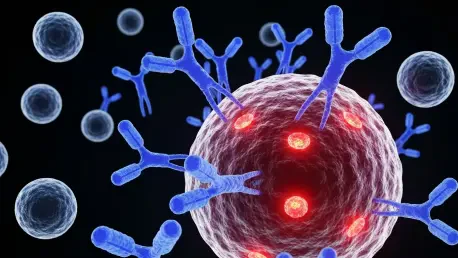
Dr. Dennis Slamon’s contributions are credited with fundamentally reshaping the landscape of cancer treatment, largely by establishing the foundational principles of “precision medicine” long before the term entered the common lexicon. His core philosophy was revolutionary: cancer treatments should be designed to target the specific genetic mutations that fuel a tumor’s growth, rather than being based solely on the organ or location where the cancer appears. This paradigm-shifting idea found its ideal test case in the late 1980s, when his pivotal research identified a direct link between the HER2 gene and an especially aggressive form of breast cancer. This discovery provided the perfect opportunity to test his theory with a new monoclonal antibody that would specifically target the protein produced by this overactive gene. He launched the first human clinical trial of this groundbreaking drug, which would become known as Herceptin, at UCLA in 1990. Following years of rigorous testing that validated his approach, the U.S. Food and Drug Administration approved the drug in 1998, marking a monumental victory for targeted cancer therapy and a new hope for patients worldwide.
The impact of Herceptin has been immense and continues to reverberate throughout the world of oncology. To date, nearly 3.5 million women have been treated with the drug, and extensive research has demonstrated that it boosts survival rates by over 50% for patients with HER2-positive breast cancer. Today, approximately one in five breast cancer patients worldwide—around 340,000 women annually—are diagnosed with this specific form that Herceptin can effectively treat. However, Dr. Slamon’s innovative work did not conclude with this single success. He continued to develop other groundbreaking treatments for different breast cancer subtypes, including palbociclib, which received FDA approval in 2015, and more recently, ribociclib, approved in 2024. Beyond the specific drugs he developed, Slamon’s most enduring legacy may be the paradigm shift he initiated. His success validated the approach of targeting specific gene alterations, ushering in a new era of cancer research and directly inspiring other investigators to develop a host of lifesaving targeted therapies, such as Tukysa, Nerlynx, and Avastin. His profound contributions have been recognized with some of the most prestigious honors in science and medicine.
A Lasting Blueprint for Progress
The distinct yet equally impactful careers of these two inventors ultimately converged on a shared principle: that scientific discovery’s greatest value was realized when translated into practical solutions that address urgent global needs. Maher El-Kady’s journey, which began with a repurposed DVD burner and culminated in industry-leading battery technology, forged a tangible path toward a safer and more sustainable energy future. His work exemplified how creative thinking and interdisciplinary science could overcome long-standing technical hurdles in energy storage. In parallel, Dr. Dennis Slamon’s persistent challenge to conventional cancer treatment protocols established a new, more precise paradigm that transformed a devastating diagnosis into a manageable and often curable condition for millions of patients worldwide. His development of Herceptin and subsequent therapies not only saved lives but also created a blueprint for personalized medicine that continues to guide researchers today. Their collective achievements stood as a powerful testament to how dedicated research, when nurtured within an ecosystem committed to innovation, could fundamentally alter the human experience for the better. The recognition they received celebrated not just their individual patents and discoveries, but the profound and lasting benefit their work delivered to humanity.