
The global marketplace for pharmaceuticals has reached a critical inflection point where the sheer volume of counterfeit medications now threatens the fundamental integrity of international healthcare systems and patient safety alike. As criminal networks become more sophisticated in replicating packaging and pill aesthetics, the demand for an immediate, field-deployable verification method has never been higher. Researchers at the University of California, Riverside, recently addressed this gap by engineering a groundbreaking, low-cost diagnostic tool designed to authenticate medications in a matter of seconds. This innovation represents a paradigm shift in how regulatory bodies and healthcare providers can monitor supply chain integrity without relying on inaccessible, high-cost laboratory infrastructure.
The pharmaceutical industry currently faces a pervasive crisis involving the global proliferation of falsified and substandard treatments. From life-saving antibiotics to high-demand weight-loss therapies, the market for illicit drugs has expanded into a multi-billion-dollar enterprise that circumvents traditional safety protocols. By providing a tool that is both affordable and easy to operate, this research offers a frontline defense mechanism capable of democratizing drug safety. The primary objective is to move beyond centralized testing models, allowing for real-time verification at the point of distribution, which is essential for protecting vulnerable populations in both developing and developed nations.
The Growing Global Threat of Counterfeit and Substandard Medications
According to data provided by the World Health Organization, approximately ten percent of medical products circulating in low- and middle-income countries fail to meet quality standards or are outright falsifications. While the crisis was once viewed primarily as a challenge for the developing world, where fake antimalarial drugs contribute to thousands of preventable deaths annually, the risk profile has shifted significantly. In recent years, the United States has seen a sharp increase in “gray market” activity involving luxury treatments and high-demand pharmaceuticals. This domestic vulnerability highlights the fact that no supply chain is entirely immune to the infiltration of unregulated or dangerous substances.
Understanding the scale of this problem is vital for evaluating the market potential of new diagnostic technologies. The rise of e-commerce and unregulated online pharmacies has simplified the process for counterfeiters to reach consumers directly, bypassing the stringent oversight of licensed pharmacists. These background factors have forced a reallocation of research priorities toward the creation of accessible, rapid-response tools. As the pharmaceutical landscape becomes more fragmented, the necessity for a universal, low-cost verification standard becomes a matter of national security and public health stability.
The Science and Mechanics of Disintegration Fingerprinting
Analyzing Physical Behavior to Verify Chemical Integrity
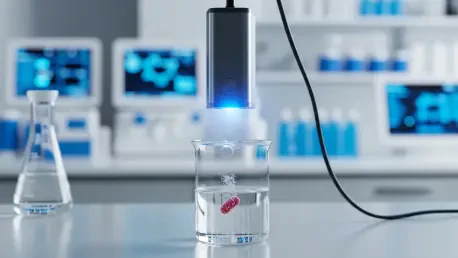
The methodology behind the UC Riverside innovation is centered on a process known as “disintegration fingerprinting,” which analyzes how a pill physically breaks down in a solvent. Unlike traditional chemical analysis, which requires expensive mass spectrometers and specialized reagents to identify molecular structures, this device monitors the unique dissolution rate of a tablet. Because legitimate manufacturers utilize hyper-precise ratios of binders and fillers alongside standardized compression techniques, every authentic pill of a specific brand possesses a characteristic physical signature. By tracking this breakdown, the tool creates a digital profile that can immediately distinguish a genuine product from a counterfeit produced under different environmental conditions or with substitute materials.
Leveraging Repurposed Technology for Maximum Accessibility
A major driver of this tool’s market viability is its radical cost-effectiveness and mechanical simplicity. The research team developed a prototype that can be manufactured for under $30, with projections suggesting that mass-production costs could drop as low as $5 per unit. The device utilizes a repurposed infrared sensor originally intended for low-cost toy robots designed to follow lines on paper. By adapting this sensor to measure the clarity of water as a pill disintegrates, the researchers successfully transformed a common toy component into a sophisticated diagnostic instrument. Furthermore, the decision to publish the plans as an open-source project ensures that health organizations can implement the technology without the financial burden of proprietary licensing.
Validating Performance Through Diverse Pharmaceutical Testing
The efficacy of this disintegration fingerprinting method underwent rigorous validation across more than 30 different types of medications, including antibiotics, opioids, and over-the-counter painkillers. The results were remarkably consistent, with the device correctly identifying 90% of the medications based solely on their physical dissolution signatures. Notably, the tool displayed enough sensitivity to differentiate between name-brand drugs and their generic counterparts, which often share active ingredients but differ in inactive binders. This level of precision allows the device to detect not only outright fakes but also “diverted” products that have been illegally moved across regional borders, providing an extra layer of supply chain transparency.
Future Trends in Decentralized Medical Diagnostics
The success of this project signals a broader industry shift toward decentralized, “point-of-care” diagnostics that empower small-scale providers and individual consumers. As sensor technology continues to decrease in price while increasing in capability, the market should expect an influx of smartphone-integrated tools capable of verifying everything from vaccine integrity to the purity of liquid medications. Regulatory bodies are likely to adopt these low-cost methodologies as standard screening protocols at border crossings and distribution centers to mitigate the influx of illicit goods. This evolution represents a move away from centralized laboratory testing toward a more transparent, distributed model of global health safety that prioritizes speed and accessibility.
Actionable Strategies for Ensuring Medication Authenticity
For healthcare providers and non-governmental organizations, the emergence of this tool offers a clear roadmap for enhancing pharmaceutical security in high-risk environments. Organizations should consider adopting open-source diagnostic hardware to verify their inventories regularly and prevent the distribution of substandard lots. For the general public, the most critical strategy remains sourcing medications exclusively through verified, licensed pharmacies to avoid the inherent risks of the unregulated gray market. As this technology becomes more widely available, the best practice will involve the creation of a global database of digital “disintegration fingerprints,” allowing for instantaneous cross-referencing to ensure that every pill delivered to a patient is exactly what the manufacturer intended.
Safeguarding Public Health Through Technological Innovation
The creation of the disintegration fingerprinting tool by UC Riverside researchers marked a significant milestone in the global effort to neutralize pharmaceutical crime. By synthesizing low-cost hardware with sophisticated physical analysis, the team provided a unified solution to a diverse set of problems, from cosmetic fraud in wealthy nations to the deadly counterfeit markets in the developing world. This innovation demonstrated that even the most complex global challenges were addressable through the clever application of simple, accessible technology. Ultimately, the development of this tool served as a formidable barrier against those who preyed on the vulnerable, ensuring that pharmaceutical integrity remained a reachable goal for all health systems. This progress laid the groundwork for a future where the authenticity of medicine was no longer a luxury but a fundamental guarantee for every patient.