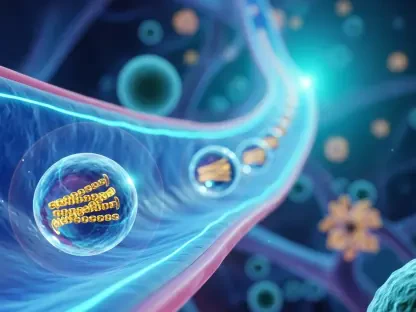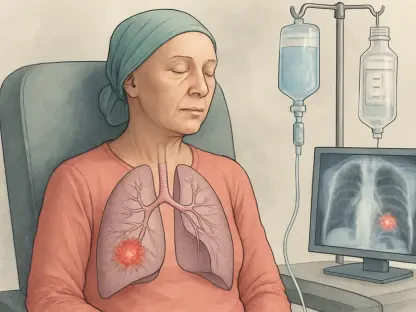

Biological systems are increasingly recognized not just as chemical factories but as mechanical engines where the physical resistance of surrounding tissue determines the fate of a malignant cell. This realization has catalyzed a profound shift in oncology, moving focus from purely genetic mutations toward the study of mechanotransduction. At the heart of this evolution is the Tyrosine Kinase 2 protein, which functions as a specialized molecular sensor capable of interpreting the structural integrity of the extracellular matrix. By examining how physical forces are converted into biochemical signals, researchers have identified a critical regulatory node that determines the invasive potential of breast cancer cells based on the rigidity of their environment.
Understanding the TYK2 Mechanotransduction Framework
The TYK2 mechanotransduction framework operates as a sophisticated interface between the physical properties of the tumor microenvironment and the internal machinery of the cell. Historically, the extracellular matrix was viewed as a passive scaffold, providing mere structural support to the tissues. However, the emergence of mechanobiology has redefined the matrix as a dynamic signaling entity. In this context, TYK2 serves as the primary transducer, sensing the mechanical tension or “stiffness” of the surrounding environment to modulate cellular behavior. This transition in understanding marks a significant departure from traditional cancer models that prioritized intracellular mutations over extracellular physical cues.
This framework is particularly relevant in the study of the tumor microenvironment, where the interplay between various cell types and the surrounding fibers creates a complex ecosystem. As cancer progresses, the microenvironment undergoes significant remodeling, leading to changes in density and elasticity. The TYK2 framework allows for a nuanced analysis of these changes, providing a biological context for how mechanical stress leads to the activation of oncogenic pathways. By positioning TYK2 as a central component of this sensing mechanism, the technology offers a robust model for predicting how tumor architecture influences the likelihood of metastasis, bridging the gap between mechanical engineering and molecular oncology.
Core Mechanisms of TYK2 as a Molecular Switch
TYK2 Membrane Localization and Metastasis Suppression
The function of TYK2 as a molecular switch is fundamentally tied to its physical location within the cell, which is dictated by the softness or stiffness of the local environment. In healthy tissues or early-stage tumors characterized by low-stiffness environments, TYK2 remains firmly localized at the plasma membrane. In this specific orientation, the protein acts as a guardian of cellular stability, maintaining the structural connections that keep cells anchored to their original location. This membrane-bound state effectively suppresses the triggers of metastasis, ensuring that cancer cells do not gain the migratory capabilities required to leave the primary tumor site.
This biological barrier represents a natural defense mechanism that inhibits cancer cell detachment. When TYK2 is active at the membrane, it facilitates signaling pathways that reinforce the cell-to-matrix adhesion, preventing the cytoskeletal reorganization necessary for movement. Consequently, as long as the surrounding tissue remains compliant and elastic, the presence of TYK2 serves as an effective brake on disease progression. This localized suppression highlights the importance of maintaining tissue homeostasis and provides a target for therapies aimed at preserving the physical integrity of the cellular environment to prevent the spread of malignancy.
Extracellular Matrix Rigidity and TYK2 Inactivation
The balance of this system is disrupted when the extracellular matrix undergoes pathological hardening, a common occurrence in aggressive cancer types. As collagen fibers become increasingly dense and cross-linked, the resulting tissue rigidity exerts mechanical pressure that alters the behavior of TYK2. Under these high-stiffness conditions, the protein undergoes a fundamental shift, detaching from the cell membrane and translocating into the cytoplasm. This movement signifies a loss of inhibitory control, as the relocated TYK2 is no longer able to maintain the adhesion signals that keep the cell in place.
Once TYK2 is inactivated by this mechanical translocation, the cancer cell undergoes a transformation that favors invasion and survival in hostile environments. The loss of membrane-associated TYK2 allows the cell to reorganize its internal structure, developing the specialized projections and metabolic flexibility needed to push through a rigid matrix. This in-depth transition from a suppressor to an inactive cytoplasmic component illustrates how physical hardening directly feeds into the molecular drivers of cancer. It emphasizes that the physical state of the tumor is not merely a symptom of the disease but a functional driver of its lethality, forcing a reassessment of how mechanical cues influence genetic expression.
Recent Advances in Mechanobiology and Oncology
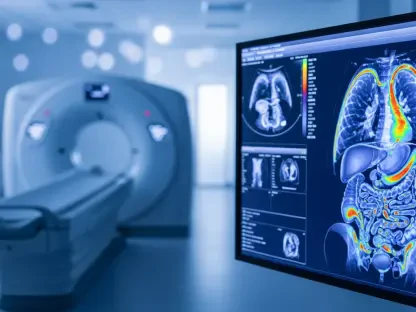
The landscape of mechanobiology has seen rapid innovation in 2026, particularly in the development of high-resolution imaging techniques designed to map tissue stiffness in real time. Modern tools such as magnetic resonance elastography and advanced optical sensors now allow clinicians to visualize the mechanical tension within a tumor with unprecedented precision. These advancements have shifted the research focus toward the “mechanical heterogeneity” of the tumor microenvironment, revealing that different zones within a single tumor can exert vastly different physical influences on cancer cells. This spatial understanding is critical for identifying the specific regions where TYK2 is most likely to be inactivated, marking the front lines of potential metastasis.
Furthermore, there is an increasing trend in perceiving physical cues as equal to, if not more influential than, traditional genetic mutations. Researchers are now exploring how mechanical stress can actually induce epigenetic changes, essentially rewriting the cellular code in response to physical pressure. This shift in perspective has led to the discovery of new signaling pathways that work in tandem with TYK2, such as those involving integrin clusters and Rho-associated kinases. By integrating these mechanical insights into oncology, the scientific community is moving toward a more holistic view of cancer, where the physical “soil” of the tissue is just as important as the malignant “seed” of the cell.
Real-World Applications and Experimental Validation
The practical implications of TYK2 research have been validated through extensive experimental models that mimic the progression of breast cancer from localized to metastatic states. In vitro studies using synthetic matrices with tunable stiffness levels have consistently shown that cancer cells transition into invasive modes only when the matrix reaches a specific threshold of rigidity. These findings are further supported by in vivo mouse models, where researchers have mapped the “invasion front” of tumors. By tracing the location of TYK2 in these models, scientists have successfully predicted which tumors are most likely to spread, providing a potential diagnostic tool for identifying high-risk patients long before physical symptoms of metastasis appear.
Another notable implementation involves the use of pharmacological inhibitors to test the causal relationship between TYK2 function and cancer spread. When researchers applied TYK2-blocking agents in experimental settings, they observed a marked increase in the speed and frequency of cancer cell detachment and migration. This validation was crucial because it proved that the loss of TYK2 activity—whether caused by mechanical forces or chemical interference—is sufficient to trigger the metastatic cascade. These experiments have provided the necessary proof of concept to move the study of mechanotransduction into the realm of clinical trials, where the focus is now on finding ways to keep TYK2 anchored to the membrane regardless of tissue stiffness.
Challenges and Clinical Constraints
Despite the promising potential of TYK2 as a therapeutic target, the technology faces significant clinical constraints, most notably the “double-edged sword” of existing TYK2 inhibitors. These drugs are currently approved and widely used for treating autoimmune conditions like psoriasis and rheumatoid arthritis because of their effectiveness in dampening inflammation. However, the discovery that TYK2 suppression promotes cancer metastasis raises alarming concerns for patients who may have undiagnosed malignancies or precancerous lesions. The very drugs that offer relief from autoimmune symptoms might inadvertently facilitate the spread of cancer by neutralizing the body’s natural mechanical brakes on invasion.
Ongoing development efforts are now focused on mitigating these risks through enhanced screening and drug delivery systems. There is an urgent need for rigorous screening protocols, particularly for patients with conditions like ductal carcinoma in situ, where the cancer is currently noninvasive but highly sensitive to the mechanical state of the environment. Researchers are investigating the possibility of tissue-specific TYK2 inhibitors or combination therapies that can address inflammation without compromising the stability of TYK2 at the cell membrane in healthy or precancerous tissues. Balancing these contradictory roles of TYK2 remains one of the primary hurdles in translating mechanobiological research into safe clinical practice.
Future Outlook and Therapeutic Breakthroughs
The future of cancer therapy lies in the development of “mechanomedicines” that target the physical environment of the tumor alongside the cancer cells themselves. One potential breakthrough involves the concept of “tissue softening” or matrix-degrading therapies designed to reduce the stiffness of the extracellular matrix. By enzymatically breaking down excess collagen or preventing its cross-linking, clinicians could theoretically restore a low-stiffness environment that keeps TYK2 active at the membrane, thereby locking cancer cells in a noninvasive state. This approach would represent a significant shift from the traditional “search and destroy” method of chemotherapy toward a strategy of environmental containment.
In the long term, understanding mechanotransduction will be a cornerstone of precision medicine, allowing for treatment plans tailored to the physical profile of a patient’s specific tumor. We may see the advent of membrane-stabilizing drugs that physically prevent TYK2 from translocating to the cytoplasm, even in the presence of a rigid matrix. These therapies could offer a way to maintain the metastasis-suppressing functions of the cell despite the inevitable hardening of the tumor. As global cancer treatment strategies evolve, the integration of mechanical sensing data will likely become a standard part of diagnostic and therapeutic pipelines, leading to more nuanced and effective interventions.
Final Assessment of TYK2 Research Impact
The investigation into TYK2 mechanotransduction provided a transformative understanding of the mechanical triggers that drove breast cancer metastasis. By establishing the role of this protein as a mechanical sensor, the research successfully bridged the gap between the physical state of the tumor and its molecular behavior. It was demonstrated that the location of TYK2 served as a reliable indicator of metastatic risk, with its translocation from the membrane to the cytoplasm marking a critical failure in the body’s natural defense against cancer spread. This insight moved the field toward a more integrated view of oncology that respected the physical realities of the tumor microenvironment.
The state of TYK2 research reached a level where it profoundly influenced both the pharmaceutical and oncological sectors by highlighting the risks associated with existing treatments and opening new avenues for drug discovery. The potential for future advancements remained high as scientists continued to explore therapies that could manipulate the mechanical properties of tissues to suppress disease. Ultimately, the impact of this research lay in its ability to redefine metastasis as a predictable and potentially preventable mechanical process. This paradigm shift provided a foundation for the next generation of cancer therapies that prioritized the stabilization of the cellular environment as a primary goal in the fight against malignant progression.