
While traditional breast cancer screening saves lives, its methods often involve discomfort, radiation, and high costs, creating significant barriers for many. A new wave of technology is emerging to change that. Ultra-Low Field (ULF) MRI is gaining traction as a potential solution, promising a safer, more comfortable, and radically more accessible approach to medical imaging. This analysis will explore the data-driven rise of ULF MRI, examine its application in a pioneering clinical study, consolidate expert opinions on its potential, and project its future trajectory in diagnostic medicine.
The Rise of a New Screening Paradigm
The evolution of medical diagnostics is often a response to existing limitations, and the emergence of Ultra-Low Field MRI is a clear example of this principle in action. Driven by a combination of clinical needs and powerful economic incentives, this technology is carving out a niche with the potential to fundamentally alter the landscape of preventative care. It represents not just an incremental improvement but a paradigm shift toward making advanced imaging more equitable and patient-centric.
Addressing Market Gaps and Economic Drivers
A careful look at the data reveals significant drawbacks in current breast screening modalities that have created a distinct market gap. Mammography, the long-standing gold standard, requires patients to endure uncomfortable breast compression and involves repeated exposure to ionizing radiation over a lifetime. On the other hand, conventional high-field MRI, while highly detailed, is prohibitively expensive for widespread public screening, relegating it primarily to high-risk populations. This leaves a vast number of individuals without access to advanced, radiation-free imaging.
The growth trajectory of ULF MRI is fueled by a compelling economic argument. ULF systems are projected to cost less than 5% of their high-field counterparts, a staggering cost differential that immediately lowers the barrier to acquisition for hospitals and clinics. Moreover, their long-term operating costs are substantially lower, reducing the financial burden on healthcare systems over time. This economic advantage is not merely a cost-saving measure; it is the key that could unlock access to advanced screening, positioning ULF MRI to fill a critical gap in healthcare, particularly in diverse communities and lower-resource settings where high-field systems are an impossibility.
Pioneering Application The Mass General Brigham Feasibility Study
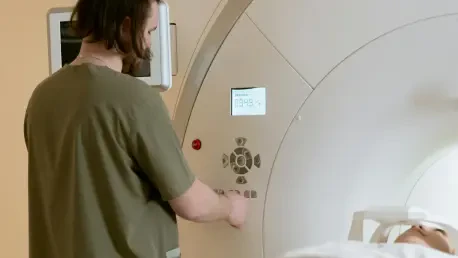
The theoretical promise of ULF MRI found its first real-world proof of principle in a feasibility study conducted by Mass General Brigham. This pivotal research moved the technology from the laboratory into a clinical context, investigating its practical application for breast imaging. The study was designed to test the fundamental question: could this low-cost, low-power technology produce images of sufficient quality to be clinically useful?
The investigation involved a deliberately diverse cohort of 14 participants, which included women with no history of breast cancer, some with a prior diagnosis, and one with a known benign mass. This varied group allowed researchers to assess the technology’s performance across a range of tissue densities and clinical scenarios. The results were a resounding confirmation of the technology’s foundational viability. Radiologists reviewing the scans were able to successfully identify essential anatomical breast features and, critically, distinguish between different tissue types, all without the use of ionizing radiation or injected contrast agents.
Beyond its technical success, the case study underscored a significant patient-centric advantage. One of the most common complaints associated with mammography is the pain caused by breast compression. Because ULF MRI does not require this procedure, it holds the potential to dramatically enhance patient comfort. This improvement could lead to higher compliance rates with screening recommendations, as a more comfortable experience may reduce the reluctance some individuals feel toward regular check-ups, ultimately contributing to earlier detection and better outcomes.
Expert Perspectives A Consensus on Cautious Optimism
The initial findings from the ULF MRI study have generated a strong sense of optimism among the research community, tempered with the pragmatism necessary for rigorous scientific development. The consensus is that while the technology is still in its nascent stages, its performance has exceeded expectations and laid a solid foundation for future innovation.
Dr. Matthew Rosen, the project’s principal investigator, characterized the results as a “very encouraging proof of principle.” His statement reflects a balance of excitement and scientific caution, emphasizing that these initial successes are not an endpoint but rather a powerful motivation for the “continued pursuit of safe, comfortable, lower-cost screening approaches.” This perspective frames the study as a critical milestone that validates the core concept and justifies further investment and research.
This sentiment was reinforced by co-principal investigator Dr. Kathryn E. Keenan, who highlighted the inherent uncertainty of early-stage research. She noted that the team’s success in visualizing key breast features provided a strong foundation for the next phase of development. The collective viewpoint of the research team is clear: while the findings are preliminary and require extensive validation in larger trials, they represent a critical first step toward a revolutionary shift in how breast cancer screening is delivered.
The Future Trajectory From Proof of Principle to Clinical Practice
The journey of ULF MRI from a promising concept to a standard clinical tool is a multi-stage process that will hinge on both technological advancement and rigorous clinical validation. The successful feasibility study has charted the course for this evolution, outlining the key challenges and opportunities that lie ahead. The ultimate goal is to refine the technology into a reliable, accessible, and effective tool in the public health arsenal against breast cancer.
Future developments will concentrate heavily on engineering refinements aimed at enhancing the technology’s diagnostic capabilities. The primary focus is on improving image quality to achieve the high-resolution standards required for clinical-grade diagnostics. This involves optimizing hardware, developing more sophisticated imaging sequences, and leveraging artificial intelligence to process and interpret the data more effectively. These technical advancements are essential to ensure that ULF MRI can not only identify anatomical structures but also reliably detect subtle abnormalities.
However, technology alone is not enough. The primary challenge on the path to clinical adoption is the need for larger, more comprehensive clinical trials. These studies will be designed to definitively establish the diagnostic accuracy of ULF MRI, particularly its ability to distinguish between benign and malignant lesions. By testing the technology on thousands of diverse patients, researchers can build the robust evidence base required for regulatory approval and integration into clinical guidelines. These trials are the crucible in which the technology’s true value will be proven. The broader implication of this work is the potential for ULF MRI to become a valuable complementary screening tool. It is envisioned not necessarily as a replacement for mammography or high-field MRI in all cases, but as a new option that democratizes access to effective breast imaging. By offering a more comfortable, safer, and more affordable experience, ULF MRI could significantly improve patient compliance and bring life-saving early detection to populations that are currently underserved.
A New Horizon in Diagnostic Imaging
The analysis of Ultra-Low Field MRI revealed it as a significant emerging trend, driven by its inherent potential to overcome the persistent cost, safety, and comfort barriers associated with traditional screening methods. The landmark Mass General Brigham study provided a foundational proof of principle, demonstrating the technology’s core viability. This empirical evidence was supported by a unified expert opinion that, while cautiously optimistic, recognized the results as a critical first step toward a new era in medical imaging.
The importance of this trend lay in its profound potential to make life-saving early detection accessible to a much broader and more diverse population. By lowering economic and physical barriers, ULF MRI presented a pathway to address long-standing inequities in healthcare access. The technology’s promise was not just in its technical specifications but in its capacity to foster a more inclusive and patient-friendly approach to preventative medicine.
Ultimately, the trajectory from concept to clinic depended on dedicated effort. Continued investment in research and development was identified as the crucial catalyst needed to transition ULF MRI from a promising idea into a standard clinical tool. Successfully navigating this path held the promise of redefining our collective approach to public health and preventative medicine for generations to come.