
The persistence of devastating medical conditions like cancer recurrence and antibiotic resistance often stems not from a failure of the drug itself, but from the survival of a few rogue cells that defy treatment. These resilient “outlier” cells, which deviate from the population average, represent a fundamental challenge in modern medicine. A paradigm shift is now underway, moving scientific focus away from controlling the average behavior of cell populations and toward a far more ambitious goal: precisely managing the random, unpredictable fluctuations—or “noise”—within each individual cell. This analysis explores the emergence of this trend, details a groundbreaking mathematical framework called the “Noise Controller” that embodies this new approach, incorporates insights from its creators, and projects the future impact of this technology on medicine and synthetic biology.
The Rise of Single-Cell Control Data and Application
Charting the Trend The Failure of Traditional Controls
At the heart of biology lies an inherent randomness. Even within a genetically identical population, random molecular events cause individual cells to exhibit unique behaviors, deviating from the collective average. This phenomenon, known as biological noise, is not a flaw but a fundamental feature of life. However, this very unpredictability is the source of significant problems in medicine and biotechnology, where consistent and predictable outcomes are paramount. For decades, the goal of control has been to regulate the mean—the average protein levels or response across a population.
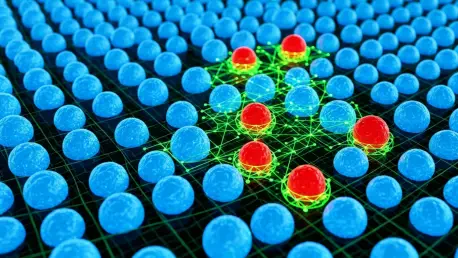
The critical flaw in these traditional feedback mechanisms is a destabilizing trade-off. While they successfully stabilize the average behavior, they often do so at the cost of amplifying the noise within individual cells. This can be likened to a shower that maintains a perfect average temperature of 40°C by rapidly oscillating between freezing and boiling water; while the average is correct, the experience is dangerously unstable. In a biological context, a cell experiencing such wild fluctuations can be pushed into undesirable states, such as drug resistance or dormancy, even if the population average appears stable.
This realization has led to a growing consensus in systems and synthetic biology: managing variance is as critical as controlling the mean for achieving robust biological outcomes. The trend is now clearly moving away from population-level thinking and toward strategies that can impose order at the single-cell level. This shift acknowledges that in systems where failure is determined by the weakest link—a single surviving cancer cell or a lone dormant bacterium—controlling the average is simply not enough.
A Blueprint for Precision The Noise Controller Case Study
In a landmark development, a novel gene regulatory circuit designed through advanced mathematical modeling offers a tangible blueprint for this new paradigm. Known as the “Noise Controller” (NC), this framework was engineered not just to manage the average, but to directly measure and suppress the cellular noise that traditional methods amplify. It represents a conceptual leap, treating noise as a variable to be controlled rather than an unavoidable byproduct.
The core mechanism of the Noise Controller is elegant in its design. It employs protein dimerization, a process where two protein molecules bind together, to effectively “sense” the second moment of protein levels—a statistical measure of variance or noise. This sensory input is then coupled with a degradation-based actuation system that actively targets and eliminates proteins contributing to the fluctuations, thereby dampening the noise. This integrated sense-and-respond circuit allows the cell to actively police its own internal randomness.
The outcome of this sophisticated control is a state termed “Noise Robust Perfect Adaptation” (Noise RPA). In this state, both the mean and the variance of protein levels are stabilized down to a fundamental physical limit, creating an exceptionally stable and predictable cellular environment. The power of this approach was demonstrated through in silico validation using the DNA repair system of E. coli. In simulations, the NC reduced the failure rate of individual cells from a significant 20% to just 7%, dramatically increasing the survival rate of the entire population by ensuring that outlier cells were brought into compliance.
Voices from the Vanguard Insights from Leading Researchers
The significance of this breakthrough is underscored by the researchers behind it. Professor KIM Jae Kyoung highlighted that this innovation brings cellular noise “into the realm of precise mathematical control.” He noted its pivotal implications for developing smart microbes and providing a new strategy for overcoming drug resistance by preventing the emergence of non-compliant cells. This perspective frames the work not just as an academic exercise but as a foundational technology with immediate practical relevance.
Adding to this, Professor KIM Jinsu emphasized the power of the interdisciplinary approach, stating that the achievement demonstrates how science can move “from theoretical equations to design a mechanism that solves a fundamental biological problem.” This viewpoint celebrates the convergence of abstract mathematics and applied biology, where computational models serve as the architects for engineering real-world biological solutions. It marks a maturation of synthetic biology, where design principles are no longer purely empirical but are increasingly derived from rigorous theoretical foundations.
The research team’s consensus further reinforces the trend’s core principle: controlling outliers is the key to preventing system-level failures. In fields like disease treatment, where the fate of a few cells can determine a patient’s long-term outcome, this ability to enforce uniformity is transformative. The failure of a therapy is often the success of a few outliers, and this work provides a direct strategy to eliminate that possibility.
The Future Horizon Projecting the Impact of Precision Control
Revolutionizing Medicine Eradicating Outliers in Disease
The potential for this technology to revolutionize medicine is profound. By ensuring that every cell in a population responds uniformly, new therapies could be developed to prevent cancer recurrence. Such treatments would synchronize the response of all tumor cells to chemotherapy, leaving no resilient survivors to seed a new growth. This would transform cancer treatment from a battle of attrition into a decisive and complete victory.
In the realm of infectious diseases, this approach offers a powerful new weapon against persistent infections. Many chronic illnesses are caused by bacteria that enter a dormant, drug-tolerant state. The Noise Controller framework could be used to design interventions that force these dormant bacteria to comply with antibiotic treatments, effectively waking them up to be eliminated. This would provide a path to finally eradicating infections that currently plague millions.
Ultimately, the benefit of this trend is the creation of more predictable and effective treatments. By minimizing the random non-compliance of individual cells, therapies can be designed with a much higher degree of confidence. This ensures that every cell within a target population responds as intended, moving medicine closer to the ideal of perfect, personalized precision.
Engineering Advanced Biological Systems Beyond Medicine
The implications of single-cell precision control extend far beyond medicine. In synthetic biology, this framework provides the tools to engineer highly stable and reliable “smart microbes.” These engineered organisms, designed for use in bioreactors, environmental sensors, and other biotechnological applications, could perform their functions with unprecedented consistency, leading to more efficient and dependable biomanufacturing processes.
The primary challenge ahead lies in translating the mathematically proven and computationally validated Noise Controller framework into functional, living biological systems. This in vivo implementation will require sophisticated genetic engineering to build the circuit within a host organism and test its efficacy in a complex, real-world cellular environment. This step from theory to practice represents the next frontier for the field.
Nevertheless, this foundational blueprint has set a new standard for the design of robust biological circuits. It will undoubtedly guide future experimental and computational research for years, inspiring a new generation of synthetic biologists to tackle the challenge of biological randomness head-on and build living systems with the precision of a finely tuned machine.
Conclusion A New Era of Biological Engineering
The analysis of this emerging trend highlighted the inherent limitations of traditional, population-level biological controls and the critical need for a new approach. It detailed the innovative design of the Noise Controller, a mathematically derived framework that offered a direct solution by measuring and actively suppressing the random fluctuations, or noise, within individual cells. The framework’s potential was confirmed through computational models that demonstrated a significant increase in system robustness.
The importance of this shift toward single-cell precision control was reaffirmed as a transformative strategy. It addressed the root cause of many persistent biological and medical challenges—the unpredictable behavior of outlier cells. By targeting these outliers, this approach promised to deliver more effective cancer therapies, overcome antibiotic resistance, and enable the engineering of highly reliable biological systems.
This work ushered in a future for synthetic biology where mathematical design and precision control would unlock unprecedented capabilities. It represented a pivotal step toward a new era of biological engineering, one in which the chaotic randomness of life could be harnessed and programmed with intention, leading to solutions for some of humanity’s most pressing problems.