
The intricate landscape of the tumor microenvironment is increasingly recognized not as a simple collection of malignant cells, but as a complex ecosystem where cancer’s fate is dictated by a dynamic interplay with the body’s own immune system. The targeting of specific immune cell subsets represents a significant advancement in cancer immunotherapy. This review will explore the complex role of neutrophils in cancer, focusing on a recently identified pro-tumor phenotype that promotes cancer survival and progression. We will examine the evolution of our understanding, the key molecular mechanisms involved, the methodological innovations that enabled these discoveries, and the profound impact this has on future therapeutic strategies. The purpose of this review is to provide a thorough understanding of this pro-tumor neutrophil state, its current relevance as a biomarker, and its potential as a target for next-generation cancer therapies.
The Dichotomous Role of Neutrophils in the Tumor Microenvironment
Neutrophils, the most abundant type of white blood cell in circulation, are the quintessential first responders of the innate immune system. Renowned for their rapid migration to sites of infection and inflammation to engulf pathogens, their presence is also a prominent feature within the tumor microenvironment (TME). However, once recruited into a tumor, their allegiance becomes complicated. Instead of uniformly fighting the malignancy, these cells, now referred to as tumor-associated neutrophils (TANs), display a remarkable functional plasticity.
This adaptability gives rise to a paradox: TANs can exhibit both anti-tumor and pro-tumor activities. On one hand, they can be cytotoxic to cancer cells, release anti-tumor agents, and recruit other immune effectors to mount an attack. On the other hand, they can be subverted by the tumor to support its growth, promote angiogenesis (the formation of new blood vessels), suppress other immune cells, and facilitate metastasis. The specific context of the tumor, including its type, stage, and the local signaling molecules present, appears to dictate which functional state these neutrophils adopt, making them a fascinating but challenging cell to understand in oncology.
Characterizing the Pro-Tumor Neutrophil State
A Conserved, Senescent Phenotype Across Cancer Types
Recent breakthroughs have moved beyond the general understanding of TAN duality to pinpoint a specific and consistent pro-tumor state. Research has identified a distinct population of terminally “aged,” or senescent, neutrophils that systematically contributes to cancer progression. This state is reliably identified by the high expression of a specific chemokine known as CCL3. The discovery of these “CCL3hi” neutrophils has revealed a conserved genetic program that tumors appear to actively induce, pushing neutrophils along a maturation pathway that culminates in this pro-tumor phenotype.
Significantly, this aged CCL3hi state is not an isolated phenomenon confined to a single type of cancer. It has been consistently observed in hypoxic (low-oxygen) niches across a wide variety of human and murine tumors, including lung and breast cancer. This suggests a fundamental and broadly applicable mechanism that cancer cells exploit for survival. These senescent neutrophils thrive in the harsh, oxygen-deprived conditions deep within a tumor, where they activate specialized genetic subroutines that not only ensure their own survival but also trigger a host of functions that directly aid the malignancy.
The CCL3-CCR1 Axis as a Critical Pro-Tumor Feedback Loop
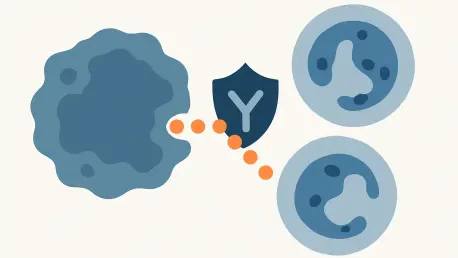
The function of CCL3 extends beyond being a simple marker of this aged state; it is a critical driver of the process itself. The research demonstrates that CCL3hi TANs release this chemokine, which then binds to a receptor on their own surface called CCR1. This engagement creates a powerful autocrine feedback loop, a self-reinforcing signal that locks the neutrophils into their pro-tumor identity.
This CCL3-CCR1 signaling axis is pivotal for propelling TANs further toward their terminal state, enhancing their longevity within the hostile TME, and activating the specific gene programs that support tumor growth. Experiments in murine models have compellingly validated this mechanism. By disrupting either side of the axis—either by engineering mice whose neutrophils lack CCL3 or by using mice whose neutrophils lack the CCR1 receptor—researchers observed a significant impairment in tumor growth. These findings confirm that this specific biochemical circuit is essential for the pro-tumor function of neutrophils.
Methodological Innovations in Neutrophil Analysis
A major hurdle in deciphering the role of neutrophils in cancer has been the technical difficulty of studying them. Standard high-resolution analytical tools like single-cell RNA sequencing (scRNAseq), which revolutionized the study of other immune cells, are largely ineffective for neutrophils. This is due to a biological peculiarity: mature neutrophils contain very low levels of RNA, providing insufficient material for the technique to work reliably. This limitation has historically obscured a detailed understanding of their diverse functional states within tumors.
To overcome this challenge, investigators developed a novel computational probability classifier. This sophisticated tool was specifically designed to work with the sparse data obtained from neutrophil sequencing. By analyzing the limited raw data, the classifier can accurately sort individual neutrophils into distinct functional states. Applying this innovative method to a vast dataset encompassing over 190 human and murine tumors allowed for the consistent identification of the terminal CCL3hi state across the entire spectrum of cancers examined, revealing a conserved biological signature that was previously hidden.
Clinical Relevance and Potential Applications
CCL3hi Neutrophils as a Pan-Cancer Prognostic Biomarker
The discovery of a conserved pro-tumor neutrophil state has immediate implications for clinical practice. The consistent association between the CCL3hi phenotype and tumor support suggests its potential as a powerful pan-cancer prognostic biomarker. The abundance of these specific neutrophils within a patient’s tumor could serve as a reliable variable to predict disease progression and patient outcomes across many different types of cancer.
This approach offers a new dimension for patient stratification, moving beyond traditional markers to incorporate a direct measure of a key immune interaction within the TME. A prognostic tool based on the CCL3hi signature could help clinicians identify high-risk patients who may benefit from more aggressive or novel therapeutic interventions. This parallels other recent discoveries, such as macrophage gene expression ratios, reinforcing the idea that specific immune cell states can provide broadly applicable insights into a patient’s cancer journey.
The CCL3-CCR1 Pathway as a Novel Therapeutic Target
Beyond its use as a biomarker, the CCL3-CCR1 signaling pathway represents a highly promising therapeutic target. Because this axis is critical for establishing and maintaining the pro-tumor function of TANs, its disruption offers a unique opportunity to reprogram the immune environment. Evidence from preclinical models, where disabling either CCL3 or CCR1 crippled tumor growth, provides a strong rationale for developing drugs that inhibit this circuit.
Targeting this pathway is particularly attractive because it aims to neutralize a specific pro-tumor mechanism rather than broadly suppressing the immune system. This targeted approach could potentially disarm the cancer-supporting neutrophils while leaving their beneficial, infection-fighting counterparts intact. Such a strategy could be used as a standalone therapy or, more likely, in combination with other treatments to enhance their efficacy.
Challenges and Therapeutic Hurdles
Despite the promise of these findings, translating them into effective clinical therapies presents significant challenges. The primary hurdle is the difficulty of selectively targeting a specific subset of neutrophils. Neutrophils are essential for protecting the body against infections, and any therapy that indiscriminately depletes or disables them could leave patients dangerously vulnerable to pathogens. Therefore, developing strategies that specifically inhibit the pro-tumor functions of CCL3hi TANs without compromising systemic immune defense is paramount.
Furthermore, creating highly specific and potent inhibitors for the CCL3-CCR1 axis requires considerable drug development efforts. The inhibitors must be designed to have high affinity for their target, minimal off-target effects, and favorable pharmacological properties for use in patients. Ensuring these future therapies are both safe and effective will require rigorous preclinical and clinical testing to navigate the fine line between therapeutic benefit and potential immunosuppressive side effects.
Future Outlook and Therapeutic Directions
The identification of the CCL3-CCR1 axis has opened a new frontier in cancer immunotherapy, charting a clear course for future research and drug development. The immediate future will likely focus on designing and optimizing novel small molecule inhibitors or monoclonal antibodies that can effectively block this pathway. These agents will need to be tested for their ability to specifically neutralize the pro-tumor activity of TANs within the complex TME.
Looking further ahead, the greatest potential may lie in combination therapies. Integrating neutrophil-targeted agents with existing immunotherapies, such as checkpoint inhibitors, could offer a powerful synergistic effect. Checkpoint inhibitors work by unleashing T cells to attack tumors, but their effectiveness can be limited by suppressive cells in the TME, including pro-tumor neutrophils. By simultaneously targeting the CCL3-CCR1 pathway, it may be possible to remove this suppressive shield, thereby overcoming treatment resistance and making existing immunotherapies effective for a broader range of patients.
Conclusion and Overall Assessment
The characterization of a conserved, senescent, and pro-tumor neutrophil state marked by high CCL3 expression represents a pivotal advance in our understanding of cancer immunology. This work has successfully illuminated a key mechanism that tumors across a wide range of types exploit to ensure their survival and growth. By leveraging innovative computational tools to overcome long-standing technical barriers, researchers have uncovered a druggable pathway that is fundamental to the interplay between cancer and the innate immune system.
This discovery’s impact was already being felt, as it provided both a powerful prognostic biomarker and a rational target for next-generation therapeutics. The CCL3-CCR1 axis stood as a prime candidate for therapeutic intervention, offering a clear path toward developing drugs that could selectively disarm a key accomplice in tumor progression. The high potential for clinical translation underscored the importance of this finding, marking a significant step forward in the ongoing effort to outsmart cancer by manipulating the very immune cells it seeks to control.