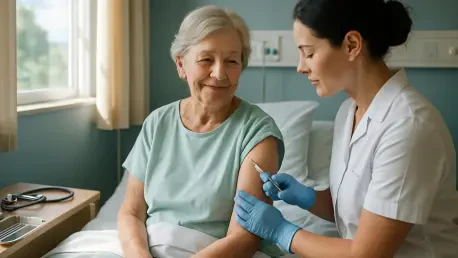

Imagine a simple shot, one already familiar to millions for preventing a painful skin condition, holding the power to shield the mind from a devastating disease like dementia—a condition impacting over 55 million people worldwide with no cure in sight. That’s the startling promise emerging from a groundbreaking study led by researchers at Stanford Medicine. Published in esteemed journals such as Nature and Cell, this research suggests that the shingles vaccine, designed to thwart the reactivation of the varicella-zoster virus, might reduce dementia risk by an impressive 20%. This revelation offers a beacon of hope in a field where progress has been frustratingly slow, hinting at a dual-purpose tool against two major health threats. It’s not just about preventing a rash; it could be about preserving memories and independence for aging populations globally.
What sets this study apart is its innovative approach, sidestepping the usual pitfalls of observational research. Under the guidance of Pascal Geldsetzer, MD, PhD, the team capitalized on a unique public health policy in Wales from over a decade ago, using it as a natural experiment to compare nearly identical groups of older adults. This clever design has brought clarity to a murky area of science, suggesting a real causal link between vaccination and lower dementia rates. Beyond prevention, the findings point to potential benefits even for those already grappling with dementia, adding layers of intrigue to an already compelling narrative. Let’s dive into the details of this research and explore what it could mean for the future of healthcare.
Unpacking the Research Foundation
A Fresh Perspective on Dementia Causes
The idea that a viral infection like shingles could play a role in dementia marks a significant departure from decades of research fixated on brain plaques and tangles, particularly in Alzheimer’s disease. For years, scientists have poured resources into targeting these hallmarks, yet effective treatments or preventive measures remain elusive. Now, an emerging hypothesis suggests that neurotropic viruses—those with a knack for targeting the nervous system, such as varicella-zoster—might contribute to cognitive decline over time. This shift in thinking opens a new window into understanding dementia’s roots, proposing that infections could be a modifiable risk factor. If proven, this could steer public health strategies toward leveraging existing tools like vaccines in unexpected ways, potentially altering the trajectory for millions at risk.
This fresh angle also reflects growing frustration with traditional paths. Where amyloid-focused studies have hit dead ends, exploring the viral connection feels like uncharted territory worth mapping. The varicella-zoster virus, which lies dormant in the body after chickenpox and can reactivate as shingles later in life, may quietly influence brain health in ways previously overlooked. By focusing on this link, researchers are asking critical questions about how infections stress the nervous system over decades. It’s a perspective that not only challenges old assumptions but also aligns with broader evidence tying other viruses to neurodegenerative conditions. This study, therefore, isn’t just a standalone finding—it’s part of a larger pivot in science that could redefine how dementia is approached.
Breaking Through Research Barriers
Traditional studies linking the shingles vaccine to reduced dementia risk often stumbled over a nagging issue: bias. People who choose to get vaccinated frequently lead healthier lifestyles—eating better, exercising more, or seeking regular medical care—factors that are tough to untangle from health outcomes in data. Such behavioral differences clouded past conclusions, leaving doubts about whether the vaccine itself made the difference. However, the Wales-based research cleverly dodges this hurdle by exploiting a strict age cutoff for vaccine eligibility set by a public health policy rolled out years ago. This created two groups of older adults, nearly identical in every way except for a slight age difference, allowing for a comparison that mimics the rigor of a controlled trial.
This natural experiment design is a game-changer, providing a clearer lens on cause and effect. By focusing on individuals just under and just over the eligibility age of 80 on a specific date, the study minimized variations in lifestyle or health-seeking behaviors that typically skew results. The outcome offers a stronger foundation for believing that the vaccine, not some hidden factor, drives the observed reduction in dementia risk. It’s a methodological leap that not only bolsters confidence in these findings but also sets a precedent for how future health studies might tackle similar biases. As this approach gains traction, it could inspire other researchers to seek out real-world policies or events as tools for cutting through the noise of observational data.
Delving into Results and Broader Impact
A Surprising Drop in Dementia Incidence
The numbers from this study are striking and paint a picture of potential far beyond what anyone might have expected from a shingles vaccine. Examining health records of over 280,000 older Welsh adults, researchers discovered that those who received the vaccine faced a 20% lower chance of developing dementia over a seven-year follow-up period compared to their unvaccinated counterparts. This isn’t a small difference—it’s a signal that a routine immunization could have profound effects on brain health. The comparison was made possible by the strict eligibility rules of the vaccination program, ensuring the groups were as similar as possible except for the shot itself. For a field starved for good news, this finding feels like a breakthrough, suggesting a practical way to curb a disease that steals memory and autonomy.
What’s equally remarkable is the vaccine’s reach beyond prevention. A deeper analysis revealed benefits for those already living with dementia at the study’s outset. Among thousands of Welsh seniors with a diagnosis, vaccinated individuals showed a notably lower rate of death from dementia over nine years—only about 30% passed away compared to nearly half in the unvaccinated group. This hints that the vaccine might slow the disease’s relentless march, offering a lifeline where few exist. It’s a discovery that shifts the conversation from merely staving off dementia to possibly softening its blow after onset. For families and clinicians, this dual effect sparks a flicker of optimism, pointing to a tool that could extend both life and quality of life in unexpected ways.
Variations in Response and Wider Benefits
Digging into the data, an intriguing pattern emerged: women appeared to gain a much stronger protective effect from the shingles vaccine against dementia compared to men. Researchers speculate this could tie to differences in immune responses—women often mount higher antibody reactions to vaccines—or perhaps to how dementia unfolds differently across sexes. This disparity isn’t just a footnote; it suggests that personalized approaches to vaccination or dementia prevention might be needed down the line. It also underscores how much there still is to learn about the interplay between biology and treatment outcomes, pushing scientists to consider sex as a critical variable in future studies and interventions.
Moreover, the vaccine’s benefits stretch across the spectrum of cognitive decline. Vaccinated individuals were less likely to develop mild cognitive impairment, often a warning sign of dementia, during the follow-up period. This broad impact—from delaying early decline to potentially easing advanced stages—paints the vaccine as a versatile shield for brain health. Add to that a 37% reduction in shingles cases among the vaccinated, and the case for widespread immunization grows even stronger. These findings aren’t confined to one region; echoes of similar effects appear in health records from places like England, Australia, and Canada. This global consistency fuels hope that the vaccine’s power isn’t a fluke but a universal possibility, urging policymakers to weigh its expanded use as a public health strategy.
Looking Ahead to Challenges and Opportunities
Decoding the Protective Puzzle
Despite the excitement surrounding these results, a big question looms: how exactly does the shingles vaccine guard against dementia? Theories abound, but none are confirmed. It might be that the vaccine revs up the immune system in a way that indirectly protects brain cells from degeneration. Alternatively, by preventing shingles outbreaks, it could reduce stress on the nervous system caused by viral reactivations. There’s also the chance of an entirely different mechanism at play, one not yet on the radar. Unraveling this mystery is crucial, as understanding the ‘why’ behind the effect could unlock ways to amplify or replicate it through other means, potentially benefiting even more people.
Another layer of uncertainty involves the type of vaccine studied. The Wales research focused on a live-attenuated version, an older formulation no longer the primary choice in many areas, having been largely replaced by a recombinant version with specific viral proteins. Whether this newer vaccine delivers the same dementia-fighting benefits remains untested. This gap in knowledge poses a practical challenge—health systems have shifted to the updated version for its safety profile, but its impact on cognitive health is a blank slate. Addressing this will require targeted studies to compare the two, ensuring that current vaccination programs aren’t missing out on—or inadvertently diminishing—a critical secondary benefit.
Pushing for Confirmation and Action
To transform these promising findings into concrete action, researchers like Geldsetzer are advocating for a large-scale randomized controlled trial. Such a trial, randomly assigning participants to receive the vaccine or a placebo, could nail down causality with certainty. The Wales data showed differences in dementia rates emerging within just 18 months, suggesting that definitive answers might not take long to surface. Securing funding for this step is a pressing need, especially since the older vaccine version is off-patent and lacks the commercial allure to attract private investment. Yet, the stakes couldn’t be higher—confirming these effects could reshape vaccination policies worldwide.
Looking back, this study stands as a bold stride forward, weaving together innovative design and compelling evidence that challenged long-standing barriers in dementia research. The 20% risk reduction and slowed progression in diagnosed patients were revelations that captivated the scientific community. Even the sex-based differences offered a nuanced glimpse into tailored care. While not the final word, these insights laid a foundation for hope. Moving forward, the focus must shift to rigorous trials and deeper biological probes to validate and build on what was uncovered. If successful, these efforts could cement the shingles vaccine as a cornerstone in battling dementia, blending prevention and therapy into a single, accessible intervention for aging populations everywhere.