
The era of living medicines has dawned with treatments that can melt away once-untreatable cancers, yet this revolutionary power remains locked away from the vast majority of patients who need it. These advanced cellular immunotherapies, while miraculously effective for some, are hobbled by a manufacturing process so complex and expensive that it functions more like a bespoke craft than modern medicine. A recent breakthrough by researchers at the University of British Columbia (UBC), however, has dismantled a critical barrier, developing the first reliable method to produce a vital type of immune cell from a renewable source. This achievement lays the scientific groundwork to transform these highly personalized, costly procedures into widely accessible, “off-the-shelf” treatments.
The High Cost and Complex Limits of Cell-Based Medicine
Current leading-edge cancer treatments, such as CAR-T therapy, operate on a “one patient, one treatment” model. This autologous approach requires harvesting immune cells from an individual, shipping them to a specialized lab for genetic reprogramming, and then reinfusing them into the same patient. The entire cycle is a logistical and financial behemoth, taking weeks to complete for a single person and carrying a price tag that can soar into the hundreds of thousands of dollars. This inherent limitation of time, cost, and complexity means that even the most effective living drugs are out of reach for the global patient population.
In response to this challenge, the medical research community has long pursued the goal of allogeneic, or “off-the-shelf,” therapies. The vision is to manufacture therapeutic cells in massive, standardized batches from a single, inexhaustible source, such as pluripotent stem cells. This would create a consistent, quality-controlled product that could be produced in advance, stored, and administered to patients on demand, much like a common antibiotic. Such a paradigm shift would drastically lower costs and eliminate the agonizing wait times, democratizing access to this next generation of medicine. However, a fundamental biological puzzle has stood in the way of realizing this vision.
The Immune System’s Orchestra and Its Missing Conductor
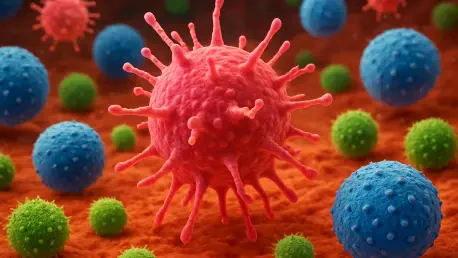
An effective and lasting immune assault on disease, particularly cancer, is not a solo performance; it is a coordinated symphony requiring the synergistic action of multiple immune cell types. For years, scientists have made progress in generating one of the key players from stem cells: the “killer” T cells, also known as CD8+ T cells. These are the frontline soldiers of the immune system, tasked with directly identifying and eliminating cancerous or infected cells. Their ability to be manufactured in the lab represented a significant step forward.
However, these soldiers are far more effective when guided by a skilled conductor. This role is played by “helper” T cells, or CD4+ T cells. As co-senior author Dr. Megan Levings describes them, these cells are indispensable for orchestrating the entire immune response. They are the sentinels that first identify a threat, the commanders that activate and direct the killer T cells, and the strategists that sustain the attack over the long term to prevent relapse. Without them, the immune response can be weak, short-lived, and ultimately ineffective.
The inability to reliably produce functional helper T cells in the laboratory has been the critical missing piece of the puzzle. Without a scalable source for these essential conductors, any potential off-the-shelf therapy would be incomplete, lacking the coordination and durability required to overcome complex diseases. This roadblock effectively prevented the development of a comprehensive, multi-pronged cellular therapy that mimics the body’s natural, powerful immune response, leaving the full potential of stem-cell-derived treatments untapped.
Voices from the Vanguard of a Cellular Revolution
The UBC team’s success is rooted in a deep understanding of this two-cell problem. Dr. Levings emphasized the indispensable role of the “conductors,” noting their importance in orchestrating a robust and durable anti-tumor response. The breakthrough goes beyond simply making the right cells; it provides the tools to create a balanced and more potent therapeutic product. This control is what elevates the research from a scientific curiosity to a cornerstone of future medical manufacturing.
Translating this fundamental discovery into a practical, scalable process was a central goal. According to co-first author Dr. Ross Jones, the method was developed within a controlled laboratory environment specifically designed to be transferable to real-world biomanufacturing protocols. This focus on application ensures the discovery has a clear path from the lab to the clinic. Further validating the success of their method, the team rigorously tested the lab-grown cells. Co-first author Kevin Salim confirmed their quality, stating, “These cells look and act like genuine human helper T cells,” a critical benchmark proving their potential for therapeutic use.
This achievement is being hailed as a foundational moment for the field. Co-senior author Dr. Peter Zandstra framed the work as paving the way for a new generation of “living drugs.” By solving the helper T cell production issue, the research not only enables new investigations into their role in cancer therapy but also unlocks the potential to create other specialized immune cells. This opens the door to developing treatments for a much broader range of conditions, including autoimmune disorders and infectious diseases.
The Scientific Blueprint for Directing a Stem Cell’s Fate
At the heart of the UBC team’s discovery was the identification of a master molecular switch that governs a stem cell’s journey to becoming a mature T cell. The researchers pinpointed a developmental signaling pathway known as Notch as the key determinant. They observed that this signal was essential during the early stages of T cell development, pushing the stem cells down the correct immunological path.
The true innovation, however, was in uncovering the critical importance of timing. The team found that while the Notch signal was necessary to start the process, its prolonged activation actively prevented the stem cells from maturing into helper T cells. By meticulously experimenting with this pathway, they learned how to precisely tune the signal, reducing its activity at the exact right moment during the differentiation process. This newfound control allowed them to command the stem cells’ destiny, reliably directing them to become either helper T cells or killer T cells.
To confirm the success of their blueprint, the researchers conducted extensive functional tests on the resulting cells. They demonstrated that the lab-grown helper T cells were not merely superficial copies; they were fully functional. The cells expressed the correct surface markers, possessed a diverse array of immune receptors necessary to recognize a wide spectrum of threats, and showed the ability to specialize into various subtypes. This comprehensive validation confirmed that the team had developed a robust and repeatable method for producing authentic, high-quality helper T cells ready for the next stage of therapeutic development.
Toward a Future Where Living Cures Are Universally Accessible
The research published by the UBC team represented a foundational leap forward in the field of cellular immunotherapy. By cracking the code to reliably generate both helper and killer T cells from a single renewable stem cell source, the scientists solved a long-standing and critical manufacturing bottleneck. This accomplishment has laid the essential groundwork for developing a new class of more effective, affordable, and accessible living drugs that were previously just a theoretical possibility.
The implications of this breakthrough extended far beyond the laboratory. The ability to control the ratio of these two critical immune cell types in a final therapeutic product promised to significantly enhance treatment efficacy across a wide spectrum of diseases. This newfound precision opened the door to creating customized cellular cocktails tailored for specific conditions, from various cancers to chronic infections and autoimmune disorders. In solving the two-cell problem, the researchers did more than create a new cell type; they unlocked a new, more powerful, and ultimately more equitable future for medicine.