
The biological complexity of triple-negative breast cancer has long positioned it as one of the most aggressive and difficult-to-treat malignancies in the field of oncology. Unlike other forms of the disease that respond to targeted hormonal therapies, this specific subtype lacks the estrogen, progesterone, and HER2 receptors, leaving clinicians with a limited toolkit primarily consisting of systemic chemotherapy. Recent research published in Scientific Reports has fundamentally shifted this landscape by identifying a previously unknown molecular partnership that drives the lethal spread of these cancer cells. By focusing on the physical interaction between the chaperone protein GRP78 and the CD44 variant isoform (CD44v), scientists have uncovered a “master switch” that governs the migratory behavior of the tumor. This discovery is transformative because it identifies a druggable surface target that is specifically active in malignant cells, providing a concrete strategy to halt metastasis—the primary cause of mortality in cancer patients—at its molecular point of origin.
The significance of this finding lies in its ability to address the inherent plasticity and movement of triple-negative breast cancer cells, which frequently disseminate to the brain, lungs, and liver. For decades, the medical community has struggled to find a “weak spot” in the defenses of these cells, as they effectively evade traditional precision medicines. However, the identification of the GRP78-CD44v axis moves the focus away from internal genetic mutations and toward the physical machinery located on the cell’s outer membrane. By understanding how these two proteins link together to form a functional unit, researchers are now able to design interventions that act like a mechanical block, essentially paralyzing the cancer cells and preventing them from detaching from the primary tumor. This approach represents a paradigm shift from trying to kill every single cancer cell to strategically inhibiting the specific behaviors that make the disease fatal, offering a more nuanced and potentially more effective roadmap for long-term patient survival.
The Mechanics: Surface Proteins and Cellular Mobility
The research details a fascinating biological phenomenon where GRP78, a protein traditionally sequestered within the endoplasmic reticulum to assist with internal protein folding, relocates to the cell surface under conditions of extreme stress. In the hostile, low-oxygen environment of a growing tumor, this translocation serves as a survival mechanism, but it also transforms GRP78 from an internal stabilizer into an external signaling receptor. Once positioned on the plasma membrane, surface GRP78 seeks out and binds with CD44v, a variant of a well-known adhesion molecule that is heavily implicated in the maintenance of cancer stem cells. This specific pairing is not merely a coincidental proximity; rather, it is a robust biochemical coupling that reconfigures the cell’s entire operational priority. The union of these two proteins essentially creates a specialized signaling hub that tells the cell it is time to move, initiating the complex process of epithelial-mesenchymal transition that precedes metastasis.
Once the GRP78-CD44v complex is established on the surface, it triggers a cascade of internal structural changes through the activation of Focal Adhesion Kinase (FAK) and Rho GTPase pathways. These pathways are responsible for managing the actin cytoskeleton, which functions as the internal scaffolding of the cell. Under the influence of the GRP78-CD44v axis, the cell begins to remodel this scaffolding, allowing it to stretch, contract, and exert force against its surroundings. This mechanical transformation enables the cancer cell to develop “feet” known as lamellipodia and filopodia, which it uses to crawl through the extracellular matrix and squeeze into the bloodstream. By pinpointing this interaction as the primary driver of such motility, the study clarifies how a static tumor cell gains the physical capability to become a traveling invader, providing a clear target for therapies aimed at disrupting the very propulsion system of the malignancy.
Therapeutic Interventions: Disrupting the Metastatic Cascade
Building on the discovery of this molecular engine, the study demonstrates that the physical separation of GRP78 and CD44v can effectively terminate the migratory signal. Researchers utilized highly specific blocking antibodies and tailored small-molecule inhibitors to occupy the binding sites on the GRP78 protein, preventing it from ever making contact with its CD44v partner. In laboratory cultures of aggressive human breast cancer cells, this intervention led to an immediate and significant reduction in cellular movement. The cells, which previously exhibited high levels of invasive behavior, became largely stationary despite being surrounded by the chemical signals that normally stimulate migration. This “paralysis” at the cellular level confirms that the interaction is a critical bottleneck in the metastatic process; without the physical bond between these two surface proteins, the downstream signaling required for movement simply does not occur.
The transition from successful laboratory testing to living organisms has shown equally promising results in preclinical models. When these inhibitors were administered in murine xenograft studies, there was a marked decrease in the ability of the primary breast tumor to invade adjacent muscle tissue or spread to distant lymph nodes. Crucially, because surface-expressed GRP78 is a hallmark of cancer cells and is rarely found on the surface of healthy, non-stressed cells, this treatment strategy offers a level of precision that is difficult to achieve with traditional cytotoxic drugs. This selective targeting means that the therapeutic agents can focus their activity on the tumor while leaving healthy tissues unaffected, potentially eliminating the severe systemic toxicity and immune suppression that often complicate current breast cancer treatment regimens. This safety profile is particularly vital for patients who may already be weakened by previous rounds of heavy chemotherapy.
Strategic Developments: Mapping the Path to Precision Care
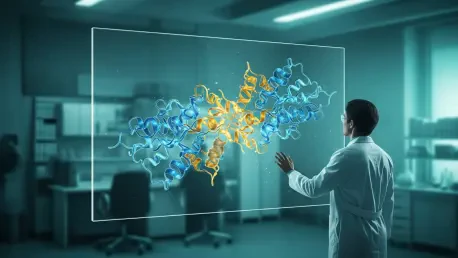
To advance these findings into a clinical setting, the researchers employed high-resolution computational modeling to identify the exact “hotspots” or amino acid sequences where the GRP78 and CD44v proteins interlock. This structural mapping acts as a blueprint for rational drug design, allowing medicinal chemists to develop high-affinity compounds that fit perfectly into the protein-protein interface. Historically, targeting the interaction between two large proteins has been considered a major challenge in drug development because the contact surfaces are often flat and lack the deep pockets that smaller molecules usually bind to. However, by identifying specific structural motifs and electrostatic interactions that hold GRP78 and CD44v together, the study provides a path forward for creating a new class of “interface inhibitors” that are both potent and highly specific to this particular oncogenic pairing.
The broader implications of this research suggest that the GRP78-CD44v axis may be a common vulnerability across various types of aggressive, recalcitrant cancers. Beyond triple-negative breast cancer, other high-grade malignancies often display surface-localized chaperones as an adaptive response to nutrient deprivation and oxidative stress within the tumor microenvironment. By developing a therapeutic platform that targets these surface-bound protein complexes, medical science can move toward a more proactive form of oncology that focuses on preventing the spread of disease before it becomes systemic. The next logical step involves the optimization of these inhibitors for human bioavailability, ensuring they can reach the tumor site in sufficient concentrations to maintain the mechanical block. This work establishes a firm foundation for a future where a metastatic diagnosis is no longer a terminal sentence but a condition that can be effectively contained at the molecular level.