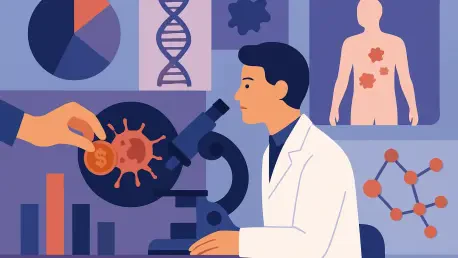

A fundamental transformation is underway in the landscape of cancer research funding, signaling a deliberate pivot from broad, generalized support to a highly strategic, multi-pronged investment in the future of oncology. This sophisticated approach is built upon a clear consensus that progress against cancer requires more than just scientific discovery; it demands a robust ecosystem that nurtures talent, ensures equitable access to care, and balances groundbreaking innovation with pragmatic, community-level prevention. This new wave of funding opportunities reflects a holistic vision, recognizing that the path to controlling and ultimately conquering cancer is paved by investing simultaneously in the people who conduct the research, the patients who stand to benefit, and the public health initiatives that can stop the disease before it starts. It is a comprehensive strategy designed to fortify every link in the chain of cancer control, from the undergraduate laboratory intern to the patient participating in a clinical trial.
Investing in the Future: Building the Research Pipeline
A foundational pillar of the modern oncology funding strategy is an intensive, long-term investment in human capital. Recognizing that future breakthroughs depend entirely on the scientists who will discover them, organizations are meticulously constructing a supportive pipeline to attract, train, and retain talent at every stage of the research career ladder. This deliberate cultivation of expertise ensures a continuous infusion of fresh ideas and skilled hands into the field, safeguarding the intellectual vitality required to tackle the complex challenges of cancer for decades to come. This approach moves beyond simply funding projects and instead invests in the people who will define the future of the discipline, from their first exposure to a laboratory to the launch of their independent research programs. The emphasis is on structured development, mentorship, and providing the resources necessary for emerging scientists to thrive and innovate.
Igniting Early Interest
The concerted effort to build a resilient research pipeline now begins at the earliest possible stage, targeting undergraduate students with immersive programs designed to transform nascent curiosity into a committed career path. Opportunities such as the Cancer Research Internship Summer Program (CRISP), a ten-week intensive at the IU Simon Comprehensive Cancer Center, and the Breakthrough Cancer Research Summer Student Scholarship are strategically designed to serve as critical entry points into the world of oncology. These are not merely summer jobs; they are structured, hands-on experiences that plunge students into the realities of laboratory work, data analysis, and clinical investigation. By providing direct exposure to the challenges and rewards of cancer research, these programs demystify the field and provide a tangible sense of purpose, encouraging a new generation to envision a future for themselves in science and medicine. The application deadline for the CRISP initiative is January 31, 2026, while the Breakthrough scholarship closes on February 4, 2026.
These early-stage initiatives play an indispensable role in securing the foundation of the scientific workforce by providing much more than technical skills. They offer invaluable mentorship from established investigators, creating professional networks that can guide students through the complex academic journey ahead. The experience gained in a single summer can be transformative, solidifying a student’s decision to pursue advanced degrees and a career dedicated to oncology. For the field, this represents a crucial investment in its own future, actively cultivating a diverse and talented pool of future graduate students, postdoctoral fellows, and principal investigators. By sparking this interest early, the oncology community ensures that the pipeline remains filled with passionate and well-prepared individuals ready to take on the multi-year training required to become leaders in the fight against cancer, thereby guaranteeing the long-term sustainability of the research enterprise.
Supporting the Next Generation of Scientists
Once students commit to a research career, a different tier of support becomes essential to navigate the rigors of doctoral training. The financial and academic pressures on PhD candidates can be immense, potentially diverting their focus from the deep, intensive work required for discovery. Recognizing this, funding mechanisms like the California Breast Cancer Research Program (CBCRP) Predoctoral Fellowship and the Breakthrough Cancer Research PhD Scholarships provide a vital lifeline of dedicated support. The CBCRP fellowship, for example, offers up to $60,000 annually for two years to cover stipends, tuition, and supplies, contingent on the student dedicating 75% of their effort to their breast cancer-focused project. This level of funding is transformative, allowing emerging scientists to fully immerse themselves in their research without the constant burden of financial uncertainty or the need to take on extensive teaching duties that can detract from their lab work.
The strategic design of these doctoral fellowships also serves to guide research toward areas of critical need and broaden the diversity of the scientific community. The CBCRP fellowship notably encourages investigations into environmental contributors to breast cancer and health disparities, pushing the field to address complex and often underfunded questions. Furthermore, by not requiring U.S. citizenship, it opens the door to a global talent pool, ensuring that the best and brightest minds are recruited into the field, regardless of their origin. This multi-year, protected funding is more than just a grant; it is an investment in the development of an independent scientist. It provides the stability and freedom necessary to tackle ambitious projects, publish foundational research, and build the track record required to successfully compete for future funding, thus securing the next link in the research pipeline. The process for the CBCRP award begins with a Letter of Intent due by January 15, 2026, followed by a full application by March 5, 2026, while the Breakthrough scholarships have a deadline of January 23, 2026.
Fostering Specialized and Transitional Talent
As researchers advance, the funding ecosystem adapts to support their increasingly specialized training and the critical, often precarious, transition to independent careers. One of the most significant hurdles is the “valley of death” between a postdoctoral fellowship and securing a tenure-track faculty position. The CRI IGNITE Award from the Cancer Research Institute directly addresses this challenge with a transformative $1.05 million grant distributed over three years. This substantial, flexible funding is designed to “ignite” the careers of the most exceptional young scientists in cancer immunology, giving them the resources to establish their own laboratories, hire staff, and immediately pursue bold, high-risk research agendas. Open to applicants worldwide who have secured a faculty position, this award acts as a powerful accelerator, enabling new principal investigators to become productive and competitive from day one, rather than spending their initial years struggling for smaller, preliminary grants.
The strategic support for advanced talent also extends beyond the traditional academic path to encompass specialized clinical-investigator tracks and policy-focused careers. The Miller Mindell Gynecologic Oncology Research Fellowship, for instance, provides crucial salary support for physicians training in gynecologic oncology in Canada, allowing them to carve out protected time for research amidst demanding clinical responsibilities. This ensures that the vital perspective of clinician-scientists continues to inform the research agenda. In a different but equally important domain, the Friends of Cancer Research Science Policy Fellowship offers a unique six-month opportunity in Washington, D.C., for scientists to apply their expertise to the regulatory and legislative processes that govern drug development and healthcare. This fellowship acknowledges that progress against cancer depends not only on discoveries in the lab but also on sound, evidence-based policy, creating a cadre of experts who can navigate the complex intersection of science, industry, and government.
A New Era of Patient-Centered Research and Equity
A paradigm shift is reshaping the focus of cancer research, moving the patient from a passive recipient of care to an active partner in the scientific process. This evolution is driven by a growing consensus that the ultimate value of research is measured by its real-world impact on people’s lives. Consequently, major funding initiatives are now prioritizing patient-centered outcomes, health equity, and the dismantling of systemic barriers that prevent all populations from benefiting from scientific advances. This represents a profound reorientation of research priorities, ensuring that the questions being asked are relevant to patients’ needs and that the solutions developed are accessible to everyone, regardless of their race, income, or geographic location.
Putting Patients at the Core of Research
Leading the charge in this patient-focused movement is the Patient-Centered Outcomes Research Institute (PCORI), which has allocated up to $60 million for its Cancer Partner PFA. This initiative is dedicated to funding large-scale comparative clinical effectiveness research, a field that seeks to answer a simple but vital question: “What works best, for whom, and under what circumstances?” Instead of focusing solely on whether a new drug is better than a placebo, this research compares established treatments head-to-head to determine their relative benefits, risks, and impacts on quality of life. The goal is to generate actionable evidence that patients, their families, and their clinicians can use to make informed decisions that align with their personal values and priorities. The sheer scale of the funding, with individual projects eligible for up to $12 million, underscores the commitment to producing robust, definitive evidence.
A defining feature of the PCORI funding model is its mandatory partnership requirement, compelling academic research institutions to collaborate with community organizations, patient advocacy groups, and health systems. This structure ensures that the research is not conducted in an ivory tower but is deeply embedded in the communities it aims to serve. It guarantees that the research questions are grounded in the lived experiences of patients and that the study designs are practical and relevant to real-world clinical settings. This approach fundamentally changes the dynamic of research, fostering a collaborative environment where scientists and community members work together to generate knowledge that is not only scientifically rigorous but also immediately useful and implementable. By placing patients at the core of the research process, from conception to dissemination, these initiatives promise a future where scientific progress translates directly into better health outcomes for all. A Letter of Intent for this funding is due by January 6, 2026, with full applications due May 5, 2026.
Dismantling Barriers to Access
A critical component of the patient-centered agenda is the direct confrontation of long-standing inequities in cancer care and research participation. Clinical trials are the gateway to the most advanced treatments, yet they have historically failed to enroll populations that are representative of the real world. This lack of diversity means that treatments are often approved based on data from a narrow, homogenous group, leaving uncertainty about their safety and efficacy in racial and ethnic minorities, rural residents, and older adults. The Leukemia & Lymphoma Society’s (LLS) Equity in Access Research Grant is a powerful intervention designed to tackle this problem head-on. With a substantial $2.5 million award over five years, this grant funds research aimed at designing, implementing, and rigorously evaluating interventions to increase trial participation among these underrepresented groups.
This initiative moves beyond simply identifying the problem of inequity and invests in finding evidence-based solutions. The research funded by the LLS grant encourages multidisciplinary teams to address the complex web of obstacles that prevent equitable access. These include systemic barriers, such as the geographic scarcity of trial sites or implicit bias in provider referral patterns, as well as patient-level challenges like the high costs of transportation and lodging, the need for childcare, language barriers, and a deep-seated, historically justified mistrust of the medical establishment. By fostering research that tests practical solutions—such as patient navigator programs, telehealth options for trial monitoring, or community-based education campaigns—this grant aims to generate a robust playbook of what works. The ultimate goal is to ensure that the promise of cutting-edge cancer therapy is not a privilege for the few but a real possibility for all patients, thereby making scientific progress both more ethical and more generalizable. The deadline for full proposals is January 26, 2026.
A Dual Strategy: High-Impact Science and Prevention
The most sophisticated funding strategies recognize that the war on cancer must be fought on two complementary fronts: the relentless pursuit of high-impact, technologically advanced science and a steadfast commitment to foundational, upstream prevention. This dual approach creates a balanced portfolio that invests in both the cure for tomorrow and the health of today. It acknowledges that while groundbreaking therapies are essential for patients facing a diagnosis, reducing the long-term burden of cancer also requires practical, population-level interventions that stop the disease before it ever develops. This integrated vision ensures that resources are allocated across the full continuum of cancer control, reflecting an intelligent and comprehensive plan for public health.
Fueling High-Risk, High-Reward Science
At the forefront of the innovation-driven approach are grants designed to fuel high-risk, high-reward translational science. The CRI IGNITE Award serves as a prime example of this strategy. While it functions as a pipeline-building grant, its core purpose is to de-risk ambitious research by providing significant, flexible capital to the brightest emerging scientists in cancer immunology. This field holds immense promise for revolutionizing treatment, but its most transformative ideas are often too novel or unproven to attract funding from more conservative mechanisms. The IGNITE Award’s $1.05 million endowment allows new investigators to bypass the need for years of preliminary data collection and instead immediately pursue the kind of paradigm-shifting concepts that can lead to entirely new classes of therapies rather than mere incremental improvements on existing ones.
This strategic investment in targeted science is a calculated bet on the future of oncology. By specifically empowering young leaders in cancer immunology, the Cancer Research Institute is not just supporting individual labs; it is nurturing the growth of an entire therapeutic discipline. This approach recognizes that the next major breakthrough is likely to come from a disruptive idea that challenges current dogma. Providing substantial, unrestricted funding to carefully selected, exceptionally promising researchers creates an environment where creativity and innovation can flourish. It is an acknowledgment that accelerating the pace of discovery requires taking calculated risks and backing visionary scientists with the resources they need to translate bold ideas from the laboratory bench to the patient’s bedside, potentially unlocking the next generation of cancer treatments. Applications for this prestigious award are due by January 9, 2026.
Championing Upstream Prevention
Balancing the high-tech focus on treatment is an equally important and pragmatic investment in upstream prevention. This strategy is rooted in the fundamental public health principle that preventing a disease is profoundly more effective and less costly than treating it. The Shade Grant Initiative, a partnership between Cancer Council SA and Preventive Health SA, offers a clear and tangible example of this philosophy in action. The program provides grants of up to AUD 50,000 per site for public schools and early childhood centers in Australia to construct new, permanent shade structures or repair existing ones. This is a direct, upstream intervention designed to reduce a key risk factor for skin cancer—ultraviolet (UV) radiation exposure—at a population level. By targeting a vulnerable group—children—during a critical period of development, this initiative aims to instill sun-safe habits and reduce the cumulative UV damage that leads to skin cancer later in life.
This type of prevention-focused grant demonstrates a remarkably holistic and far-sighted approach to cancer control. It illustrates the understanding that the fight against cancer is not confined to advanced research institutes and hospitals but also takes place in community settings like schoolyards and parks. Investing in something as simple as a shade structure is a powerful acknowledgment that public health infrastructure plays a vital role in the long-term reduction of the cancer burden. This initiative, with applications closing on February 20, 2026, complements the high-science investments perfectly, creating a comprehensive strategy that addresses the full spectrum of the disease. It shows a commitment to tackling cancer from every angle, from developing novel immunotherapies for advanced disease to ensuring that future generations are better protected from developing it in the first place.
A Strategic Blueprint for Progress
The landscape of oncology funding opportunities ultimately revealed a clear and intentional shift toward a more integrated and comprehensive framework for progress. The dominant focus on building a robust and diverse research pipeline, from undergraduate internships to substantial awards for new faculty, ensured the long-term intellectual vitality of the field. This commitment to nurturing human capital was powerfully complemented by a growing dedication to patient-centeredness and health equity, with significant investments aimed at making cancer research and its resulting benefits more accessible, relevant, and beneficial to all populations. This cohesive vision suggested that the future of oncology depended not on a single breakthrough but on coordinated advancements across all fronts. The collective impact of these opportunities painted a picture of a field that had matured, recognizing that scientific discovery, talent development, and societal impact were inextricably linked in the complex and ongoing challenge of controlling cancer.