
I’m Ivan Kairatov, and I’ve spent my career at the intersection of biotechnology and oncology, focusing on how we can use innovative tools to outsmart cancer. For too long in breast cancer care, we’ve been playing a waiting game. A patient undergoes successful treatment, and we tell them they are disease-free, but we all know there’s a risk of recurrence. Our follow-up tools, like imaging, can only spot the enemy once it has already rebuilt its army in the form of metastases. This is where my work in liquid biopsies and minimal residual disease, or MRD, comes in. We’re moving away from that reactive stance to a proactive one. In our conversation today, we’ll explore how a simple blood test can fundamentally change a patient’s journey by detecting relapse months, or even over a year, before traditional methods. We’ll delve into the different technologies that make this possible, discuss how these insights are already being used to guide treatment decisions and improve outcomes, and address the critical challenge of implementing this powerful tool responsibly in the clinic.
The review notes that clinicians are often alerted to relapse only after metastases are established. Can you walk us through a patient’s journey where MRD testing could have intervened, detailing how detecting molecular relapse 8 to 15 months earlier changes the treatment approach?
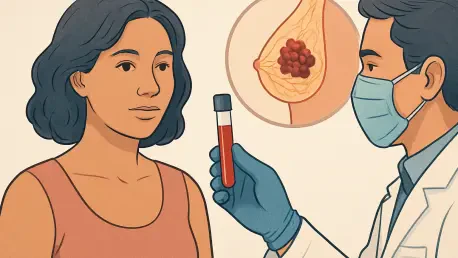
Absolutely. Let’s imagine a patient who has just completed surgery and chemotherapy for early-stage breast cancer. All her scans are clear, her tumor markers are normal, and by every conventional measure, she is in remission. The standard approach is to monitor her with periodic imaging. But what’s happening at the microscopic level? We can’t see it. Now, let’s introduce MRD testing. A few months after her treatment, she comes in for a simple blood draw. That test detects circulating tumor DNA (ctDNA)—tiny fragments of DNA shed from cancer cells that are still lurking in her body. This is the molecular relapse. Critically, this signal can appear a full 8 to 15 months before any tumor would be large enough to see on a CT scan. This is not just an earlier warning; it’s a completely different paradigm. Instead of waiting for a visible, established metastasis to treat, we now have a crucial window to intervene when the disease burden is incredibly low. This allows us to potentially use more targeted, less aggressive therapies to eliminate those residual cells before they can form a new tumor, fundamentally altering her prognosis and her treatment experience.
The article outlines two strategies: tumor-informed and tumor-agnostic. Could you compare the step-by-step process for each, from the initial sample to the final result, and explain what factors would make a specific patient a better candidate for one approach over the other?
These two strategies represent different philosophies for hunting down ctDNA, each with distinct advantages. The tumor-informed approach is deeply personalized. The process begins with the patient’s original tumor tissue, which we obtain after surgery. We sequence that tissue to identify its unique set of mutations—its specific genetic fingerprint. Then, we design a custom-built assay, a blood test, that is exquisitely designed to look for that exact fingerprint and nothing else. This makes it incredibly sensitive, capable of detecting ctDNA at levels as low as parts per million. The tumor-agnostic approach, on the other hand, is more of a standardized tool. It doesn’t require the original tumor tissue. Instead, it uses a pre-designed panel that screens for a broad set of common genetic mutations or methylation patterns known to be associated with breast cancer. It trades some of that pinpoint sensitivity for speed, lower cost, and accessibility. A patient is a better candidate for a tumor-informed assay when we have their tumor tissue available and the goal is maximum sensitivity for long-term monitoring. For situations where tumor tissue isn’t available, or when a faster, more standardized screening is needed, the tumor-agnostic approach is an excellent and practical alternative.
Beyond just predicting relapse, recent trials show MRD-guided treatment can extend progression-free survival. Could you elaborate on this with a specific example, explaining how a positive ctDNA result might lead to a change in therapy and what that means for the patient’s outcome?
This is really the most exciting evolution in the field—moving MRD from a simple prognostic marker to a true decision-making tool. It bridges the gap between standard protocols and truly individualized care. Let’s take a patient who is on adjuvant endocrine therapy following her initial treatment. Her follow-up plan includes regular MRD testing. For the first year, her tests are negative, which is very reassuring. But then, a test comes back positive for ctDNA. Her imaging is still clear, and she feels perfectly well, but this molecular signal tells us her cancer is developing resistance to the current therapy. In the past, we would have done nothing until she had a visible recurrence. Today, that positive ctDNA result triggers an immediate clinical action. Her oncologist might switch her to a different class of endocrine therapy or intensify her treatment by adding a targeted drug. Recent studies show that making these early, MRD-guided adjustments can significantly delay the time until the cancer progresses. For the patient, this is transformative. It means we are actively steering her treatment in real-time based on her cancer’s biology, staying one step ahead rather than waiting to react to a full-blown relapse.
The authors highlight the challenge of standardizing MRD testing to avoid over- or under-treatment. What are the key steps required to establish reliable thresholds and testing intervals in a clinical setting, and what are the potential risks for patients if these aren’t defined properly?
This is an absolutely critical point for the responsible integration of MRD into clinical practice. To get this right, the first step is to establish clear, clinically validated thresholds through large-scale studies. We need to know precisely what level of ctDNA in the blood is a true signal of impending relapse versus just background noise. Is a single positive reading enough to change therapy, or should we require a second confirmatory test showing a rising trend? Secondly, we must define the optimal testing intervals. Should a high-risk patient be tested every three months, while a lower-risk patient is tested every six? These protocols need to be based on solid evidence. Finally, the assays themselves must be standardized across different labs to ensure results are consistent and comparable. The risks of failing to do this are enormous. If we set the bar too low, we risk over-treating patients—subjecting them to the cost, anxiety, and physical toxicity of treatments they may not have needed. Conversely, if our thresholds are too high or our testing intervals too long, we risk under-treatment, missing that critical window for early intervention and losing the main benefit of the technology.
What is your forecast for minimal residual disease monitoring in breast cancer?
My forecast is that MRD monitoring will fundamentally redefine what “remission” and “survivorship” mean in breast cancer. Within the next decade, I expect it to become a standard of care for post-treatment monitoring, moving from specialized academic centers into routine community oncology. We will see a future where patient care is stratified based on MRD status. Patients who remain consistently MRD-negative may be candidates for de-escalating therapy, safely avoiding the long-term side effects of treatments they no longer need. Conversely, patients who test MRD-positive will be immediately identified as a high-risk group, allowing us to escalate their therapy proactively or enroll them in clinical trials for novel adjuvant agents. This technology will also dramatically accelerate drug development by providing earlier endpoints for clinical trials. Ultimately, as the technology matures and costs come down, this approach will complete the shift in breast cancer management from one of delayed detection of metastatic disease to one of timely, precise, and personalized intervention.