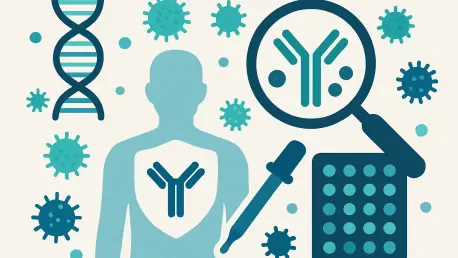

Imagine a world where the most abundant immune cells in the human body, crucial for fighting infections, remain a mysterious black box to scientists and medical professionals. For too long, neutrophils—those rapid-response warriors of the immune system—have been just that, with their complex behaviors across tissues and diseases poorly understood. Enter NeuMap Immune Mapping Technology, a revolutionary tool that unveils the hidden architecture of these cells, offering unprecedented insights into their organization and function. This review delves into the transformative potential of this cutting-edge platform, exploring how it reshapes immunology and paves the way for precision medicine.
Unveiling the Core of NeuMap
At its heart, NeuMap stands as a groundbreaking advancement, mapping over one million neutrophils using next-generation sequencing to create a detailed atlas of their behavior. Developed through a collaborative effort among international research institutions, this technology captures the dynamic nature of neutrophils across various life stages, tissues, and disease states. Far from being a mere data dump, it reveals a surprising stability in neutrophil patterns, providing a unified framework that was previously missing in immunology.
Moreover, the significance of this tool lies in its ability to bridge long-standing gaps in research. Historically, the short lifespan of neutrophils—just a few hours—made them elusive subjects for study. NeuMap overcomes this hurdle by synthesizing vast datasets into a coherent picture, allowing researchers to track how these cells adapt during conditions like infections or cancer. This clarity positions the technology as a cornerstone for future discoveries in immune response mechanisms.
Key Features Driving Innovation
Detailed Neutrophil Atlas
One of NeuMap’s standout features is its comprehensive mapping of neutrophil organization, cutting through the apparent chaos to highlight consistent patterns. Whether analyzing cells during fetal development or in aging adults, the technology uncovers how neutrophils maintain a stable architecture despite their fleeting existence. This atlas serves as a critical reference point for scientists aiming to decode immune responses in diverse scenarios.
Beyond just cataloging, this feature offers practical value by pinpointing specific neutrophil types tied to particular health outcomes. For instance, in cardiovascular diseases, NeuMap identifies unique cellular behaviors that could inform targeted interventions. Such precision underscores its role as a transformative tool, moving research from broad observations to specific, actionable insights.
Cross-Species Insights
Another remarkable aspect is NeuMap’s ability to detect conserved patterns of neutrophil behavior between humans and mice. By leveraging advanced sequencing techniques, it reveals striking similarities that enhance the reliability of preclinical studies. This cross-species conservation accelerates the translation of lab findings into clinical applications, a critical step for developing new therapies.
The implications of this feature are profound, especially for speeding up drug discovery. With shared characteristics between species, researchers can more confidently test treatments in animal models before human trials. This capability not only saves time but also boosts the potential for successful outcomes in addressing complex diseases, reinforcing NeuMap’s relevance in modern medical research.
Performance and Impact in Real-World Applications
Turning to performance, NeuMap excels in practical settings, providing insights into neutrophils’ roles across a spectrum of conditions, from pregnancy to myocardial infarction. Its ability to predict how these cells contribute to health and disease makes it invaluable for crafting personalized therapeutic strategies. In cancer research, for example, identifying specific neutrophil contributions could lead to novel biomarkers for early detection.
Additionally, the technology aligns seamlessly with the trend toward data-driven, holistic approaches in immunology. By integrating massive datasets, it supports precision medicine initiatives that aim to tailor treatments based on individual cellular profiles. This adaptability ensures that NeuMap remains at the forefront of innovation, addressing diverse challenges in healthcare with unparalleled depth.
However, challenges persist, such as the complexity of managing vast data and the historical lack of benchmarks for neutrophil studies. Efforts to make the atlas freely accessible globally are underway, fostering collaboration to refine its applications. Overcoming these hurdles will likely enhance NeuMap’s impact, ensuring it continues to shape research methodologies.
Looking Ahead: Challenges and Future Potential
Despite its strengths, NeuMap faces obstacles that warrant attention. The intricate nature of integrating datasets from varied conditions can strain resources and expertise. Yet, ongoing initiatives to streamline data processing and expand the technology’s scope to other immune cells show promise for broader utility in the coming years, potentially from 2025 onward.
Furthermore, the future holds exciting possibilities for refining NeuMap’s resolution to uncover even finer details of immune behavior. Anticipated breakthroughs may include mapping additional cell types or enhancing therapeutic development for inflammatory disorders. Such advancements could cement its status as a pivotal tool in reshaping how immune-related conditions are understood and treated.
Final Thoughts on a Pioneering Tool
Reflecting on this review, NeuMap Immune Mapping Technology emerged as a transformative force in immunology, bringing order to the once-fragmented study of neutrophils. Its detailed atlas and cross-species insights offered a robust foundation for research, while real-world applications demonstrated tangible impacts on health outcomes. Looking back, its role in advancing precision medicine stood out as a highlight of its early journey.
Moving forward, the next steps involved expanding access and refining capabilities to tackle lingering data challenges. Collaborative efforts were essential to unlock its full potential, ensuring that researchers worldwide could build on this foundation. With a focus on innovating therapeutic strategies, NeuMap promised to remain a catalyst for groundbreaking solutions in immune health, inspiring optimism for what lay ahead.