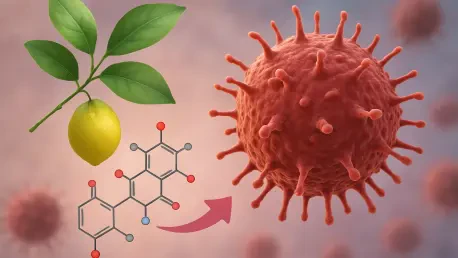

A recent scientific breakthrough has shed light on a promising new strategy against ovarian cancer, demonstrating how a natural compound derived from a traditional herb can selectively destroy malignant cells by disrupting their internal waste management system. The study, a collaborative effort between researchers at Zhejiang Chinese Medical University and Jiangsu Normal University, meticulously details how Dihydrotanshinone I (DHT) targets a specific protein, sortilin 1 (SORT1), which is highly prevalent in ovarian tumors. This interaction triggers a cascade of events that leads to a unique form of programmed cell death, presenting a novel therapeutic avenue for a disease known for its high mortality rate and challenging treatment landscape. The discovery offers a clear molecular pathway that could be exploited to develop more effective and targeted therapies, moving beyond conventional approaches.
Exploiting a Cellular Vulnerability
The investigation into Dihydrotanshinone I was predicated on a fundamental weakness observed in ovarian cancer cells, which are distinguished by having the highest mortality rate among all gynecological cancers. These malignant cells exhibit a significantly reduced “autophagic flux” when compared to their healthy counterparts. Autophagy is an essential cellular process that functions as a sophisticated quality control system, responsible for degrading and recycling damaged organelles and proteins to maintain cellular health. The term autophagic flux describes the entire dynamic pathway, from the formation of a vesicle known as an autophagosome around the cellular debris to its eventual fusion with a lysosome for breakdown. The inherently sluggish nature of this process in ovarian cancer cells suggested a critical vulnerability. Researchers hypothesized that by further impeding this already compromised system, they could overwhelm the cancer cells and induce their self-destruction.
Building on this hypothesis, a series of in vitro experiments using ovarian cancer cell lines revealed that DHT orchestrates a potent, two-pronged attack on the autophagic pathway. The first part of its assault involves significantly promoting the formation of autophagosomes, the double-membraned vesicles that sequester cellular waste. This was biochemically confirmed by observing an increased expression of microtubule-associated protein 1 light chain 3-II (LC3-II), a well-established marker indicating the presence of these structures. Simultaneously, and more critically, the study demonstrated that DHT inhibits the final, crucial step of the process: the fusion of these newly formed autophagosomes with lysosomes. This blockage effectively prevents the degradation of the vesicles’ contents, leading to a massive and ultimately toxic accumulation within the cancer cells. This disruption of the autophagic flux creates a state of unresolvable cellular stress, ultimately pushing the malignant cells to undergo autophagic cell death.
The Molecular Mechanism of Action
To unravel the precise molecular mechanics behind DHT’s potent effects, the research team employed proteomic analysis, a powerful technique that allows for the large-scale study of proteins. This investigation led them to pinpoint sortilin 1 (SORT1) as the direct target of the natural compound. SORT1 is a protein typically located on the endoplasmic reticulum and lysosomal membranes, where it plays a key role in sorting and transporting other proteins to the lysosome for their eventual degradation. Previous research had already implicated SORT1 as a significant contributor to the progression of ovarian cancer, with multiple studies showing that it enhances the proliferation, migration, and invasion of malignant cells. The clinical relevance of this protein is further underscored by the finding that high levels of SORT1 expression are detected in over 75% of clinical ovarian tumor samples, making it an exceptionally specific and attractive target for the development of new therapeutic interventions.
Further investigation provided direct and compelling evidence of the specific physical interaction between the DHT molecule and the SORT1 protein. Utilizing sophisticated techniques such as co-immunoprecipitation and cellular thermal shift assays, the researchers demonstrated that DHT physically binds to SORT1. This binding event initiates a critical cellular cascade, effectively “tagging” the SORT1 protein for ubiquitin-dependent degradation by the cell’s own protein disposal machinery. The subsequent degradation of SORT1 unleashes a profound downstream effect on the autophagy process. It leads to the release of two key autophagy-related proteins, ATG5 and ATG16L1, which are normally associated with SORT1. Once freed, these proteins further enhance the formation of new autophagosomes, creating a powerful feedback loop that dramatically amplifies the very process that DHT’s blockage of lysosomal fusion has already stalled, sealing the cancer cell’s fate.
A New Therapeutic Strategy Unveiled
To validate these compelling cellular findings within a more clinically relevant biological system, the researchers turned to an orthotopic ovarian cancer model in mice. This in vivo model, where human ovarian cancer cells are implanted directly into the ovaries of the animals, provides a more accurate representation of how the disease progresses and responds to treatment in a living organism. The results from this phase of the study robustly corroborated the initial in vitro observations. Mice that received treatment with DHT exhibited a statistically significant reduction in both the rate of tumor growth and the final tumor weight when compared to the untreated control groups. Furthermore, a detailed analysis of the tumor tissues harvested from the DHT-treated mice confirmed a marked decrease in the expression of SORT1, directly and unequivocally linking the therapeutic efficacy observed in the living model to the molecular mechanism of targeting and degrading the SORT1 protein.
This pivotal study provided a comprehensive and detailed account of how Dihydrotanshinone I, a compound derived from the traditional Chinese herb Salvia miltiorrhiza, effectively combatted ovarian cancer. The research established a clear chain of events: DHT directly targeted and bound to the SORT1 protein, which is overexpressed in a majority of ovarian tumors. This interaction promoted the degradation of SORT1, which in turn disrupted the normal autophagic flux by causing a pathological accumulation of autophagosomes that could not fuse with lysosomes. This lethal accumulation triggered autophagic cell death, selectively eliminating the cancer cells. These findings highlighted the significant potential of DHT as a novel therapeutic agent and validated the strategy of targeting the SORT1-mediated autophagy-lysosome pathway. This work opened the door for future research focused on optimizing DHT for clinical use and further exploring its underlying mechanisms, offering a new ray of hope for the treatment of this deadly disease.