The journey to bring a new medicine to market is a monumental undertaking, frequently spanning over a decade and consuming more than two billion dollars in investment, a reality that has long created a significant bottleneck in addressing pressing global health challenges. In this high-stakes environment, a startup named Medra is pioneering a transformative approach designed to shatter these long-standing barriers. The company has announced a successful $52 million Series A funding round to advance its mission of creating the first “physical AI scientist.” This ambitious endeavor aims to create an unprecedented fusion of advanced artificial intelligence models with fully autonomous laboratory robots, forging a direct and seamless link between theoretical scientific discovery and real-world experimental validation. By closing this critical loop, Medra seeks to radically accelerate the pace of therapeutic development and redefine the very structure of pharmaceutical research and development for the modern era.
A New Paradigm in Automated Research
The current landscape of drug discovery is characterized by a significant degree of fragmentation, even with the advent of artificial intelligence. Existing AI tools often operate in isolated silos, leading to persistent inefficiencies that hinder progress. On one side, there are systems designed to automate specific laboratory tasks, such as liquid handling or sample analysis, but these platforms still depend heavily on human scientists for the crucial stages of experimental design, hypothesis generation, and data interpretation. On the other side, sophisticated AI models can sift through vast datasets to generate novel hypotheses and predict molecular interactions, yet they lack the physical capability to test their own predictions. This disconnect forces a manual and often slow handoff between the digital realm of AI-driven theory and the physical world of the laboratory, reintroducing a human bottleneck that fundamentally limits the speed and scale at which new scientific insights can be validated and iterated upon. Medra’s strategy directly confronts this fragmentation by creating a holistic, end-to-end system.
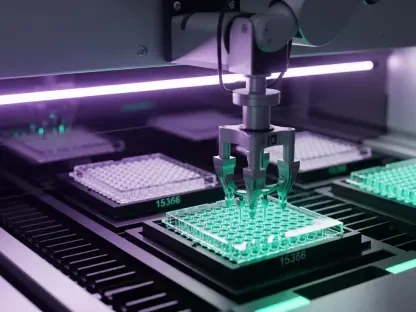
At the heart of Medra’s innovative platform is a dual-component system engineered to work in perfect concert, effectively bridging the gap between ideation and execution. The first element, known as “Scientific AI,” is a specialized large-scale model trained extensively in the principles of drug discovery and scientific reasoning. Its primary function is to conceive of and design complex, multi-step experiments aimed at testing novel therapeutic hypotheses. The second component, “Physical AI,” comprises a suite of general-purpose robots designed to interact with standard, off-the-shelf laboratory equipment. These robots act as the hands of the Scientific AI, autonomously carrying out the precise protocols it designs. This integration creates a powerful closed-loop system where the AI generates a theory, the robots conduct the experiment, and the resulting data is immediately fed back into the AI model for analysis and refinement. This continuous, self-correcting cycle enables an unprecedented volume of experiments to be run without human intervention, dramatically accelerating the iterative process of scientific discovery.
Securing Capital for a Revolutionary Vision
The substantial financial backing secured by Medra underscores the growing investor confidence in its pioneering vision for the future of pharmaceutical research. The $52 million Series A round was led by Human Capital, a firm known for backing ambitious, category-defining companies. The round also saw significant participation from a syndicate of prominent investors with deep expertise in both technology and life sciences, including Lux Capital, Menlo Ventures, and Catalio Capital Management. This infusion of capital is earmarked for several strategic initiatives critical to the company’s growth trajectory. A primary focus will be on expanding the specialized engineering and scientific teams to further enhance the capabilities of both the Scientific AI and Physical AI platforms. Additionally, the funding will be instrumental in the construction of Medra’s first proprietary, fully automated laboratory, which is scheduled to become operational next year and will serve as a showcase for its integrated discovery engine.
Even in its relatively early stages of development, Medra’s integrated AI system is already gaining significant traction within the biopharmaceutical industry, a testament to the pressing need for such a solution. The company has forged early partnerships with several major industry players, including Genentech Inc., Addition Therapeutics, and Cultivarium Inc., all of which are leveraging Medra’s technology to augment their own research and development pipelines. This early adoption serves as powerful market validation for the company’s approach. From the perspective of its lead investors, Medra is not merely improving an existing process but is actively creating an entirely new category within drug research. The prevailing belief is that by enabling science to learn, iterate, and scale at a pace previously unimaginable, Medra’s platform holds the potential to consistently and efficiently produce novel therapeutics that could address some of the most challenging diseases of our time.
A Pivotal Moment for Therapeutic Innovation
The successful closure of this funding round represented more than just a financial milestone for a single company; it signaled a broader industry-wide shift toward embracing fully integrated, AI-driven systems in the quest for new medicines. The capital secured by Medra provided the necessary resources to transition its ambitious vision from a conceptual framework into a tangible, operational reality. This investment validated the core premise that the future of drug discovery lay not in piecemeal automation but in a holistic ecosystem where artificial intelligence could both reason and act. The confidence shown by leading venture capital firms suggested a collective belief that Medra’s closed-loop approach could finally break the decades-old cycle of slow, expensive, and fragmented research, heralding a new era where the path from hypothesis to therapy could become exponentially faster and more efficient for the entire pharmaceutical landscape.