
Basal cell carcinoma remains the most frequently diagnosed form of cancer globally, yet the primary treatment still relies on invasive surgery that often leaves patients with significant scarring and long recovery times. This reality has prompted a search for non-surgical interventions that provide high efficacy without the trauma of physical excision. The evaluation of the SkinJect microneedle delivery system represents a critical step in this evolution, focusing on clinical and histological clearance as primary indicators of success. By delivering active pharmaceutical ingredients directly into the lesion site, this platform offers a potential shift toward less invasive oncology management.
Advancing Non-Surgical Interventions for Basal Cell Carcinoma
Traditional Mohs surgery, while effective, places a heavy burden on both patients and surgical resources due to its highly invasive nature. The focus of recent research has shifted toward drug-device combinations like D-MNA and P-MNA to determine if localized delivery can match surgical outcomes while improving the patient experience. By prioritizing non-invasive methods, the medical community hopes to reduce the prevalence of excision-related complications and provide more aesthetic results.
The Rising Need for Innovative Dermatologic Oncology Solutions
Because basal cell carcinoma is so widespread, the demand for accessible and less intensive treatments has never been higher than in the current clinical environment. Current standards often involve long recovery times and specialized facilities that may not be available to all patient populations. The SkinJect platform addresses this by utilizing technology that prioritizes patient comfort and streamlines the therapeutic process.
Research Methodology, Findings, and Implications
Methodology
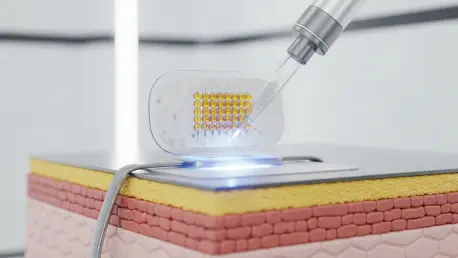
The SKNJCT-003 Phase 2 trial utilized a microneedle patch to deliver active ingredients directly into lesions, specifically monitoring a 200-microgram dosage group. Success was measured by Day 57 through visible clinical resolution and biopsy-confirmed histological clearance to ensure no malignancy remained. A control group using placebo patches allowed researchers to isolate the specific effects of the medication versus the delivery method itself.
Findings
The 200-microgram cohort achieved a 73 percent clinical clearance rate, significantly outperforming the 38 percent response seen in the placebo group. While the mechanical action of the needles appeared to stimulate some baseline immune signaling, the 40 percent histological clearance in the active group confirmed the drug’s necessity for total eradication. This distinction highlighted the synergy between the device and the pharmaceutical agent.
Implications
This data validates the potential for a technological shift in dermatology, offering a viable path to treat cancer without scalpels. Such a profile could drastically reduce healthcare costs and improve the quality of life for millions by providing a disruptive alternative to surgical intervention. Furthermore, it establishes a framework for using microneedles in other localized oncological applications.
Reflection and Future Directions
Reflection
The viability of the SkinJect platform was reinforced by its ability to overcome the benchmarks that passive topical treatments often fail to reach. Meeting these targets highlighted the effectiveness of combining mechanical delivery with potent pharmaceutical agents to bypass the skin’s natural barrier. This success suggested that localized, needle-free delivery is a robust strategy for treating superficial malignancies.
Future Directions
The next logical step involved seeking an End-of-Phase-2 meeting with the FDA to define the regulatory path toward final approval. Furthermore, the search for strategic pharmaceutical partnerships began to facilitate global scaling and explore applications for other dermatological conditions. These efforts focused on expanding the reach of the technology to ensure broad patient access in the coming years.
Transforming the Landscape of Skin Cancer Therapy
The trial results demonstrated that microneedle technology could effectively clear malignant lesions, marking a significant advancement in the field of dermatology. This progress moved oncology closer to a needle-free surgical alternative, where strategic FDA engagement and industry partnerships set the stage for a new standard of care. Ultimately, the findings confirmed that localized therapy provided a compassionate and effective future for skin cancer management.