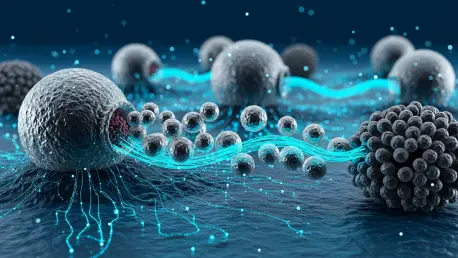

The architectural complexity of the tumor microenvironment reveals a sophisticated biological intelligence where immune cells, once thought to be defenders, are subverted into tactical accomplices for malignant growth. This transformation is driven largely by extracellular vesicles, which function as microscopic shipping containers that facilitate communication between the immune system and cancer cells. By investigating these signaling pathways, modern oncology is shifting toward a more granular understanding of how tumors manipulate their surroundings to thrive.
Extracellular vesicles are membrane-bound particles that act as essential currency in the economy of intercellular communication. Within the tumor microenvironment, a complex ecosystem of fibroblasts, endothelial cells, and immune cells interacts constantly. Historically, researchers observed that a high density of macrophages in tumor tissue correlated with a poor clinical prognosis. However, recent insights have clarified that these cells are not merely passive bystanders but are active drivers of oncogenic progression through the strategic secretion of vesicles.
The evolution of tracking technology has allowed for a deeper look into how these vesicles operate. Instead of viewing the immune response as a binary success or failure, scientists now see a nuanced dialogue where macrophages contribute to a landscape that supports malignancy. This shift in perspective is fundamental to modern cell biology, as it identifies the vesicle itself as a primary target for future clinical intervention and diagnostic mapping.
Core Mechanisms of Vesicle-Mediated Signaling
Cargo Composition and Pro-Inflammatory Mediators
The efficiency of macrophage-derived signaling lies in the specific molecular components housed within M1 macrophage-derived vesicles. These particles are heavily loaded with pro-inflammatory cytokines, most notably Tumor Necrosis Factor-alpha (TNFα) and Interleukin-1 beta (IL-1β). These proteins are critical for initiating inflammatory responses, but when packaged inside a vesicle, they gain a unique advantage. The lipid bilayer of the vesicle protects these sensitive mediators from enzymatic degradation in the harsh extracellular environment.
This protection ensures that the inflammatory “message” remains intact until it reaches the recipient cell. Unlike free-floating cytokines that might lose potency or be neutralized, vesicle-encapsulated cargo acts as a specialized delivery system. This biochemical arrangement allows for high-concentration hits of inflammatory signals directly to cancer cells, which serves to initiate systemic and localized inflammation that ultimately benefits the tumor’s survival strategy.
The NF-κB Signaling Pathway Activation
Once these vesicles encounter melanoma cells, they bypass traditional cellular barriers to deliver their cargo directly into the recipient’s cytoplasm. This entry triggers the rapid activation of the NF-κB signaling pathway, a master regulator of both immune response and cell survival. In a healthy context, NF-κB activation is transient and protective; however, when hijacked by macrophage-derived vesicles, it becomes a permanent fixture of the tumor’s operational framework.
The chronic activation of the NF-κB pathway provides a powerful shield for melanoma cells, effectively suppressing apoptosis—the programmed cell death that usually eliminates damaged or malignant cells. By turning off the self-destruct mechanism, the vesicles enhance tumor resilience. This molecular reprogramming ensures that the cancer cells not only survive the body’s natural defenses but also gain the durability needed to withstand external pressures such as early-stage chemotherapy.
Recent Innovations in Mapping the Tumor Microenvironment
Contemporary research has introduced sophisticated methods for tracking the movement of vesicles between immune cells and malignant targets. These innovations have revealed that the distinction between M1 and M2 macrophage polarization is more fluid than previously believed. While M1 macrophages are typically associated with pro-inflammatory defense, their vesicles can inadvertently create a fertile ground for cancer by establishing a self-sustaining inflammatory cycle.
This feedback loop is a critical discovery in understanding the tumor microenvironment. As vesicles induce inflammation in cancer cells, those cancer cells release signals that further recruit and polarize macrophages, ensuring a steady supply of growth-promoting vesicles. Mapping these loops allows researchers to see the tumor as a dynamic, self-correcting system rather than a static group of cells, providing new opportunities for disrupting the communication chain at various points of contact.
Real-World Applications in Oncology and Melanoma Research
The practical application of these findings is most evident in the study of melanoma aggressiveness. Research indicates that the signaling provided by macrophage vesicles is a primary driver of invasiveness. By enhancing the motility of melanoma cells, these vesicles provide the necessary biological “tools” for cancer cells to break away from the primary tumor and infiltrate the surrounding tissue. This increased movement is a direct prerequisite for metastasis, the most lethal stage of cancer progression.
Furthermore, these insights are being translated into clinical settings to identify new biomarkers. By analyzing the cargo of circulating vesicles in a patient’s blood, clinicians may soon be able to predict the trajectory of melanoma before visible symptoms of metastasis appear. This proactive approach to monitoring the tumor microenvironment represents a significant leap forward in personalized medicine, allowing for more aggressive interventions tailored to the specific signaling profile of a patient’s tumor.
Challenges in Intercepting Extracellular Communication
Despite the potential of this field, significant technical hurdles remain regarding the isolation of specific macrophage-derived vesicles. The extracellular space is a crowded environment filled with a heterogeneous population of particles from various cell types. Distinguishing the “harmful” vesicles from those performing essential housekeeping functions is a massive undertaking that requires extreme precision in filtration and molecular identification.
Moreover, targeting the NF-κB pathway presents a delicate biological balancing act. Because this pathway is essential for healthy immune function, systemic inhibition could leave a patient vulnerable to infections and other complications. Neutralizing the vesicle cargo before it reaches target cells is equally difficult in a live physiological system, as the body’s circulatory dynamics make it hard to ensure that therapeutic agents find and bind to these microscopic particles with high enough efficiency to halt the signaling process.
Future Directions and Therapeutic Potential
The horizon of cancer therapy is likely to include drugs designed specifically to inhibit the secretion of vesicles from pro-inflammatory macrophages. By slowing down the “shipping” of these inflammatory messages, it may be possible to starve the tumor of the signals it needs to maintain its aggressive phenotype. This approach does not necessarily kill the cancer cells directly but instead strips them of their environmental advantages, making them more susceptible to existing treatments.
Additionally, the development of vesicle-neutralizing antibodies or synthetic “decoy” molecules offers a revolutionary path for improving immunotherapy. These decoys could be engineered to intercept and bind to macrophage vesicles, preventing them from ever reaching the melanoma cells. This strategy of intercellular message interception represents a paradigm shift, moving the focus of treatment from the cancer cell itself to the communication infrastructure that allows the cancer to dominate its local ecosystem.
Summary and Assessment of Vesicle Signaling Research
The investigation into M1 macrophage-derived extracellular vesicles provided a clear molecular map of how inflammation drives cancer aggressiveness. The research established that these vesicles served as essential conduits for TNFα and IL-1β, which in turn activated the NF-κB pathway to enhance the survival and motility of melanoma cells. This discovery successfully reframed the role of pro-inflammatory immune cells as unintentional contributors to a pro-tumorigenic landscape through a self-sustaining cycle of chemical signaling.
The findings suggested that the future of oncology lies in the management of the tumor microenvironment rather than the isolated targeting of malignant cells. By highlighting the specific mechanisms of vesicle-mediated communication, the study offered a foundation for disruptive therapeutic strategies. Actionable next steps will likely involve the refinement of vesicle isolation technologies and the exploration of synthetic molecules designed to break the inflammatory feedback loop. Ultimately, the management of these molecular conversations appeared to be a vital key in halting the progression of aggressive cancers and improving patient outcomes in the years ahead.