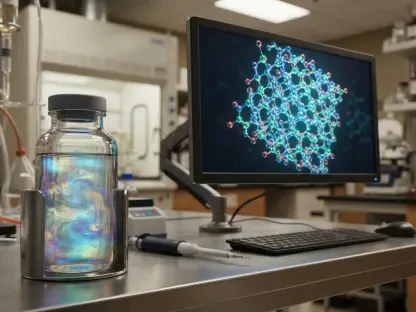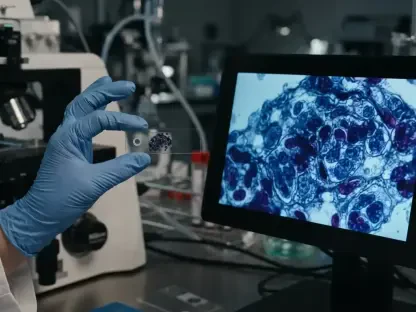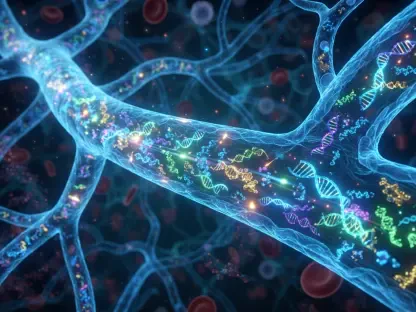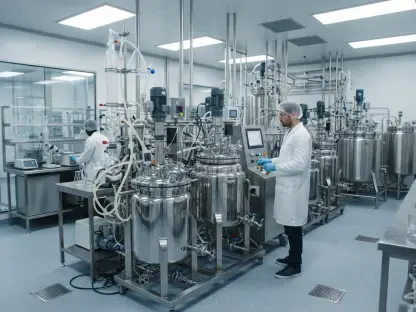

The traditional pharmaceutical development funnel is currently facing a massive overhaul as researchers move away from static, isolated chemical assays toward dynamic platforms that observe drug behavior within the bustling complexity of living human cells. This transition marks a fundamental departure from the “lock and key” simplicity of the past, acknowledging that the human body is not a collection of isolated proteins but a deeply integrated web of interactions. By prioritizing live-cell environments, the industry is finally addressing the high failure rates that have plagued drug discovery for decades. Modern researchers are increasingly leveraging tools like the NanoBRET platform, which uses bioluminescence resonance energy transfer to provide a real-time window into how a drug molecule interacts with its intended target inside an intact cell. This “molecular ruler” is essential for capturing the nuances of drug-target binding, including how long a compound stays attached and whether it reaches the correct cellular compartment. As the boundary between laboratory chemistry and physiological reality continues to blur, these platforms are becoming the new standard for validating therapeutic candidates before they ever reach a clinical setting. This shift ensures that the molecules being developed are not just chemically active but biologically relevant in a way that truly mimics human health.
Overcoming the Limitations of Traditional Biochemical Assays
For decades, the pharmaceutical industry relied on biochemical reductionism, a method that involves isolating a specific protein and testing thousands of chemical compounds against it in a simplified test-tube environment. While this approach allowed for high-throughput screening and rapid data collection, it frequently missed the mark because it ignored the “crowded” nature of the intracellular space. In a living cell, proteins are not floating in a vacuum; they are surrounded by a dense sea of other molecules, ions, and structural components that can drastically alter their shape and function. Many potential drugs that appeared highly effective in these purified assays failed spectacularly when tested in living organisms because the target protein behaved differently in its natural habitat. This lack of context led to a phenomenon where researchers were chasing “ghost” leads—molecules that looked perfect on paper but were fundamentally incompatible with the complex machinery of human biology. By moving the primary screening phase into live cells, scientists are now able to see how a drug must navigate these biological obstacles, ensuring that the compounds being promoted for further study are those that can actually function within the chaotic and highly organized environment of a human cell.
Beyond simple physical crowding, the structural integrity of many high-value drug targets, such as multi-subunit receptors and membrane-bound proteins, is often lost the moment they are removed from the cell membrane. These proteins often require specific lipid environments or the presence of various chaperone proteins to maintain their functional three-dimensional configuration. Traditional biochemical methods often used truncated versions of these proteins or artificial detergents to keep them soluble, which inadvertently masked the very binding sites that a drug would need to access in a real patient. Consequently, the industry suffered from a high rate of attrition during late-stage development, where billions of dollars were lost on compounds that simply did not work in a physiological setting. The shift toward live-cell platforms allows researchers to maintain the protein in its native state, ensuring that any binding observed is truly representative of what will occur in the human body. This approach provides a much more accurate prediction of success, filtering out ineffective compounds much earlier in the discovery timeline. By focusing on the native state of the protein, the industry has managed to unlock targets that were previously considered impossible to drug, opening new doors for treating complex diseases.
Deciphering the Technical Foundations of NanoBRET Technology
At the heart of this technological shift is NanoBRET, a technology that harnesses the physics of proximity-based energy transfer between a light-emitting donor and a light-absorbing acceptor. Scientists begin by tagging a target protein with a small, highly efficient luciferase enzyme, which acts as the light source, and then introducing a fluorescently labeled version of the drug or a specialized tracer. When the drug and the target protein come into close proximity—usually within a distance of less than ten nanometers—energy is transferred from the luciferase to the fluorescent tag, resulting in a measurable light signal. This process is entirely non-disruptive, meaning it can be carried out in real-time without breaking the cell open or causing premature cell death. This allows researchers to observe the kinetics of drug binding over hours or even days, providing a temporal view of drug activity that static assays could never achieve. The sensitivity of this “molecular ruler” is such that it can detect even subtle changes in binding affinity, giving researchers the high-resolution data needed to refine their chemical designs with unprecedented precision. This capability is proving vital for understanding the nuances of modern molecular pharmacology.
There are two primary experimental designs used within these live-cell platforms to gather different types of pharmacological intelligence: tracer-based competition assays and target-agnostic shift assays. In a tracer-based setup, a known fluorescent molecule is used to compete with the new drug candidate for the binding site, allowing researchers to calculate the precise affinity and residence time of the new compound. Alternatively, shift assays detect physical conformational changes in the target protein itself upon drug binding, providing information on the drug’s mechanism of action even if a tracer is not available. Both of these methodologies yield critical data regarding how a drug behaves in a competitive biological environment where it must out-compete endogenous ligands or other cellular proteins. This level of insight is particularly valuable for understanding “slow-binding” kinetics, which are often associated with longer-lasting therapeutic effects and better patient outcomes. By quantifying these interactions within the living cell, discovery teams can prioritize compounds that possess the optimal balance of potency and duration of action. These insights are transforming how chemists think about molecule design, moving focus away from simple affinity toward long-term functional engagement.
Unveiling Mechanisms Within Undruggable and Hidden Targets
One of the most significant advantages of using live-cell platforms is the ability to study “hidden” or “invisible” biological targets that do not produce an immediate, easy-to-measure signal. In the past, many proteins were considered undruggable simply because researchers lacked a functional readout to tell them if a drug was actually doing anything. For example, if a drug binds to a protein but does not immediately change the cell’s metabolism or trigger a fluorescent reporter gene, it might be discarded as inactive during a standard screen. Live-cell engagement assays solve this problem by focusing entirely on the physical interaction between the drug and the target rather than the downstream biological consequences. This allows scientists to confirm that a molecule is reaching its target “lock” and successfully inserting the “key,” regardless of whether the “door” opens right away. This direct measurement of target engagement is vital for exploring new therapeutic areas, such as neurological disorders or chronic inflammation, where the biological response to a drug might be subtle, delayed, or incredibly complex. It has provided a way to validate the early stages of discovery for a much broader range of the human proteome than ever before.
Furthermore, by measuring direct engagement inside the cell, researchers can effectively bypass the noise and interference often found in messy or divergent signaling pathways. Traditional phenotypic screening—where scientists simply look at the end result of a drug treatment—can be confusing because many different molecules might cause the same final change in the cell, even if they are working through completely different mechanisms. This ambiguity often leads to “off-target” effects where a drug is unintentionally interacting with proteins it was not supposed to touch, potentially leading to toxic side effects. Live-cell platforms provide a much-needed layer of clarity by verifying that the observed biological effect is actually driven by the intended interaction. This level of molecular certainty is essential for developing highly selective therapies that minimize side effects for the patient. By focusing on the physical reality of the drug-target complex, research teams can more confidently advance their lead compounds, knowing that the foundation of their pharmacological hypothesis is built on direct, quantifiable evidence from within a living system. This clarity is helping to eliminate the guesswork that has historically slowed down the transition from the laboratory to the clinic.
Mapping Molecular Interactions Across Diverse Intracellular Compartments
Modern biology has moved past the simplistic view of a cell as a “bag of enzymes” and now recognizes it as a highly structured landscape divided into distinct, functional compartments. Drugs must often travel through multiple membranes and navigate various organelles, such as the nucleus, mitochondria, or the endoplasmic reticulum, to reach their intended destination. Live-cell platforms like NanoBRET are compatible with these localized environments, enabling researchers to see exactly where a drug is working within the cellular geography. This is a game-changer for developing organelle-targeted therapies, which aim to deliver a drug specifically to one part of the cell to maximize efficacy and reduce toxicity elsewhere. For instance, a drug designed to treat a mitochondrial disease is useless if it gets trapped in the cytoplasm or the lysosomes. By utilizing compartment-specific tagging, scientists can now map the distribution of their compounds in real-time, ensuring that the concentration of the drug is highest exactly where it is needed most to address the underlying pathology. This spatial precision is allowing for the development of drugs that are more efficient and require lower overall doses, which significantly improves the safety profile of new treatments.
The local environment within these different cellular compartments can also significantly influence how a drug binds to its target. Factors such as local pH levels, metabolic gradients, and the presence of specific protein partners or cofactors vary wildly between the nucleus and the cell membrane. A compound that binds tightly to a protein in the cytoplasm might lose its affinity entirely once it enters the more acidic environment of a lysosome or the specialized environment of the Golgi apparatus. Understanding these site-specific interactions allows scientists to predict a drug’s true potency with a level of accuracy that was previously impossible using test-tube experiments. This spatial resolution helps in the design of “smart” molecules that only become active or bind more tightly when they reach a specific cellular location. By mastering the internal geography of the cell, pharmaceutical companies can create more sophisticated and effective treatments that are fine-tuned to the actual biological conditions they will encounter inside a patient’s body. The ability to monitor these localized interactions in real-time has fundamentally changed how researchers evaluate the pharmacokinetics of their lead compounds during the early stages of development.
Enhancing Predictive Accuracy and Reducing Developmental Risk
Integrating live-cell measurements into the early stages of discovery allows for a more strategic “de-risking” of the entire development pipeline. While functional assays show whether a drug produces a biological result, biophysical assays using live cells explain the specific “how” and “where” of that interaction. When these two sets of data are used in tandem, researchers can identify instances of polypharmacology—where a drug binds to multiple different proteins—or detect potential off-target effects before they become a problem in clinical trials. This holistic view of a compound’s behavior provides a much more detailed map of its pharmacological profile, allowing for the selection of leads that have the highest probability of success. By weeding out molecules that are confirmed to be inactive or poorly distributed in cells from the very beginning, companies can avoid the massive waste of resources that occurs when a project fails in the later, more expensive stages of human testing. This data-driven approach ensures that only the most robust and functional chemical matter moves forward. This rigorous filtering process has been key to the recent successes seen in complex therapeutic areas that were previously prone to high failure rates.
These platforms proved to be particularly vital for the development of small molecules, which often exhibited less predictable behaviors than their larger, protein-based biological counterparts. By measuring engagement across a wide panel of different proteins within a live cell, scientists were able to fine-tune the selectivity profile of their most promising compounds. This careful optimization ensured that the therapeutic impact was focused entirely on the intended target, which kept potential side effects to an absolute minimum throughout the clinical process. In practice, the widespread adoption of these live-cell tools led to a more streamlined discovery process, where critical decisions were based on physiological relevance rather than laboratory convenience. This strategic shift successfully reduced the number of late-stage failures by identifying non-functional molecules before they consumed significant amounts of capital. Moving forward, the integration of these platforms with patient-derived cells will likely become the next frontier, allowing for the prediction of individual drug responses in a personalized medicine context. By bridging the gap between basic chemistry and human biology, these platforms established a new era where the internal workings of the cell were no longer a mystery but a clear and navigable map for medical intervention.