
The human cell operates as a high-speed logistics hub where the physical location of cargo determines the fate of the entire biological operation. For decades, biology textbooks have described lysosomes as simple waste disposal units—tiny acidic balloons drifting through the cytoplasm to dissolve cellular debris. However, recent breakthroughs have revealed that these organelles are actually sophisticated command centers. Their position within the cell acts as a master signal that dictates whether a tissue will thrive, grow, or succumb to metabolic collapse.
A groundbreaking collaborative study has finally identified a specific molecular brake, a protein called TBC1D9B, that prevents these vital organelles from drifting aimlessly. Without this “off switch,” the cell loses its navigation system, rendering it unable to switch between states of growth and survival. This discovery is not merely a win for basic biochemistry; it represents a fundamental shift in how we approach the treatment of devastating diseases. By understanding the logistics of the cell, we are finally moving beyond observing cellular decay and toward a future where we can actively redirect internal machinery to combat illness.
The Hidden Logistics of the Living Cell
In the microscopic world of human biology, the cell is far more dynamic than a static container of chemicals. It functions like a sophisticated distribution center where proteins and organelles must be at the right place at the precise time to execute their duties. Lysosomes, once relegated to the role of “trash cans,” are now recognized as metabolic sensors. They monitor the environment and tell the cell whether to invest energy in building new structures or to conserve resources by recycling old ones.
The physical movement of these organelles is the primary language of this decision-making process. When lysosomes move toward the edges of the cell, they signal a period of expansion and proliferation. Conversely, when they cluster near the nucleus, they initiate a survival protocol. The identification of TBC1D9B as the specific regulator of this movement reveals a layer of control that was previously invisible to scientists, showing that cellular health depends as much on spatial organization as it does on chemical composition.
Why Lysosomal Positioning Changes Everything in Modern Medicine
The discovery of TBC1D9B addresses a significant flaw in our traditional understanding of cellular health: the assumption that having the right components is sufficient for a functional system. In reality, a lysosome in the wrong place is a lysosome that cannot do its job. This spatial regulation serves as a frontline defense against neurodegeneration and metabolic failure. As the global population ages and the prevalence of conditions like Alzheimer’s and Parkinson’s climbs, understanding how cells recycle their own waste through autophagy has become an urgent clinical necessity.
This research allows us to move beyond the limitations of current medicine. Instead of just trying to clear away the plaques and tangles associated with brain diseases, we can now look at the underlying transport mechanisms that failed in the first place. By focusing on the “logistics” of the cell, researchers are developing a framework to restore the natural recycling processes that keep neurons healthy. This shift in perspective could lead to therapies that prevent the accumulation of toxic waste before it ever reaches a critical mass.
Decoding the TBC1D9B Regulatory Complex
To understand how a cell halts its internal transport, one must look at the ARL8B protein, which functions as a molecular ignition for lysosomal movement. When active, ARL8B hitches lysosomes to microtubule tracks, driving them toward the cell’s periphery to promote growth. However, every motor needs a brake, and that is where TBC1D9B enters the picture. Acting as a GTPase-activating protein (GAP), TBC1D9B serves as the specific “off switch” that deactivates ARL8B, allowing the cell to stop outward movement and pivot toward preservation.
This regulatory process requires a coordinated team effort rather than a single actor. TBC1D9B does not work in isolation; it must bind to a membrane protein called TMEM55B to latch onto the lysosome and exert its influence. This partnership creates a spatial logic that responds to the cell’s environment. When a cell faces starvation, this complex ensures lysosomes migrate to the perinuclear center to initiate autophagy. Without this protein complex, the “self-cleaning” process fails entirely, leaving the cell vulnerable to energy depletion and structural damage.
Expert Insights and Experimental Breakthroughs
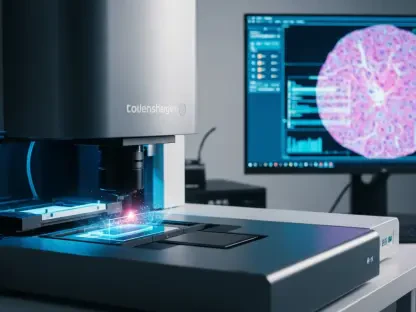
Research teams from Bielefeld University and the Leibniz-Forschungsinstitut utilized high-resolution microscopy and advanced proteomics to prove that the mere presence of lysosomes cannot compensate for incorrect positioning. Their experiments demonstrated that when the TBC1D9B switch is disabled, lysosomes spread uncontrollably, and the cell loses its ability to respond to nutrient stress. This multi-omics evidence has confirmed that the spatial distribution of organelles is a primary regulatory layer of metabolism, not just a side effect of other processes.
The implications for neuro-resilience are particularly striking. Scientists suggested that by manipulating the TBC1D9B switch, it might be possible to force-start the clearance of toxic protein aggregates in nerve cells, potentially delaying the onset of dementia. Furthermore, the findings have significant weight in oncology. Cancer cells often hijack this very transport system to survive in nutrient-poor tumor environments. By identifying the molecular brakes and gas pedals of this system, pharmaceutical researchers have gained a high-value target for interventions that could starve tumors of their adaptive capabilities.
Strategies for Integrating Spatial Biology into Therapeutic Research
Moving forward, the focus must shift toward developing small-molecule inhibitors that mimic the action of TBC1D9B. Such compounds could prevent the aggressive spreading of lysosomes in tumor cells, effectively stalling the growth of resilient cancers. Additionally, the interaction between TBC1D9B and TMEM55B should be utilized as a biomarker in clinical settings. This would allow doctors to assess the “recycling health” of cells in patients with inherited metabolic storage disorders, providing a more accurate diagnostic tool than traditional blood tests.
Furthermore, high-resolution tracking of lysosomal clusters in clinical biopsies could identify early-stage cellular stress long before physical symptoms of neurodegeneration appear. Beyond chronic disease, there is an opportunity to optimize immune responses by modulating ARL8B activity. Enhancing the ability of immune cells to transport and destroy invading pathogens more effectively could revolutionize our approach to infectious disease. The roadmap for future research is clear: by mastering the spatial logic of the cell, we can unlock a new generation of precision medicine that repairs the fundamental mechanics of life.