
Within the intricate machinery of our cells, the iconic double helix of DNA has long been considered the fundamental blueprint of life, but recent breakthroughs have revealed that our genetic code can adopt far more complex and enigmatic shapes. A comprehensive study has illuminated the existence of a highly unusual, four-stranded DNA structure, once dismissed as a mere laboratory curiosity, confirming its presence within living human cells. This discovery not only challenges our conventional understanding of genetic architecture but also identifies this strange DNA “knot” as a critical player in gene regulation and, pivotally, as a potential Achilles’ heel in the fight against cancer. This new research reframes the structure from a scientific anomaly into a biologically significant element that could unlock a new generation of targeted therapies.
The Unraveling of a Genetic Mystery
Beyond the Double Helix
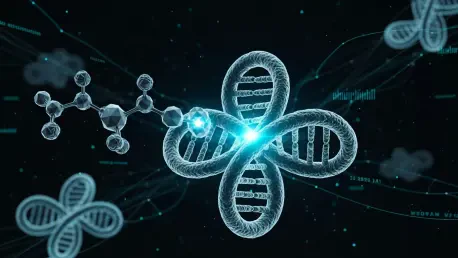
For decades, the Watson-Crick double helix has dominated our understanding of DNA, its two intertwined strands held together by precise pairings of adenine with thymine and cytosine with guanine. However, the newly confirmed structure, known as i-DNA, dramatically departs from this classic model. Instead of two strands, i-DNA is a four-stranded knot formed when a single DNA strand, rich in cytosine, folds back upon itself in a complex, knotted configuration. What makes this structure particularly unusual is how it is held together: through unconventional cytosine-cytosine pairs, a type of bonding that was long believed to be too unstable to exist within the dynamic and aqueous environment of a living cell. This skepticism led many researchers to consider i-DNA an artifact of laboratory conditions, an interesting but biologically irrelevant oddity. The latest research, employing a powerful combination of biochemical assays, sophisticated computational modeling, and advanced cell biology techniques, has definitively overturned this long-held assumption, proving that these four-stranded knots are not only real but are actively formed and managed inside our cells.
A Fleeting but Vital Presence
The formation of i-DNA within a cell is not a random or chaotic event; rather, it is a tightly regulated and transient process intricately linked to the cell’s life cycle. Researchers have demonstrated that these structures appear and disappear with precise timing, materializing just before the cell begins the crucial process of DNA replication. This “peek-a-boo” nature suggests that the i-DNA knot acts as a temporary regulatory bottleneck, a molecular switch that must be resolved at exactly the right moment for the cell to proceed with division. The study identified a specific protein, PCBP1, as the key factor responsible for this resolution. PCBP1’s job is to seek out and unwind the i-DNA knot, smoothing the DNA strand so that the replication machinery can access the genetic code and faithfully copy it. The transient existence of i-DNA highlights a new layer of complexity in gene regulation, where the very shape of DNA can be temporarily altered to control fundamental cellular processes. This dynamic structural change represents a sophisticated mechanism for managing genetic information, far beyond the simple reading of the base-pair sequence.
The Link to Cancer and Future Therapies
A Bottleneck in Replication
The timely resolution of i-DNA is not just a matter of cellular housekeeping; it is directly linked to the prevention of catastrophic genetic errors that can lead to cancer. If the PCBP1 protein fails to unwind the i-DNA structure efficiently, the knot becomes a formidable physical roadblock, stalling the progression of the DNA replication machinery. This blockage can cause the replication process to collapse, leading to breaks in the DNA strand and widespread genetic damage. Such DNA damage is a primary hallmark of cancer, creating the genomic instability that allows cells to mutate, grow uncontrollably, and form tumors. Furthermore, the researchers discovered that not all i-DNA structures are created equal. Their stability, and thus the difficulty in resolving them, varies depending on the underlying DNA sequence. Knots with a higher number of cytosine pairs are more stable and harder for PCBP1 to unwind, increasing the risk of replication errors. Critically, many of these highly stable i-DNA-forming sequences are located in the regulatory regions of oncogenes—genes known to drive cancer development—forging an undeniable link between these unusual structures and the onset of the disease.
Targeting a Cellular Weakness
This newfound understanding of i-DNA’s role in cellular mechanics opens up exciting new avenues for drug development, particularly for creating highly targeted cancer therapies. Cancer cells are defined by their rapid and often faulty division, a process that places them under immense replication stress. This inherent vulnerability makes them more susceptible to further disruptions in their DNA replication process compared to healthy cells. The research proposes a novel therapeutic strategy that exploits this weakness. By developing drugs that either stabilize the i-DNA knot, making it even harder to unwind, or inhibit the function of the PCBP1 protein that resolves it, scientists could selectively push already-stressed cancer cells past their breaking point. Such an approach would cause catastrophic DNA damage specifically in rapidly dividing cancer cells, triggering their self-destruction while leaving healthy cells, which are under less replication stress, relatively unharmed. This strategy represents a paradigm shift, moving from broadly toxic chemotherapies to precision treatments that target a fundamental biological process that is uniquely fragile in cancerous cells.
A New Chapter in Genetic Research
The confirmation of i-DNA’s existence and function within living cells marked a significant turning point in molecular biology. It fundamentally altered the long-standing view of DNA as a static double helix, revealing it to be a dynamic molecule capable of forming complex, functional structures. This discovery has not only deepened our understanding of gene regulation and the cell cycle but has also unveiled a promising new target for oncological research. The direct link established between the resolution of these DNA knots and the prevention of cancer-causing mutations provided a clear roadmap for developing innovative therapeutic strategies. Researchers are now positioned to design drugs that exploit this unique cellular mechanism, potentially leading to a new class of targeted cancer treatments that are more effective and have fewer side effects. The journey from identifying a scientific curiosity to uncovering a key to fighting a devastating disease had reached a pivotal milestone.