
The global pharmaceutical landscape has undergone a profound shift as the focus moves from mass-produced chemical pills toward highly personalized, biologically derived treatments that can essentially reprogram a patient’s own immune system. Ireland has positioned itself at the absolute center of this scientific revolution, successfully transitioning from a traditional manufacturing base into a sophisticated, world-leading hub for biologics and Advanced Therapy Medicinal Products (ATMPs). This evolution was not an accidental byproduct of economic shifts but rather the result of a calculated, multi-decade national strategy designed to build an interconnected ecosystem. By creating a seamless bridge between the European Union, the United Kingdom, and the United States, Ireland now hosts nine of the world’s ten largest pharmaceutical companies. This density of expertise has solidified the nation’s status as a dominant force in global medicine exports, ensuring that the next generation of life-saving therapies is developed and scaled within its borders.
This remarkable success is underpinned by more than €15 billion in foreign direct investment secured over the last decade, a financial influx that has supported a specialized workforce of over 50,000 professionals. As the industry approaches what many experts call the “next frontier” of healthcare, the Irish infrastructure is pivoting aggressively toward the production of cell and gene therapies, viral vectors, and mRNA. These modalities represent the peak of medical complexity, requiring environments that can handle live biological components with extreme precision. The commitment to these advanced platforms ensures that the country does not merely participate in the current market but actively shapes the future of medical innovation. By providing the necessary regulatory, technical, and human capital, Ireland offers an unparalleled environment for producing the most complex treatments of the modern era, maintaining its lead in an increasingly competitive global market.
Building a Resilient Biopharmaceutical Infrastructure
Foundations of Manufacturing Excellence
The ability to master the extreme technical complexities associated with advanced therapies is what truly sets the Irish manufacturing sector apart from its international peers. Unlike traditional chemical synthesis—where reactions are relatively predictable and easily replicated—advanced treatments like CAR T-cell therapies involve biological systems that are inherently variable and hypersensitive to their surroundings. Even a minor fluctuation in temperature or a slight change in the cellular environment can render a batch ineffective, making the manufacturing process as much a biological challenge as an engineering one. To navigate these risks, Ireland has established a manufacturing framework built upon three critical pillars: a competitive business climate, a highly specialized workforce, and a deep integration of academic research with industrial application. This structured approach allows companies to transition from small-scale laboratory breakthroughs to full-scale commercial production without losing the efficacy of the treatment.
These foundational pillars are specifically engineered to overcome the most daunting hurdles in the biopharma sector, most notably the rigorous regulatory scrutiny from agencies like the FDA and EMA. The technical difficulty of scaling up bespoke medical treatments often acts as a barrier to entry for many regions, but Ireland’s stable and predictable manufacturing environment provides a clear path forward. By focusing on “de-risking” the production process, the ecosystem ensures that high standards of quality and safety are maintained even as the complexity of the products increases. This reliability is the primary reason why global pharmaceutical giants continue to choose Ireland as their preferred location for high-stakes manufacturing. The result is a robust infrastructure that can accommodate the unique requirements of regenerative medicine while maintaining the operational efficiency needed for global distribution.
Solving the Talent Bottleneck
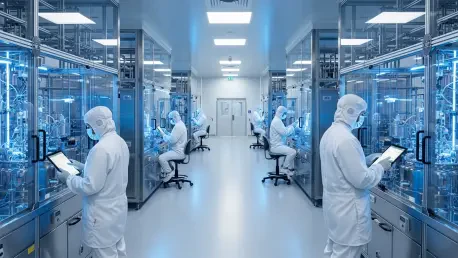
One of the most persistent threats to the continued growth of the pharmaceutical industry is the “talent bottleneck,” a phenomenon where the rapid advancement of technology outpaces the availability of skilled operators. In a high-stakes Good Manufacturing Practice (GMP) environment, the stakes are so high that bringing a new employee from the “front door to the factory floor” can traditionally take up to 18 months of intensive training. To address this critical delay, the National Institute for Bioprocessing Research and Training (NIBRT) was established to provide a simulated GMP environment that mirrors actual industrial conditions. This facility allows trainees to engage with industrial-grade equipment and participate in the full production cycle—from cell inoculation to final fill-finish operations—without the catastrophic financial or safety risks associated with errors in a live commercial production suite.
This innovative training methodology places a heavy emphasis on “error response,” a pedagogical shift that prepares personnel for the realities of the cleanroom. Instead of just learning the “happy path” of perfect production, staff are taught how to recognize and mitigate process deviations and equipment failures in real-time. This level of preparedness significantly reduces the time it takes for a professional to become “line-ready,” providing a massive competitive advantage for companies looking to hit tight production deadlines. The success of this model has been so profound that it has expanded into the NIBRT Global Partners Programme, effectively exporting Irish-developed training standards to international facilities. By standardizing the specialized skills required for biologics, Ireland has not only solved its own internal labor challenges but has also created the definitive global benchmark for workforce readiness in the biopharma industry.
Navigating Complexity and Geopolitical Strategy
Transitioning to Platform-Based Manufacturing
The biopharmaceutical industry is currently moving away from the era of standardized monoclonal antibodies toward a much more diverse and volatile set of modalities, including viral vectors and antibody-drug conjugates. This shift has made manufacturing significantly more difficult, as these new treatments often lack the stability and established “recipes” that defined earlier biologics. Ireland is leading the charge in moving away from the “cottage industry” model of bespoke cell therapies, where every product requires a unique and often manual process, toward more stable, platform-based manufacturing. This transition involves creating sophisticated systems capable of managing smaller-volume, highly complex batches that are often required for Phase 3 clinical trials. By standardizing the underlying technology platforms while allowing for product-specific customization, Irish facilities can handle a much wider variety of therapeutic candidates with greater consistency.
This adaptability ensures that the physical infrastructure of the country remains relevant even as the lifecycles of individual products evolve or as high-value patents expire. When a manufacturing site is designed with flexibility at its core, it can pivot from one type of therapy to another without requiring a complete and costly overhaul of the facility. This capability is vital for maintaining the competitive edge of the Irish ecosystem, as it allows companies to scale complex processes quickly in response to market demands or clinical trial results. The ability to maintain stability across a diverse product pipeline is a key differentiator that attracts companies looking for long-term operational resilience. As the industry continues to innovate, Ireland’s focus on platform flexibility provides a future-proof environment that can support the next wave of medical breakthroughs regardless of the biological modality involved.
Ireland as a Neutral Global Hub
In a world increasingly shaped by geopolitical tensions and supply chain disruptions, pharmaceutical companies are prioritizing regionalization to ensure that life-saving medicines can reach patients regardless of international friction. Ireland has strategically positioned itself as a “neutral hub,” offering a unique combination of stability and connectivity that few other nations can match. It remains a committed member of the European Union, providing frictionless access to the single market, while simultaneously maintaining a Common Travel Area with the United Kingdom and a deep, long-standing relationship with the United States. This geographic and political positioning makes it an ideal central node for global entities that need to coordinate complex manufacturing efforts across different regulatory jurisdictions and time zones.
The appeal of this neutral status is evident in the diversity of global firms that have chosen to concentrate their manufacturing efforts in Ireland. Companies from various regions, such as WuXi Biologics from China and Takeda from Japan, utilize the country as a strategic gateway to reach the world’s largest healthcare markets. By offering a reliable and politically stable base of operations, Ireland helps these organizations secure their global supply chains against the risks of protectionism or regional instability. This role as a trusted intermediary reinforces Ireland’s position as a vital piece of the global healthcare puzzle. In an uncertain global climate, the ability to provide a “safe harbor” for high-value manufacturing is a powerful economic driver that ensures the country remains a primary destination for foreign direct investment in the life sciences.
Integrating Research and Industrial Application
Synergy Between Academia and Industry
The Irish biopharma model is distinguished by a deliberate and highly effective lack of silos between the worlds of academic research and industrial manufacturing. While in many other countries these two sectors operate in isolation, NIBRT acts as a primary conduit for collaboration, hosting dozens of researchers who hold joint appointments with major universities. This structure ensures that academic inquiry is never purely theoretical; instead, it is directly informed by the real-world technical challenges encountered on the factory floor. When a manufacturer identifies a recurring issue with cell viability or protein folding, the research community is already integrated into the environment and can begin working on a solution immediately. This direct feedback loop accelerates the pace of innovation and ensures that scientific discoveries are translated into practical manufacturing improvements at record speed.
This collaborative culture is essential for maintaining a workforce that is not just competent in current technologies but is actively defining the next generation of bioprocessing. When researchers and engineers work side-by-side, they create a dynamic environment where the latest biological insights can be applied to optimize manufacturing processes in real-time. This ensures that the training programs provided to the workforce are always at the cutting edge, preparing professionals for the future of the industry rather than just its current state. The synergy between academia and industry is a vital component in maintaining Ireland’s edge in a rapidly evolving technological landscape, as it fosters a culture of continuous improvement and rapid problem-solving. This integrated approach turns the entire nation into a living laboratory where the science of medicine and the engineering of production are inextricably linked.
Defining the Future of Biomanufacturing
The impact of the deep integration between research and industry is perhaps most visible in the pioneering work being done in areas like metabolomic profiling and synthetic biology. Experts across the Irish ecosystem are currently investigating how the cellular makeup of a therapy—down to the finest metabolic details—affects its overall quality and the efficiency of the manufacturing process. By understanding the minute variables that influence how a cell produces a specific protein or viral vector, researchers can fine-tune the environment to maximize yield and purity. These efforts also involve pushing the boundaries of recombinant proteins and RNA therapies, using advanced analytics and mass spectrometry to monitor production in real-time. This level of precision allows for predictive modeling, where algorithms can anticipate and correct for process deviations before they ever impact the final product.
These technological advancements are often developed in close partnership with global hardware and software suppliers, ensuring that the Irish ecosystem remains a leader in both the science and the engineering of modern medicine. By leveraging mass spectrometry and predictive algorithms, Irish researchers are helping to define the global standards for the production of mRNA and siRNA therapies, which became household names during recent global health challenges. This ongoing work secures Ireland’s place as a pioneer in the next generation of biopharmaceutical manufacturing, moving beyond simple production into the realm of advanced process design. The ultimate goal is to create a manufacturing environment that is so data-driven and precise that the risk of batch failure is virtually eliminated. This forward-looking focus ensures that the nation will continue to lead the way in advanced therapy manufacturing for decades to come.
The evolution of the Irish biopharmaceutical sector provides a clear blueprint for how a nation can successfully navigate the transition from traditional industry to high-tech innovation. By focusing on solving the talent bottleneck, fostering deep ties between universities and factories, and providing the engineering expertise to build flexible capacity, Ireland has secured its place as a central node in the global healthcare supply chain. For companies operating in this space, the actionable takeaway is that success in advanced therapies requires more than just biological breakthroughs; it requires an integrated ecosystem that can handle the immense complexity of bringing those breakthroughs to the patient. Future developments will likely see an even greater reliance on automated, data-driven manufacturing platforms that further reduce the time between discovery and delivery. As the industry moves forward, the ongoing integration of digital technologies and biological science will remain the primary driver of growth, ensuring that the next wave of curative therapies is manufactured with unprecedented precision and scale. Ireland’s proactive stance has not only fortified its own economy but has also provided the global medical community with a reliable partner in the fight against the world’s most challenging diseases.