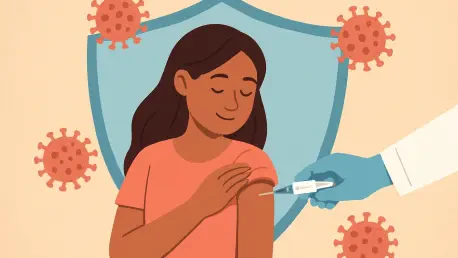

Ivan Kairatov is a distinguished expert in biopharmaceuticals and public health, specializing in the intersection of technological innovation and preventative medicine. With an extensive background in research and development, he has dedicated much of his career to analyzing the long-term efficacy of vaccines and the logistical frameworks required to implement large-scale immunization programs. His recent work focuses on the transformative impact of HPV vaccination strategies on global health outcomes.
In this conversation, we explore the longitudinal data supporting the 18-year durability of the HPV vaccine and the critical importance of early immunization. We discuss the stark differences in cancer risk reduction between adolescent and adult recipients, the evolving landscape of cervical cancer rates across different age cohorts, and the strategic improvements needed to ensure equitable vaccine access in underserved communities.
Long-term data indicates that HPV vaccine protection remains stable for at least 18 years without signs of waning. How does this durability influence the design of lifelong screening protocols, and what specific metrics should clinicians monitor to ensure this immunity holds as patients enter their 40s?
The stability of the quadrivalent vaccine over nearly two decades is a game-changer for how we structure preventative care. When we see a study of over 926,000 women showing no signs of waning protection, it allows us to shift from a reactive “catch-all” screening model to one that is more targeted and evidence-based. Clinicians should feel confident that the 79% risk reduction seen in early-vaccinated cohorts provides a robust shield that lasts well into their 30s, and likely beyond. Moving forward, the metrics for those entering their 40s will likely shift toward monitoring the persistence of high-grade cervical lesions rather than just infection presence, as the vaccine continues to prevent the most aggressive oncogenic pathways. It is vital to maintain a rigorous follow-up window, as the maximum age tracked in current robust data is 38, so keeping an eye on that transition into the fifth decade of life remains a priority for research.
Patients vaccinated before age 17 experience a 79% reduction in cancer risk compared to a 37% reduction for those vaccinated in adulthood. What physiological or behavioral factors account for this disparity, and how can healthcare providers optimize communication to encourage early immunization within diverse communities?
The disparity is primarily driven by the biological timing of the vaccination; immunizing before any potential exposure to the virus ensures that the immune system is primed to neutralize HPV before it can integrate into cervical cells. In contrast, those vaccinated at age 17 or older may have already been exposed, which explains why their risk reduction starts lower at 37%, though it is heartening to see that even in this group, risk reduction can climb to 77% after 13 to 15 years. To optimize communication, providers must emphasize that this is a cancer-prevention tool rather than a conversation about sexual activity, using the “pre-exposure” window as a clear clinical milestone. In diverse communities, this means addressing parental concerns with transparency, highlighting that for the 1999–2001 birth cohort, the cancer rate dropped to just 4 per 100,000 by age 24, a staggering testament to the power of early intervention.
There is a notable decline in cervical cancer cases among younger cohorts who grew up with routine immunization access compared to older generations. What are the logistical challenges of maintaining high-coverage vaccination programs at a national level, and what step-by-step improvements would you suggest for underserved areas?
The logistical hurdle is often maintaining the momentum of a program once the immediate “threat” seems to diminish, as seen by the high success in Sweden where they tracked nearly a million participants. For underserved areas, the first step is integrating HPV vaccination into existing school-based or routine childhood checkups to remove the barrier of separate appointments. Secondly, we need to utilize national registers more effectively to identify and reach out to cohorts—like those born between 1985 and 1988 who saw rates as high as 250 cases per 100,000—ensuring that older women who missed the initial wave still receive information on screening. Finally, diversifying the workforce to include community health advocates can bridge the gap in trust, ensuring that the vaccine reaches those who might be overlooked by traditional medical infrastructure.
While large-scale data shows success, individual lifestyle factors and screening frequency still play a role in long-term health outcomes. How do you integrate these variables into a comprehensive prevention plan, and what anecdotal trends have you observed regarding vaccine acceptance among patients who missed the early-childhood window?
A comprehensive prevention plan must acknowledge that while the vaccine is a powerhouse, it is not a complete replacement for screening, especially since some vaccinated individuals in the data did eventually develop invasive cancer. We have to consider factors like smoking, history of high-grade lesions, and even parental education levels, which were all variables accounted for in the Swedish registry analysis. Anecdotally, I’ve seen a “better late than never” trend among adults who missed the early window; once they see the data showing that risk reduction can eventually hit 77% even for those vaccinated later in life, their skepticism often turns into proactive health-seeking behavior. It’s about framing the vaccine as a lifelong health asset that provides a safety net, even if the primary window of maximum efficacy has passed.
What is your forecast for the global elimination of cervical cancer?
I am incredibly optimistic that we are on the verge of a public health revolution where cervical cancer becomes a rarity rather than a common threat. If we can replicate the high-coverage routine immunization models globally, we will see the incidence rates of older cohorts—those 250 cases per 100,000—plummet to the single digits we are already seeing in the youngest vaccinated groups. My forecast is that within the next two decades, many high-income nations will achieve the clinical threshold for elimination, provided we remain vigilant about the 18-year durability of the vaccine and continue to support low-resource settings in building their own robust vaccination infrastructures. We are effectively watching a major human cancer being phased out of existence in real-time, which is perhaps the greatest achievement in modern preventative medicine.