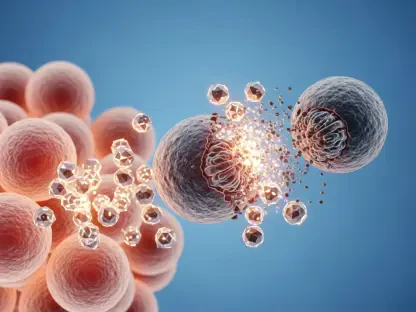

The transition from traditional stem cell therapies to more refined exosome-based treatments represents one of the most significant shifts in regenerative medicine during the middle of this decade. While stem cells offer immense healing potential, they carry inherent risks such as unwanted mutations or tumor formation, leading researchers to focus on the extracellular vesicles they secrete. These tiny messengers, known as exosomes, facilitate tissue repair and immune regulation without the dangers associated with living cell transplants. However, the path toward making these vesicles a primary clinical tool has been obstructed by a lack of efficient manufacturing processes. Current methods are often fragmented and labor-intensive, making it nearly impossible to produce high-quality, drug-loaded exosomes at a scale sufficient for global healthcare needs. To solve this, scientists at Xi’an Jiaotong-Liverpool University have introduced a streamlined pipeline that utilizes nanoparticles to synchronize production, creating a more reliable path for biological medicine.
Integrating the Fragmented Production Pipeline
Historically, the development of therapeutic exosomes required a cumbersome four-stage journey including induction, loading, isolation, and storage. Each of these steps typically functions as a separate module, often optimized in isolation, which creates significant bottlenecks during industrial transitions. For instance, while one technique might be excellent at inducing cell secretion, it may fail to effectively package the intended medicinal cargo into the resulting vesicles. This disconnected approach results in low yields and prohibitively high costs, preventing many promising therapies from leaving the laboratory. By 2026, the demand for standardized biological delivery systems has grown, yet the industry has struggled to find a cohesive methodology that preserves the integrity of the exosome while ensuring it remains functional for patient use. These systemic inefficiencies have long served as the primary barrier to the commercialization of exosome therapies, necessitating a fundamental rethink of how these microscopic packages are harvested and processed for clinical use.
Addressing these logistical hurdles required a radical departure from modular processing toward a unified, nanoparticle-integrated platform. The research team led by Dr. Gang Ruan developed a system where specialized nanoparticles are introduced directly into the growth environment of mesenchymal stem cells. This presence does not merely act as a passive additive; instead, it serves as a multi-functional catalyst that synchronizes the induction and loading phases into a single biological event. As the cells react to the nanoparticles, they are stimulated to release a significantly higher volume of exosomes than they would under normal physiological conditions. Crucially, the nanoparticles and their associated therapeutic drugs are automatically incorporated into the vesicles during their formation. This integration eliminates the need for post-production loading techniques, which are often harsh and can damage the delicate exosomal membrane. By merging these early stages, the production pipeline becomes significantly more efficient, reducing the time and resources required to generate supercharged therapeutic agents.
Engineering the Russian Doll Architecture
The internal architecture of these engineered exosomes is described by researchers as a “Russian doll” configuration, a design that maximizes both payload and stability. Within this structure, the therapeutic drug is first contained inside a nanoparticle, which is then housed securely within the exosome itself. This layering provides a double barrier of protection for the medicinal cargo, ensuring that it remains intact until it reaches the targeted tissue within the patient’s body. Furthermore, the inclusion of magnetic components within these nanoparticles allows for a level of visibility previously unattainable in standard exosome research. Scientists can now track the movement and distribution of these vesicles in real-time using biological imaging, solving the “black box” problem where clinicians were often unsure of exactly where the treatment was localized after administration. This structural innovation not only improves the therapeutic density of each vesicle but also provides a built-in monitoring system that is essential for meeting the rigorous safety standards of modern regulatory agencies.
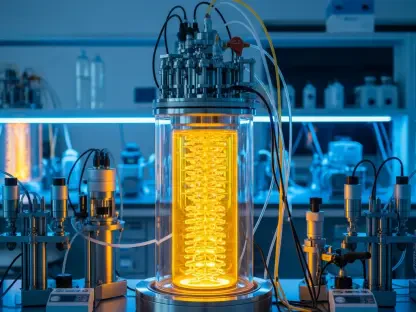
Beyond the internal structure, the use of magnetic nanoparticles enables a breakthrough in the isolation phase through a process called Mobile Internal Magnetic Separation (MIMS). Traditional methods like ultracentrifugation or size-exclusion chromatography often struggle with scalability, becoming exponentially slower and less effective as the volume of the liquid culture increases. In contrast, MIMS utilizes the magnetic properties of the embedded nanoparticles to pull the exosomes directly from the complex growth media with high precision and speed. This method maintains high purity levels regardless of whether the production occurs in a small lab flask or a large-scale industrial bioreactor. This capability is vital for moving exosome production from experimental batches to the mass-market quantities required for treating widespread conditions. By providing a separation technique that scales linearly with volume, the research offers a viable solution to one of the most persistent engineering challenges in the field, ensuring that the purity of the final product remains consistent across all levels of manufacturing.
Advancing Clinical Viability and Scalable Distribution
The practical utility of this new manufacturing pipeline was validated through a diverse array of medical models, including treatments for heart failure, pulmonary fibrosis, and Parkinson’s disease. In each case, the engineered exosomes demonstrated consistent performance, suggesting that the platform is versatile enough to be adapted for a wide variety of therapeutic applications. A critical final piece of the puzzle involved the long-term storage and distribution of these biological products, which are notoriously sensitive to temperature changes. The study confirmed that these nanoparticle-loaded vesicles remain stable during the freeze-drying process and retain their full functionality upon rehydration. This durability is a prerequisite for any global healthcare solution, as it allows the treatments to be transported over long distances and stored in conventional medical facilities without the need for specialized ultra-cold infrastructure. The successful preservation of the vesicles’ structural and functional integrity during these processes marked a major milestone in proving the commercial feasibility of the technology.
To move this technology into the hands of clinicians, stakeholders must now prioritize the standardization of nanoparticle formulations to ensure reproducibility across different cell lines. Future efforts should focus on refining the automated aspects of the MIMS process to further reduce human intervention and potential contamination. Regulatory frameworks will also need to evolve to accommodate these complex biologicals, requiring close collaboration between nanotechnologists and healthcare officials. The integration of this streamlined pipeline provided a clear roadmap for bypassing the traditional bottlenecks of exosome production, successfully demonstrating that nanotechnology can serve as the bridge between laboratory discovery and industrial-scale manufacturing. By consolidating induction, loading, and isolation into a cohesive system, researchers established a foundation for a new era of regenerative medicine. These advancements offered a practical solution for scaling the next generation of non-cellular therapies, ensuring that safer and more targeted medical treatments could finally transition from experimental concepts to accessible patient care.