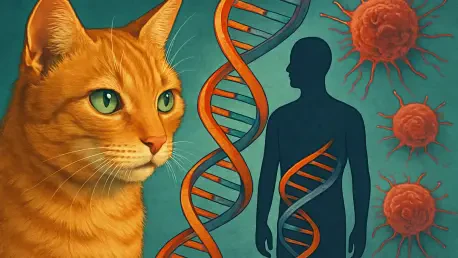

Domestic felines share more than just a home with their owners; they reside in a mirrorspace of biological risks where identical environmental stressors trigger remarkably similar oncological outcomes. This proximity has long been observed by veterinarians, but recent genomic mapping has finally provided the statistical evidence needed to turn these commonalities into a scientific roadmap. By examining the DNA of cats, researchers are discovering that the pathways leading to tumor development in pets are nearly indistinguishable from those found in human patients. This revelation moves oncology away from the traditional, often limited scope of laboratory rodents and into a more realistic, “One Medicine” framework that treats mammalian health as a unified field of study. As the scientific community looks toward 2027 and beyond, the data harvested from feline tumors is providing a blueprint for identifying which genetic mutations are merely background noise and which are the primary drivers of malignancy.
The Genomic Architecture of Shared Vulnerabilities
At the center of this cross-species investigation lies the TP53 gene, a critical regulator frequently referred to as the guardian of the genome for its role in preventing out-of-control cell division. Genomic sequencing of hundreds of feline tumor samples revealed that mutations in this specific gene appear in approximately 33 percent of cases, a figure that almost perfectly mirrors the 34 percent frequency observed in human cancers. This statistical overlap is not a coincidence but rather an indication that the fundamental machinery of life utilizes the same defense mechanisms—and fails in the same ways—across different species. Beyond this single gene, scientists have successfully identified a catalog of 31 driver genes that actively propel the growth of malignancies in both cats and humans. This shared genetic landscape suggests that therapies developed to repair or bypass these specific mutations could be equally effective regardless of whether the patient has two legs or four.
Nowhere is this genetic parity more evident than in the study of cutaneous squamous cell carcinoma, where the external influence of ultraviolet radiation leaves a distinct molecular fingerprint on the skin. Feline skin cancers exhibit UV-induced genetic signatures that are essentially identical to those found in human skin cancer patients who have experienced chronic sun exposure. This direct correlation provides a unique advantage for researchers because it allows them to study the progression of skin cancer in a naturally occurring setting rather than inducing it artificially. By analyzing how these feline tumors evolve under the same atmospheric conditions that humans face, oncologists can better predict how human skin cells will react to emerging preventative treatments. The integration of this feline data into broader dermatological research has accelerated the identification of early-stage biomarkers, potentially leading to faster diagnostic tools that can catch skin cancer before it reaches a high-risk stage.
Environmental Realism: Why Felines Outperform Traditional Models
For decades, the laboratory mouse served as the primary vehicle for cancer research, yet its controlled environment often fails to replicate the complex interplay of factors that lead to human illness. Domestic cats represent a significant upgrade in modeling accuracy because they inhabit the exact same spaces as humans, breathing the same filtered air and walking on floors treated with the same household chemicals. These animals are exposed to the “exposome”—the totality of environmental exposures—that lab mice never encounter in their sterile, temperature-controlled facilities. Because cats age faster than humans, they serve as a biological early-warning system, manifesting the long-term effects of environmental carcinogens in a fraction of the time. This accelerated timeline allows researchers to observe the lifetime impact of modern living conditions on DNA integrity, providing a much more nuanced view of how lifestyle choices and urban pollutants contribute to the global rise in cancer rates.
Transitioning research efforts toward feline oncology also addresses the biological limitations of rodent-based studies, as cats naturally develop complex, spontaneous tumors that mimic the heterogeneity of human disease. Laboratory rodents are often genetically homogenous and have tumors induced through chemical or genetic manipulation, which can lead to results that do not translate effectively during human clinical trials. In contrast, the diverse genetic backgrounds of companion animals provide a more rugged testing ground for new pharmaceutical compounds. The shift toward this more inclusive veterinary-human research model ensures that potential treatments are tested against the chaotic, unpredictable reality of natural genetic variation. By leveraging the data from pets that are already receiving care in veterinary clinics, scientists can bypass the artificial barriers of the lab, gaining insights into tumor behavior and drug resistance that are far more representative of the challenges faced in human oncology wards today.
Clinical Applications: Targeted Breakthroughs in Mammary Research
One of the most significant practical outcomes of this research is the identification of seven specific driver genes in feline mammary tumors, which share a striking resemblance to human breast cancer. The discovery of the FBXW7 gene mutation in cats has been particularly transformative, as this same mutation is frequently associated with poor clinical outcomes and treatment resistance in human patients. Laboratory experiments demonstrated that tumors carrying this specific genetic signature responded with high sensitivity to certain targeted chemotherapies that were previously overlooked for this application. This finding provides a direct pathway for personalized medicine, where a simple genetic test could determine whether a specific drug will be effective before the treatment even begins. This level of precision not only improves the quality of life for the animal but also provides immediate, actionable data that can be used to refine human clinical trial protocols for patients with similar genetic profiles.
The transformation of feline oncology into an accessible genomic database has fundamentally changed how researchers approach the problem of malignant cell growth. By moving beyond the limitations of isolated laboratory studies, the scientific community established a more holistic framework that recognized the biological unity between humans and their animal companions. This project effectively bridged the gap between veterinary science and human medicine, proving that the molecular drivers of disease did not respect species boundaries. Moving forward, the integration of feline genomic data into standard oncological practice required increased collaboration between human hospitals and veterinary research centers to ensure that discoveries were shared in real time. Investing in large-scale comparative genomics and maintaining open-access tumor registries served as essential steps for institutions seeking to stay at the forefront of cancer research. Ultimately, the lessons learned from these domestic predators ensured that the path toward a cure was built on a foundation of shared biology and collective effort.